Algeria
 Egypt
 Libya
 Morocco
 Sudan
 Tunisia
 Benin
 Burkina Faso
 Cabo Verde
 Côte d'Ivoire
 Ghana
 Guinea
 Guinea-Bissau
 Liberia
 Mali
 Mauritania
 Niger
 Nigeria
 Senegal
 Sierra Leone
 The Gambia
 Togo
 Cameroon
 Central African Republic
 Chad
 DR Congo
 Equatorial Guinea
 Gabon
 São Tomé and Príncipe
 Burundi
 Comoros
 Djibouti
 Eritrea
 Ethiopia
 Kenya
 Madagascar
 Malawi
 Mauritius
 Mozambique
 Rwanda
 Seychelles
 Somalia
 South Sudan
 Tanzania
 Uganda
 Angola
 Botswana
 Eswatini
 Lesotho
 Namibia
 South Africa
 Zambia
 Zimbabwe
In Brazzaville, a power cut does not end when the lights go out. It can also bring a workshop to a standstill, disrupt studies and make it harder to keep food fresh. The demonstration reported on Saturday 24 October highlights a daily question for residents: when will the service return, and who is accountable?
A crisis that extends beyond one neighbourhood
Power cuts are not a new phenomenon in the capital of the Republic of the Congo. In April 2026, the Congolese News Agency reported that entire neighbourhoods had been affected for several weeks. During a visit to the Mbouono electricity substation, MPs heard explanations from Énergie électrique du Congo (E2C), the state-owned company responsible for electricity supply. Its chief executive at the time cited a single transformer in service and the saturation of some cables in areas where population density is rising.
A few months later, the situation remained concerning. A report published on 13 October described evenings regularly spent without electricity in Brazzaville, particularly in parts of Bacongo and Makélékélé. Some residents and small businesses reliant on electricity turned to generators when they could afford to. These accounts describe local experiences, not a uniform duration of power cuts across the city.
The problem is also documented in planning data. A report on the Sustainable Development Goals in Brazzaville notes that increased access to electricity in urban areas has not eliminated sharp disparities between neighbourhoods. Recurring load-shedding remains an obstacle for residents and economic activity.
Protest reported, details still limited
On 26 October, a report on current affairs in the Congo said young people had held a demonstration in Brazzaville the previous day, Saturday 24 October, against power cuts. It said residents in some neighbourhoods could go several weeks without electricity. Another local media outlet also reported that a video was circulating showing young people protesting and calling for E2C’s chief executive to step down.
However, the available information does not specify the exact location of the gathering, the number of participants or what action the authorities took afterwards. These details therefore cannot be presented as established facts. The reported demonstration reflects wider discontent, but on its own it does not show the scale of the movement in the capital.
Calls targeting the company’s management reflect a demand for accountability. They do not, however, resolve the network’s technical and financial challenges: the condition of transformers, maintenance of installations, transmission capacity and adaptation to urban expansion. It is essential to distinguish between these issues. A change of leadership, if demanded or decided upon, would not automatically guarantee a regular electricity supply.
Different effects on households
For families, a prolonged power cut can make lighting, access to water where it depends on electrical equipment, and food storage more difficult. For young people in education or training, it reduces the opportunities available to study in the evening. The effects vary depending on the neighbourhood, the length of the outage and the alternatives available.
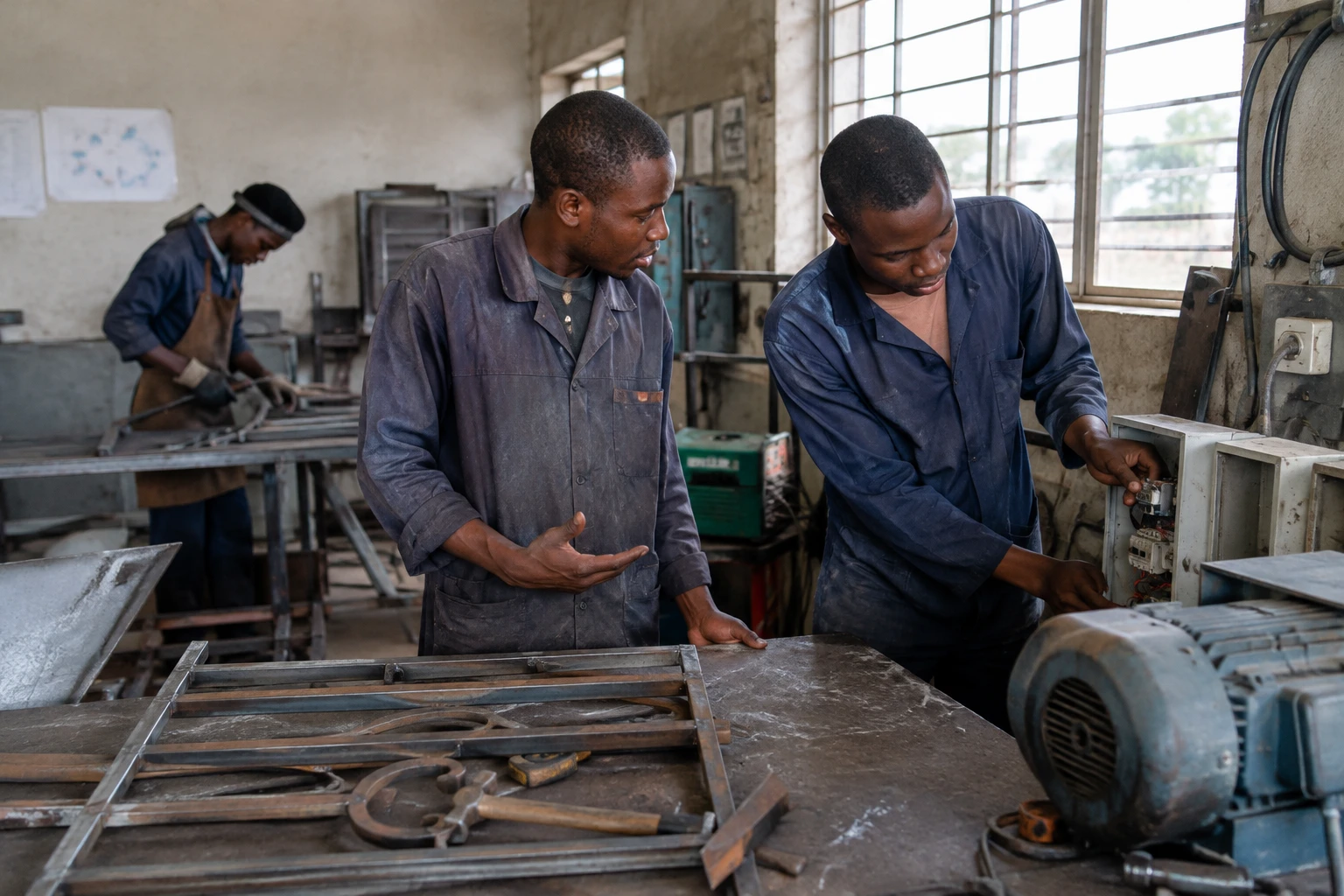
Small businesses are particularly exposed. A welding workshop, hair salon or shop that uses a refrigerator cannot always absorb several days of disruption. Businesses able to pay for a generator have a backup option, but it brings fuel and maintenance costs. Self-employed workers and businesses with tight margins have fewer ways to protect their income.
The problem extends beyond the capital. In April, the Congolese News Agency also reported persistent power cuts in Pointe-Noire and said MPs had visited the area to examine supply difficulties. Local circumstances are not identical, but they raise a shared question about service continuity and the monitoring of investment.
Residents await promised improvements on the ground
In August, the energy minister announced that rehabilitation work on strategic transformers was expected to help end load-shedding by September 2026. That deadline has passed. The power cuts reported in October show that residents have yet to see sufficient improvement in all areas. Without a detailed account of the work, however, this does not allow the conclusion that the announced operations were not carried out.
The next date to watch also concerns E2C’s governance. The company’s trade union council announced a general meeting for 18 November, according to a Congolese media outlet, amid criticism of its management and calls for the leadership to step down. This union initiative is separate from the demonstration reported in Brazzaville. Both, however, reflect mounting pressure over the quality of the public service.
Across Central Africa, reliable access to electricity underpins urban activity, essential services and economic exchanges. For the Republic of the Congo, the immediate challenge is less about announcing generation capacity than ensuring electricity is regularly delivered to neighbourhoods. The responses now awaited are concrete: the condition of equipment, a maintenance schedule, explanations for outages and measurable results from the announced works.
The demonstration by young people, as reported, has given public visibility to this expectation. Its impact will depend on what follows: dialogue with residents, communication from E2C and verifiable improvements in supply. Until those responses are clear, power cuts will continue to weigh differently on households, students and small businesses in Brazzaville.