Algeria
 Egypt
 Libya
 Morocco
 Sudan
 Tunisia
 Benin
 Burkina Faso
 Cabo Verde
 Côte d'Ivoire
 Ghana
 Guinea
 Guinea-Bissau
 Liberia
 Mali
 Mauritania
 Niger
 Nigeria
 Senegal
 Sierra Leone
 The Gambia
 Togo
 Cameroon
 Central African Republic
 Chad
 DR Congo
 Equatorial Guinea
 Gabon
 Republic of the Congo
 São Tomé and Príncipe
 Burundi
 Comoros
 Djibouti
 Eritrea
 Ethiopia
 Kenya
 Madagascar
 Malawi
 Mauritius
 Mozambique
 Rwanda
 Seychelles
 Somalia
 South Sudan
 Tanzania
 Uganda
 Angola
 Botswana
 Eswatini
 Lesotho
 Namibia
 Zambia
 Zimbabwe
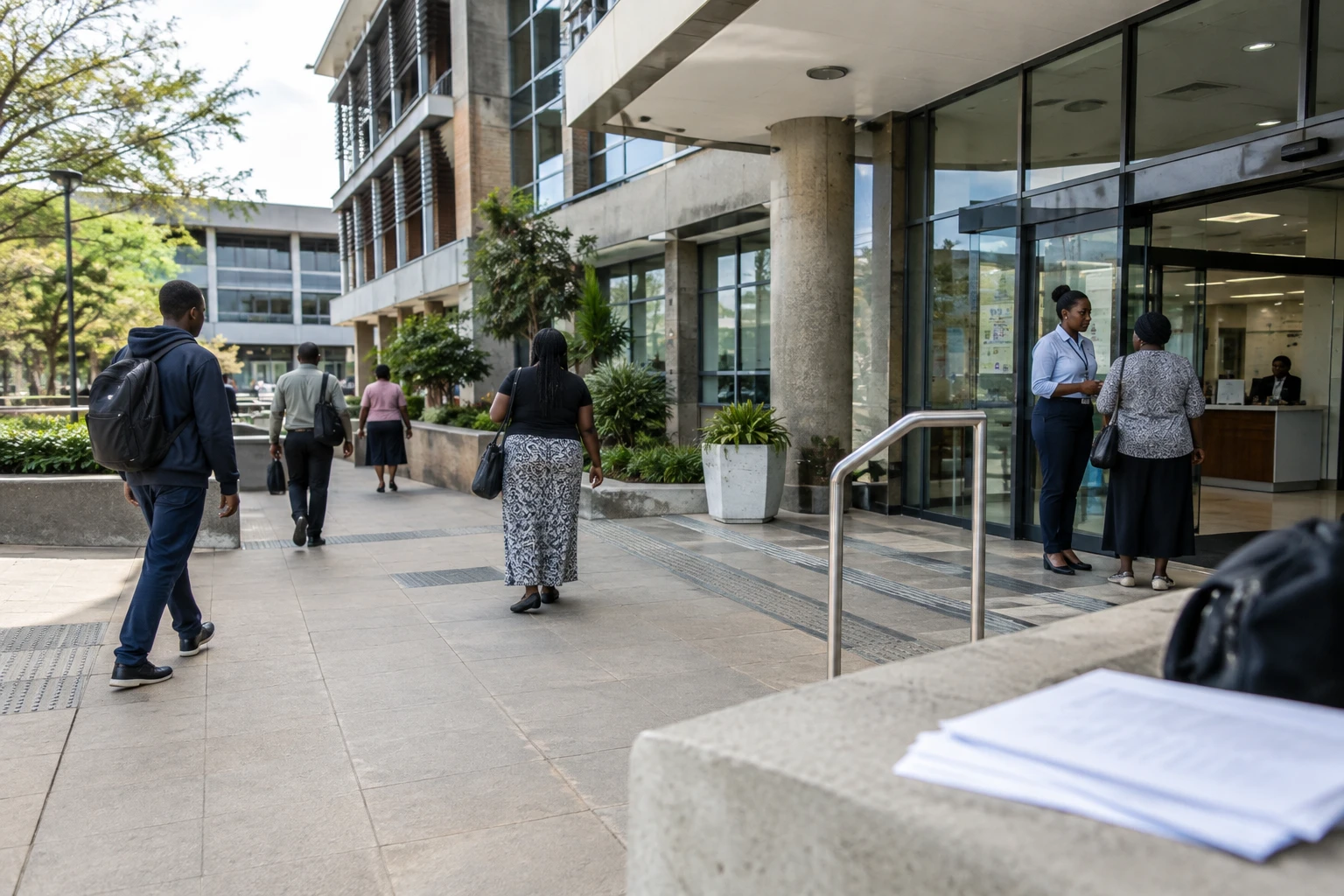
In Durban, a murder committed on the sidelines of an anti-immigration march has brought back to the fore an issue Pretoria cannot treat as a mere crime story: how to protect foreign nationals when hostile rhetoric turns into street violence. The African Commission on Human and Peoples’ Rights is calling for a public response commensurate with the risk.
A death in Durban, and responsibility to establish
On 22 October 2026, in central Durban, a foreign national was beaten to death by a group estimated at around 50 people. South African police said he was standing by the side of the road when he was attacked during a march. At the time of the first reports, his identity and nationality had not been publicly established, and investigators still had to identify the suspects.
The African Commission on Human and Peoples’ Rights, an African Union body responsible for promoting and protecting human rights, condemned the killing in a statement dated 23 October. It said the reported circumstances could amount to a crime against humanity. This is a warning, not a judicial finding: it is for investigators and, where applicable, the courts to establish the facts and determine responsibility. The Commission also urged Pretoria to recognise the recurrence of violence and xenophobic rhetoric as a crisis requiring coordinated action.
Police have not publicly established that the victim was targeted because of his origin, or that all those taking part in the march were involved in the assault. It is therefore important to distinguish the reported anti-immigration context surrounding the murder from what the investigation may prove about its motive and perpetrators. The Commission has called for a swift, impartial, thorough and transparent investigation.
A South African context already marked by attacks
The case comes in a country where assaults and threats against foreign nationals are not new. Human Rights Watch documented violence, harassment and discrimination between March 2019 and March 2020 in several provinces, including KwaZulu-Natal. In April 2020, the United Nations High Commissioner for Refugees also voiced concern after attacks in the Durban area that reportedly killed several people and forced families to flee.
These episodes do not define South African society, and foreign nationals are not a homogeneous group. But they show how quickly local tensions can affect residents, shopkeepers and families, whether they are refugees, asylum seekers, migrants or South African citizens. In Durban, a major port city in KwaZulu-Natal province, the impact can also be felt in local businesses and neighbourhoods where local and foreign residents live and work side by side.
Pressure on jobs, public services and migration control fuels political debate. It does not justify violence or sweeping accusations directed at foreigners. The African Commission stresses the state’s responsibility to protect everyone on its territory and to investigate when violence committed by private actors goes without an adequate response.
Pretoria’s response under scrutiny
The point of contention now is implementation. Since 2019, South Africa has had a national action plan against racism, racial discrimination, xenophobia and related intolerance. Human Rights Watch noted, however, that incidents of violence and discrimination against non-nationals continued in 2020 despite its adoption. The Durban murder has therefore revived questions about the gap between institutional commitments and prevention, investigation and prosecution on the ground.
For the authorities, the challenge is twofold: to establish the facts in this specific case and to prevent hostility towards migrants from turning into intimidation or mob justice. For those targeted, a lack of reliable information about the legal proceedings can heighten fear and restrict movement or economic activity. The Commission is calling for the cycle of impunity to be broken, but its statement alone does not allow the conclusion that the perpetrators in this case are escaping prosecution.
The reference to a possible crime against humanity underlines the gravity the Commission attributes to the context. It does not mean a court has already recognised that classification. The individual murder must be examined on the basis of the available evidence; whether a broader pattern exists is a separate question. This caution is essential to avoid turning an institutional warning into a verdict.
A regional issue beyond Durban
The issue extends beyond South Africa’s borders. South Africa is a member of the Southern African Development Community (SADC), a regional grouping that organises cooperation between neighbouring states. Labour mobility, family ties and trade make the safety of foreign nationals important to several countries in the region. Violence can also undermine trust between communities and complicate diplomatic relations, even when governments disagree over the circumstances of an incident.
The African Commission said it would continue to monitor the situation and stood ready to engage with the South African authorities. What happens next will depend on concrete developments: the victim’s identification, progress in the investigation, any prosecutions and the authorities’ ability to prevent further assaults. For Pretoria, the country’s political capital and the seat of its national institutions, the response concerns both the protection of residents and the credibility of South Africa’s human rights commitments.
At African Union level, the case is also a reminder that free movement and regional cooperation rest on more than agreements. They also require people to be able to live and travel without being targeted. The Durban murder does not, by itself, settle the debate over migration, but it places an immediate demand at its centre: establish responsibility and protect everyone living in South Africa, regardless of nationality.
Sources consulted: statement by the African Commission on Human and Peoples’ Rights ; Associated Press report on the events reported in Durban ; Human Rights Watch investigation into violence against non-nationals ; UNHCR alert on attacks in the Durban area ; earlier African Commission resolution on xenophobic attacks in South Africa.