
 Algeria
 Egypt
 Libya
 Morocco
 Sudan
 Tunisia
 Benin
 Burkina Faso
 Cabo Verde
 Côte d'Ivoire
 Ghana
 Guinea
 Guinea-Bissau
 Liberia
 Mali
 Mauritania
 Niger
 Senegal
 Sierra Leone
 The Gambia
 Togo
 Cameroon
 Central African Republic
 Chad
 DR Congo
 Equatorial Guinea
 Gabon
 Republic of the Congo
 São Tomé and Príncipe
 Burundi
 Comoros
 Djibouti
 Eritrea
 Ethiopia
 Kenya
 Madagascar
 Malawi
 Mauritius
 Mozambique
 Rwanda
 Seychelles
 Somalia
 South Sudan
 Tanzania
 Uganda
 Angola
 Botswana
 Eswatini
 Lesotho
 Namibia
 South Africa
 Zambia
 Zimbabwe
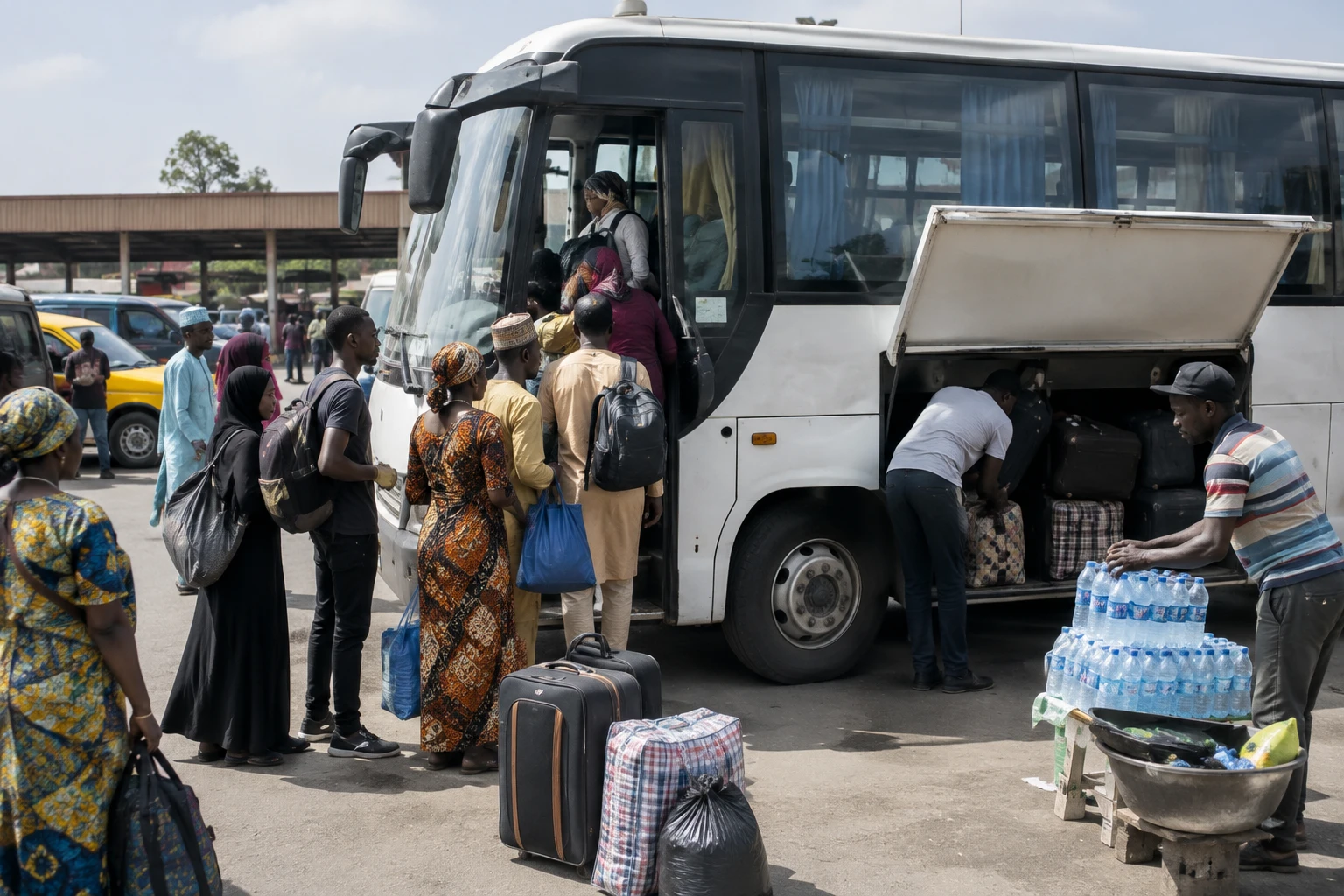
In north-west Nigeria, the presidential campaign opens with a concrete question for voters: will the reforms launched since 2023 eventually improve their daily lives? In Kaduna, Bola Tinubu defended the continuity of his policies, as the cost of living and insecurity continue to weigh on public debate.
In Kaduna, the APC bets on continuity
The Nigerian president launched his campaign for a second term on 24 October 2026, at a rally for his party, the All Progressives Congress (APC), in Kaduna State. The presidential election is scheduled for 16 January 2027 by the Independent National Electoral Commission, INEC.
Addressing his supporters, Bola Tinubu presented the next term as an opportunity to continue the programme already under way. “For this second term, it is about keeping our promise of prosperity, continuity, progress and development,” he said, according to comments reported by the Associated Press.
The Minister of Works, David Umahi, defended the government’s record, highlighting completed infrastructure and projects under way. His argument is as political as it is budgetary: keeping the current team in power, he says, would make it possible to complete projects already launched. But the campaign will also have to convince residents that these investments translate into accessible benefits, beyond announcements and major routes.
Security also featured prominently in the speeches. Kaduna Governor Uba Sani spoke of improved travel along the route linking Kaduna to Birnin Gwari, saying it was now possible to use it without a police escort. This assessment is attributed to him: on its own, it does not amount to an independent appraisal of the security situation in the state.
The cost of living, the central test of the record
The promise of prosperity is up against an economy fuelling discontent among part of the population. In Kaduna, Tinubu blamed his opponents for hunger and poverty, while saying he wanted to eradicate them. The attack sets the tone for a campaign in which the government’s record and political responsibility for economic hardship are likely to clash.
For households, the debate is not limited to national growth or the number of infrastructure projects. It also concerns the price of essential goods, disposable incomes and the ability to keep a job or business. Informal-sector workers, who make up a large part of the Nigerian economy, are particularly exposed to price fluctuations and often have fewer protections than formal employees. The campaign will therefore have to compare the government’s claimed results with voters’ daily experience.
The effects of public policies are not uniform. Major construction projects can improve trade between cities and regions, but their benefits depend on completion, maintenance and accessibility. In areas affected by insecurity, freedom of movement and the resumption of economic activity matter as much as investment announcements. By contrast, residents of large cities may feel pressure on transport and everyday goods more directly.
The government is emphasising the continuity of reforms and projects. Its opponents, meanwhile, will seek to turn the economic situation into a verdict on the outgoing term. The campaign will therefore have to set out proposed measures, how they will be funded and when their effects can be expected. Without these details, voters will find the promise of prosperity difficult to assess.
An opposition to rebuild before the election
In 2023, Bola Tinubu won 8,794,726 votes, ahead of Atiku Abubakar and Peter Obi. The figure appears in INEC’s official report and matches results compiled by Nigerian media outlet BusinessDay. This precedent is a reminder, however, that a lead in votes does not spare candidates from having to persuade electorates with different expectations.
Since that election, opposition figures have sought to coordinate their forces. An alliance discussed in 2025 around Atiku Abubakar and Peter Obi did not hold. The contest is therefore shaping up in a fragmented landscape, even though the two men remain among the best-known challengers to the incumbent president. The parties’ ability to agree on a candidate, a programme and a ground operation will weigh on the race.
For the APC, the Kaduna campaign launch opens a nationwide tour: the party has announced visits to the states and the Federal Capital Territory, with a schedule running until January. The launch in the north-west underscores the region’s importance in the electoral contest, but does not foreshadow the result in a country where the balance of power varies sharply from one state to another.
An election watched beyond Nigeria
The election is also of interest to West Africa. Nigeria is the continent’s most populous country and a major player in the Economic Community of West African States (ECOWAS), a regional organisation for cooperation and integration. The conduct of the election, confidence in its administration and acceptance of its results will therefore have implications beyond Abuja and the federated states.
The next test will be whether the campaign turns promises into verifiable proposals on the economy, infrastructure and security. Until 16 January 2027, INEC will have to conduct the electoral process, while the parties seek to mobilise their bases and broaden their reach. For Tinubu, the challenge is to make continuity a convincing response to the hardships people face. For the opposition, it is to show that an alternative can be organised and attract support nationwide.



