
 Algeria
 Egypt
 Libya
 Morocco
 Sudan
 Tunisia
 Benin
 Burkina Faso
 Cabo Verde
 Côte d'Ivoire
 Ghana
 Guinea
 Guinea-Bissau
 Liberia
 Mali
 Mauritania
 Niger
 Nigeria
 Senegal
 Sierra Leone
 The Gambia
 Togo
 Cameroon
 Central African Republic
 Chad
 DR Congo
 Equatorial Guinea
 Gabon
 Republic of the Congo
 São Tomé and Príncipe
 Burundi
 Comoros
 Djibouti
 Eritrea
 Ethiopia
 Kenya
 Madagascar
 Malawi
 Mauritius
 Mozambique
 Rwanda
 Seychelles
 Somalia
 South Sudan
 Tanzania
 Uganda
 Angola
 Botswana
 Eswatini
 Lesotho
 Namibia
 Zambia
 Zimbabwe
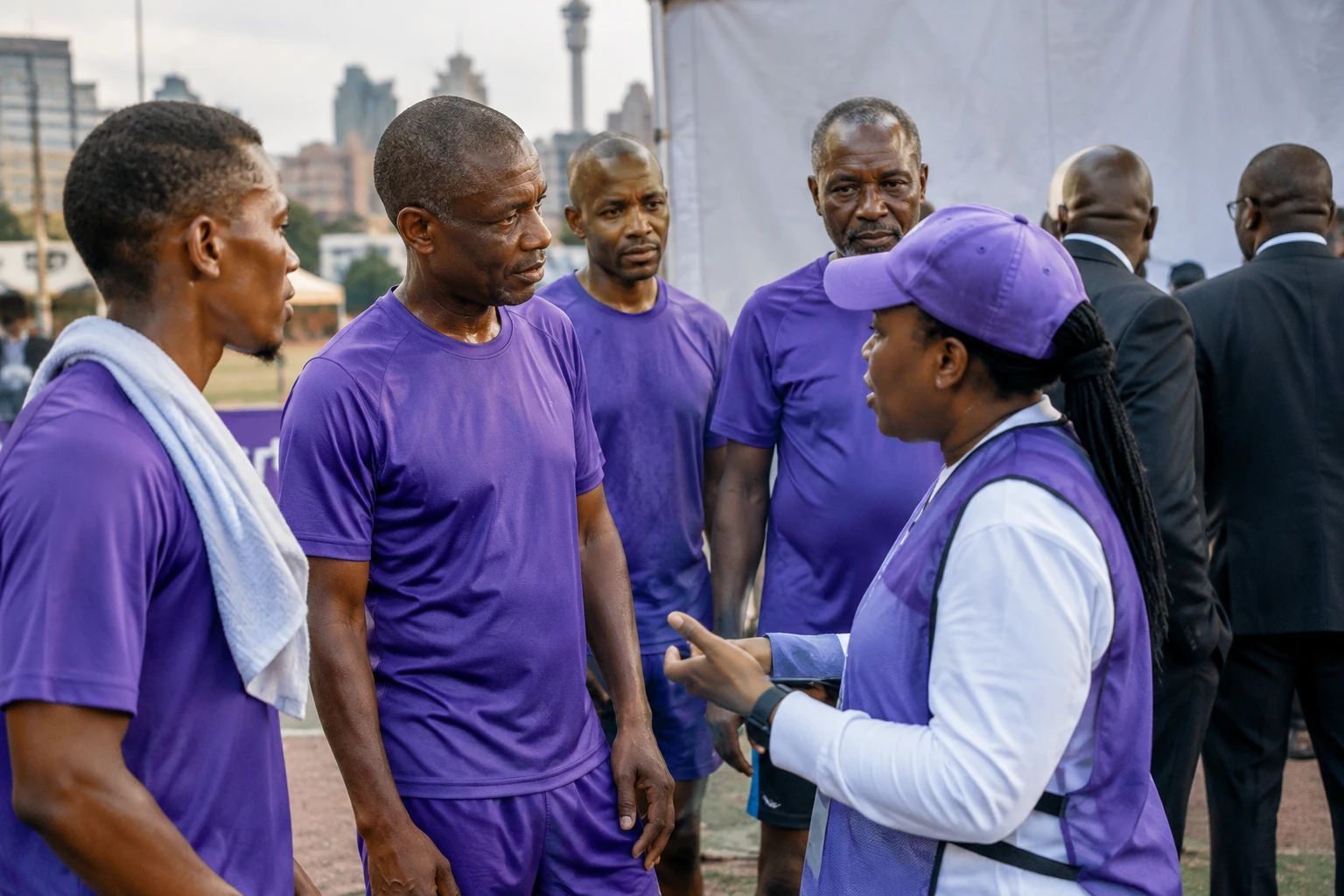
In Johannesburg, a race in purple shirts puts a question that is often left unspoken in the spotlight: how can people talk about prostate cancer before symptoms or advanced disease force the conversation? The sporting event aims to make men’s health a public issue, rather than something each person faces alone.
A campaign in the heart of Johannesburg
On Friday 23 October 2026, hundreds of men took part in the Hollard Daredevil Race, an annual event held in South Africa’s economic capital to raise awareness of prostate cancer. Some participants also shared their personal experiences of the disease.
Motaung Lehasa said he had lost two brothers to the cancer. Riyaad Kriel, himself a survivor, spoke about his journey. Their words put a human face to a disease that remains difficult to discuss in many families. They also serve as a reminder that raising awareness is about more than sharing medical information: it can help break down embarrassment and encourage people to talk about family history.
South African studies published in 2023 shed light on the extent of the information gap, although they do not represent all men in the country. In a study of black men diagnosed in the Free State, fewer than a quarter had heard of prostate cancer before their diagnosis. In a separate survey in Limpopo, nearly two-thirds of the men questioned had insufficient knowledge, and more than 80% did not know about screening methods. The study of black men diagnosed in the Free State and the survey conducted in Limpopo document two local realities, but should not be extrapolated mechanically to the whole country.
Screening starts with a discussion
The PSA, or prostate-specific antigen, test is a blood test that can help assess risk. A high result does not automatically mean there is cancer: other prostate conditions can also affect the level. The test is therefore no substitute for an assessment by a health professional.
South African guidelines stress that the decision should be discussed with a doctor, taking account of age, family history and health. Screening can have benefits, but can also lead to unnecessary tests or treatment if a slow-growing cancer is detected. That is why a general call to “get tested” is no substitute for clear information about the test’s benefits and limitations. South African screening guidelines set out the situations in which a medical discussion is particularly important.
The participants’ message — do not ignore changes you experience and seek medical advice — complements this approach, but is not a diagnosis. Some forms of prostate cancer can develop without obvious symptoms at first. Conversely, urinary problems do not necessarily mean that cancer is present. The point is to seek medical advice rather than draw conclusions alone.
Beyond awareness, access to care
The race can attract attention, but information alone does not guarantee a consultation or follow-up care. Access to services, their cost, the availability of tests and continuity of care also shape people’s journeys. The obstacles are not the same for a man with medical insurance in a city and someone living far from a health facility or relying on the public sector.
The event’s partner organisations describe the funds raised as a way to support awareness, screening and patient care. In 2025, Hollard announced a donation of 1.2 million rand to the Cancer Association of South Africa and the Prostate Cancer Foundation. The announced funding points to one possible outcome of the event: linking the visibility of a single day to practical services, particularly in less well-served areas. The statement on funds handed over after the 2025 event details their intended use.
Health data also matter. The Ekurhuleni population-based cancer registry recorded 426 prostate cancers among men in 2022, making it the most common cancer in the local data. This figure describes a specific area, not the whole of South Africa. More comprehensive national data are essential to measure diagnoses, treatment and disparities between regions. The Ekurhuleni registry’s 2022 report provides this local point of comparison.
A shared health issue in southern Africa
South Africa is a member of the Southern African Development Community, or SADC, which organises regional co-operation in several areas, including health. Prostate cancer is not unique to the country. Prevention campaigns, training for healthcare workers and the quality of registries can therefore inform regional exchanges, even though health systems and available resources differ from one country to another. SADC’s health programme places this co-operation within a regional framework.
In Pretoria, as in the provinces, the challenge is to turn a moment in the spotlight into ongoing conversations and accessible care. The Johannesburg race provides a platform and personal accounts. What follows will be measured by the ability of institutions, associations and health services to make information understandable, consultations accessible and data robust enough to track progress.



