Algeria
 Egypt
 Libya
 Morocco
 Sudan
 Tunisia
 Benin
 Burkina Faso
 Cabo Verde
 Côte d'Ivoire
 Ghana
 Guinea
 Guinea-Bissau
 Liberia
 Mali
 Mauritania
 Niger
 Nigeria
 Senegal
 Sierra Leone
 The Gambia
 Cameroon
 Central African Republic
 Chad
 DR Congo
 Equatorial Guinea
 Gabon
 Republic of the Congo
 São Tomé and Príncipe
 Burundi
 Comoros
 Djibouti
 Eritrea
 Ethiopia
 Kenya
 Madagascar
 Malawi
 Mauritius
 Mozambique
 Rwanda
 Seychelles
 Somalia
 South Sudan
 Tanzania
 Uganda
 Angola
 Botswana
 Eswatini
 Lesotho
 Namibia
 South Africa
 Zambia
 Zimbabwe
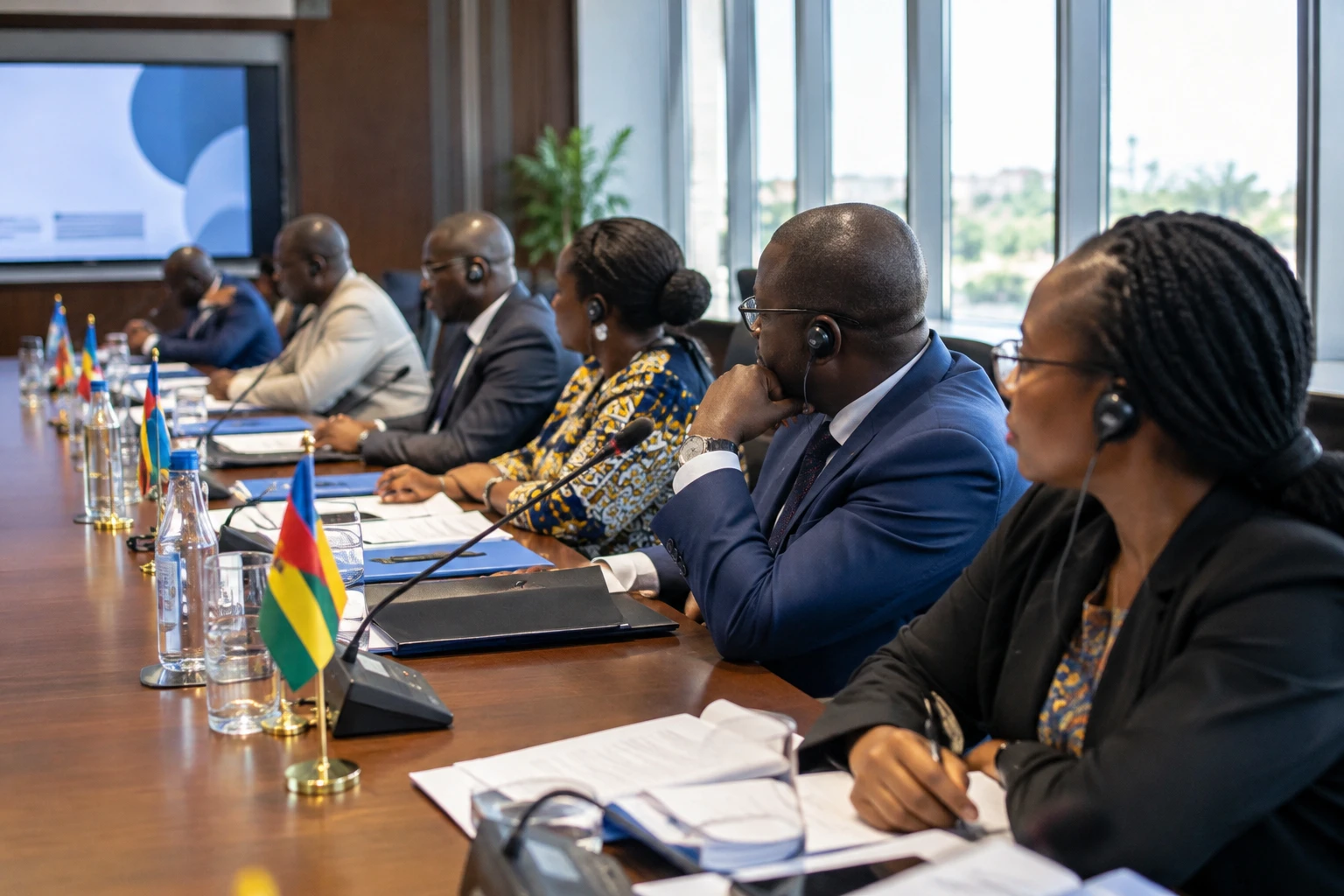
A smaller budget does not automatically mean fewer services for Togolese people. But it raises a practical question: how will the stated priorities be financed when public resources are more constrained and needs remain substantial? The draft finance bill for 2027 offers an initial answer, still subject to parliamentary scrutiny.
Reduced spending plans amid a challenging regional climate
In Lomé, budget decisions are being prepared in an environment marked, according to the government, by international economic uncertainty, geopolitical and trade tensions, and rising financing costs. These pressures also affect neighbouring states, which must weigh investment against social spending and debt control.
Togo is part of the West African Economic and Monetary Union (WAEMU), which shares, among other things, a common currency, the CFA franc, and economic coordination frameworks. It is also a member of ECOWAS, the regional organisation for the integration of West African countries. These frameworks give budget balances a regional dimension without removing the choices specific to each state.
On Thursday 22 October 2026, in Lomé, the Togolese government adopted a draft finance bill balanced at 2,684.1 billion CFA francs in revenue and expenditure. That is 2.5% less than the 2,751.5 billion included in the initial 2026 budget. It is, however, still a draft: both houses of Parliament must examine it before it can potentially come into force.
490 billion earmarked for investment
At the heart of the plan is an allocation of 490 billion CFA francs for investment under the Government Roadmap 2026-2031. This represents about 18% of the announced budget. The funding is divided across three pillars: “Protect”, with 227.2 billion; “Transform”, with 143.5 billion; and “Unite”, allocated 97 billion. Cross-cutting programmes receive 22.4 billion.
The stated priorities cover security, access to basic social services, social cohesion, employment and economic transformation. The government specifically cites agriculture, industrialisation and infrastructure. This allocation indicates the broad direction, but does not yet provide details of specific projects, their timetable or the expected results for residents.
The 2.5% decrease also calls for careful comparison. The initial 2026 budget had risen by 14.8% from the previous year, according to figures released by the authorities. The new total therefore marks a slowdown after a sharp increase, rather than simply continuing the previous trajectory. Detailed documents will need to be examined to distinguish continuing allocations, spending cuts and genuinely new investment.
The 2026 budget is also being revised
At the same Cabinet meeting, the executive adopted a draft supplementary finance bill for 2026. It reduces the current-year budget to 2,744.2 billion CFA francs, 0.3% below the initial amount. The forecast deficit is estimated at 247.6 billion, equivalent to 3.4% of gross domestic product.
The authorities say these adjustments are intended to cushion the rise in hydrocarbon prices, strengthen resources devoted to counter-terrorism and seek more external financing for development projects. These are the reasons given by the government; the parliamentary texts will clarify the arrangements and allocation of funds.
Higher energy costs can weigh on households, transport operators and businesses, while additional security spending puts pressure on public finances. The effects are not distributed evenly: urban residents feel changes in transport and prices directly, while rural producers also depend on access to roads, essential services and markets. Both formal businesses and informal activities are affected by the cost of inputs and energy.
Next step: scrutinising allocations and their execution
For Togolese people, the issue cannot be measured solely by the overall amount. It will depend on whether allocations are turned into accessible services, completed infrastructure and jobs, as well as on the regularity of disbursements. The share devoted to investment alone does not guarantee that projects will be completed on time or benefit regions evenly.
The government also says it intends to strengthen revenue mobilisation, fiscal discipline and spending efficiency. Parliamentary oversight and the publication of information on budget execution will make it possible to assess these commitments. The difference between approved allocations and the sums actually spent will be particularly important in judging results.
This process is part of budget preparation across West Africa: national choices must contend with external uncertainty while meeting local social and economic expectations. For Togo, the next milestone is parliamentary examination of the draft. Debates will show whether the stated priorities are retained, amended or clarified before the vote.
The investment amounts and allocation were published by the official portal of the Togolese Republic. The main figures for the 2026 supplementary budget were also reported by Republic of Togo and corroborated by Savoir News.