Algeria
 Egypt
 Libya
 Morocco
 Sudan
 Tunisia
 Benin
 Burkina Faso
 Cabo Verde
 Côte d'Ivoire
 Ghana
 Guinea
 Guinea-Bissau
 Liberia
 Mali
 Mauritania
 Niger
 Nigeria
 Senegal
 Sierra Leone
 The Gambia
 Togo
 Central African Republic
 Chad
 DR Congo
 Equatorial Guinea
 Gabon
 Republic of the Congo
 São Tomé and Príncipe
 Burundi
 Comoros
 Djibouti
 Eritrea
 Ethiopia
 Kenya
 Madagascar
 Malawi
 Mauritius
 Mozambique
 Rwanda
 Seychelles
 Somalia
 South Sudan
 Tanzania
 Uganda
 Angola
 Botswana
 Eswatini
 Lesotho
 Namibia
 South Africa
 Zambia
 Zimbabwe
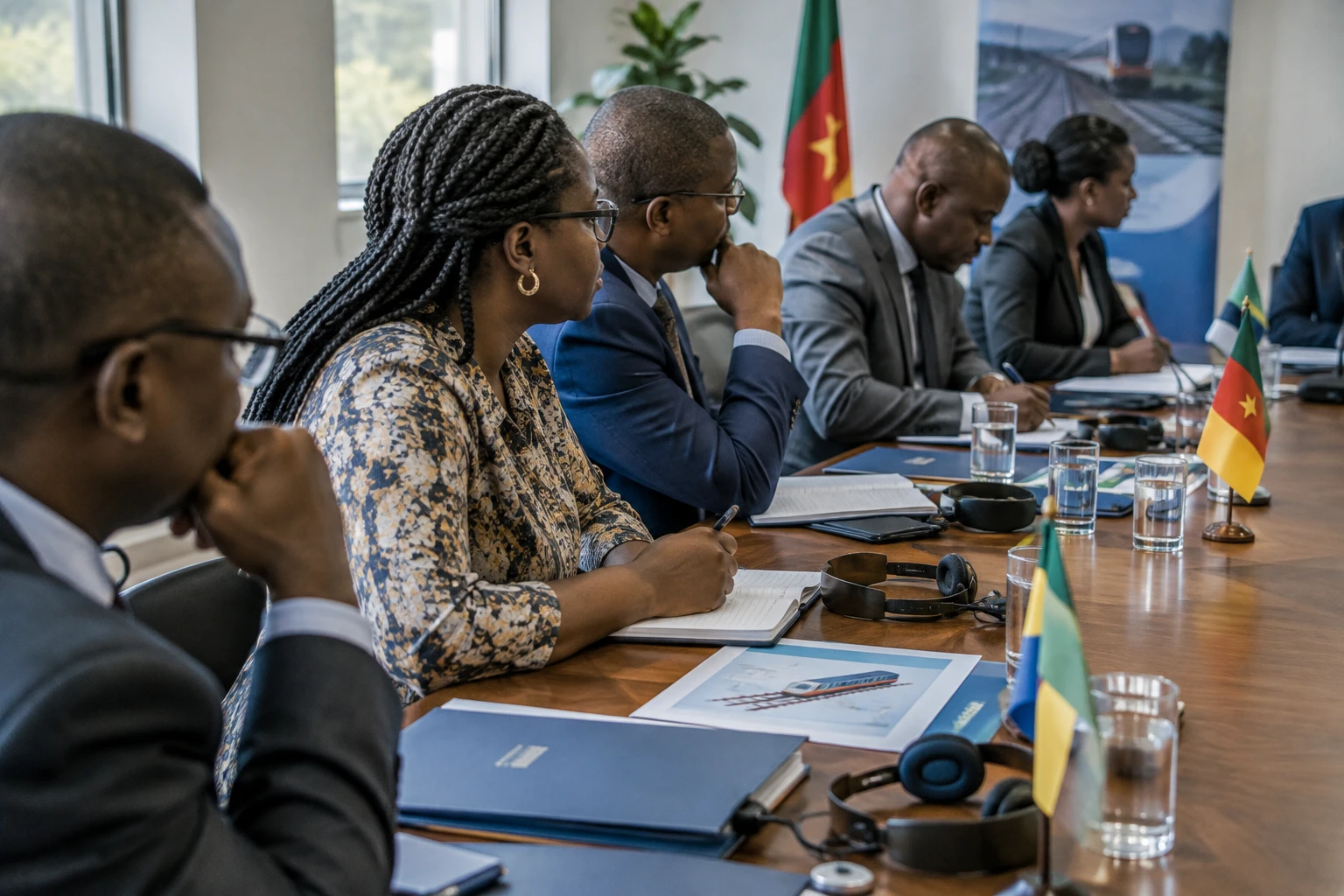
In Eséka, the memory of the derailment is measured not only by the carriages lying beside the track. It lives on in families still waiting for answers, in injured survivors living with their lasting effects and in a question that remains sensitive: what constitutes fair compensation after a collective disaster? 21 October 2026 marks ten years since the tragedy.
A vital route under pressure from traffic
The railway line links Yaoundé, the capital of Cameroon, to Douala, its main economic and port centre. It carries passengers and goods between two of the country’s most important hubs. For passengers, the train is also a way to travel along a corridor where roads can be congested or disrupted.
This role gives rail a significance that goes beyond transport alone. The reliability of the line matters to traders, businesses, workers and families travelling between the two cities. It also raises a public-service question: how can strong demand be met without weakening safety requirements?
Cameroon is a member of CEMAC, the Economic and Monetary Community of Central Africa. The regional organisation facilitates economic cooperation among its member states, but the Eséka line falls primarily under national responsibilities: operation, oversight, maintenance and emergency response. Its condition nevertheless matters for trade within Central Africa.
The derailment and its legal aftermath
On 21 October 2016, a passenger train travelling from Yaoundé to Douala derailed near Eséka, in the Centre Region. The official toll was 79 dead and more than 550 injured. The number of injured varies across reports published at the time; the official figure reported by Cameroon’s fire service is more than 550.
After the accident, the president of the republic established an inquiry commission by decree on 25 October 2016. The authorities later published findings that cited, among other things, breaches of safety rules. This institutional finding fuelled debate about the respective responsibilities of the railway operator and the state, which regulates the sector and its infrastructure.
In September 2018, the Eséka court of first instance found Camrail and several of its employees guilty of offences connected with the tragedy, including manslaughter and involuntary injury. The court ordered the payment of 50 million CFA francs to entitled relatives, in connection with claims brought by the civil parties. Camrail said it would appeal. These details were reported by several media outlets, including Africanews on the conviction and Camrail’s appeal and Business in Cameroon on the compensation awarded.
This decision should be distinguished from compensation negotiated separately by the company and its insurer. In 2018, Camrail said it had already compensated most families, while lawyers representing victims considered the sums awarded by the court insufficient and said some cases were still under discussion. These positions are not equivalent: the company was reporting on its efforts, while victims’ representatives disputed their scope.
The information available does not make it possible to establish with certainty the status, as of October 2026, of every compensation case or the final outcome of the appeal. It would therefore be imprudent to say that all families have been compensated, or that none have. The gap between the collective toll of the disaster and the individual handling of claims helps explain why expectations persist.
Compensation means more than paying a sum
For relatives of those who died, the process involves evidence, civil-status documents and exchanges with insurers or courts. For survivors, the consequences may also affect their health, income and ability to return to work. A common procedure therefore does not have the same impact on every family.
Criminal justice establishes responsibility and punishes offences. Compensation, by contrast, seeks to redress the harm suffered. A conviction does not automatically close compensation claims, particularly when parties dispute the amounts or some cases have not been decided. The two processes follow separate rules.
The debate also concerns transparency. In 2016, the government tasked a commission with examining the circumstances of the derailment. The presidential decree establishing the commission confirms that this process took place. But for families, the existence of an inquiry is no substitute for access to its findings, or for the chance to understand how responsibility was established and compensation calculated.
A safety issue for Cameroon and the region
Ten years on, Eséka is a reminder that infrastructure should not be judged solely by its capacity to carry more passengers. Track maintenance, capacity management, operating procedures and the coordination of emergency services form a single safety system. A failure can affect passengers, staff, families and economic activity along the corridor at the same time.
For Cameroon’s authorities, the challenge is to make inspections understandable and verifiable, beyond announcements made after a disaster. For the operator, trust depends on the safety of the service and the handling of complaints. For families, it requires concrete answers, case by case. Each party’s responsibilities should not be conflated, but all of them contribute to prevention.
Across Central Africa, the accident highlights the role of rail in national and regional connections. CEMAC does not replace the authorities responsible for overseeing a Cameroonian railway line, but transport safety and the continuity of trade matter to neighbouring economies. Monitoring railway infrastructure is therefore a matter of regional interest, without diminishing the primary responsibility of national institutions.
The tenth anniversary does not close the case. It brings two separate questions back to the fore: have families received compensation suited to their circumstances, and have the lessons of the inquiry been translated into lasting safety guarantees? Public answers on the progress of legal proceedings and compensation will make it possible to assess what remains to be done.