Algeria
 Egypt
 Libya
 Morocco
 Sudan
 Tunisia
 Benin
 Burkina Faso
 Cabo Verde
 Côte d'Ivoire
 Ghana
 Guinea
 Guinea-Bissau
 Liberia
 Mali
 Mauritania
 Niger
 Nigeria
 Senegal
 Sierra Leone
 The Gambia
 Cameroon
 Central African Republic
 Chad
 DR Congo
 Equatorial Guinea
 Gabon
 Republic of the Congo
 São Tomé and Príncipe
 Burundi
 Comoros
 Djibouti
 Eritrea
 Ethiopia
 Kenya
 Madagascar
 Malawi
 Mauritius
 Mozambique
 Rwanda
 Seychelles
 Somalia
 South Sudan
 Tanzania
 Uganda
 Angola
 Botswana
 Eswatini
 Lesotho
 Namibia
 South Africa
 Zambia
 Zimbabwe
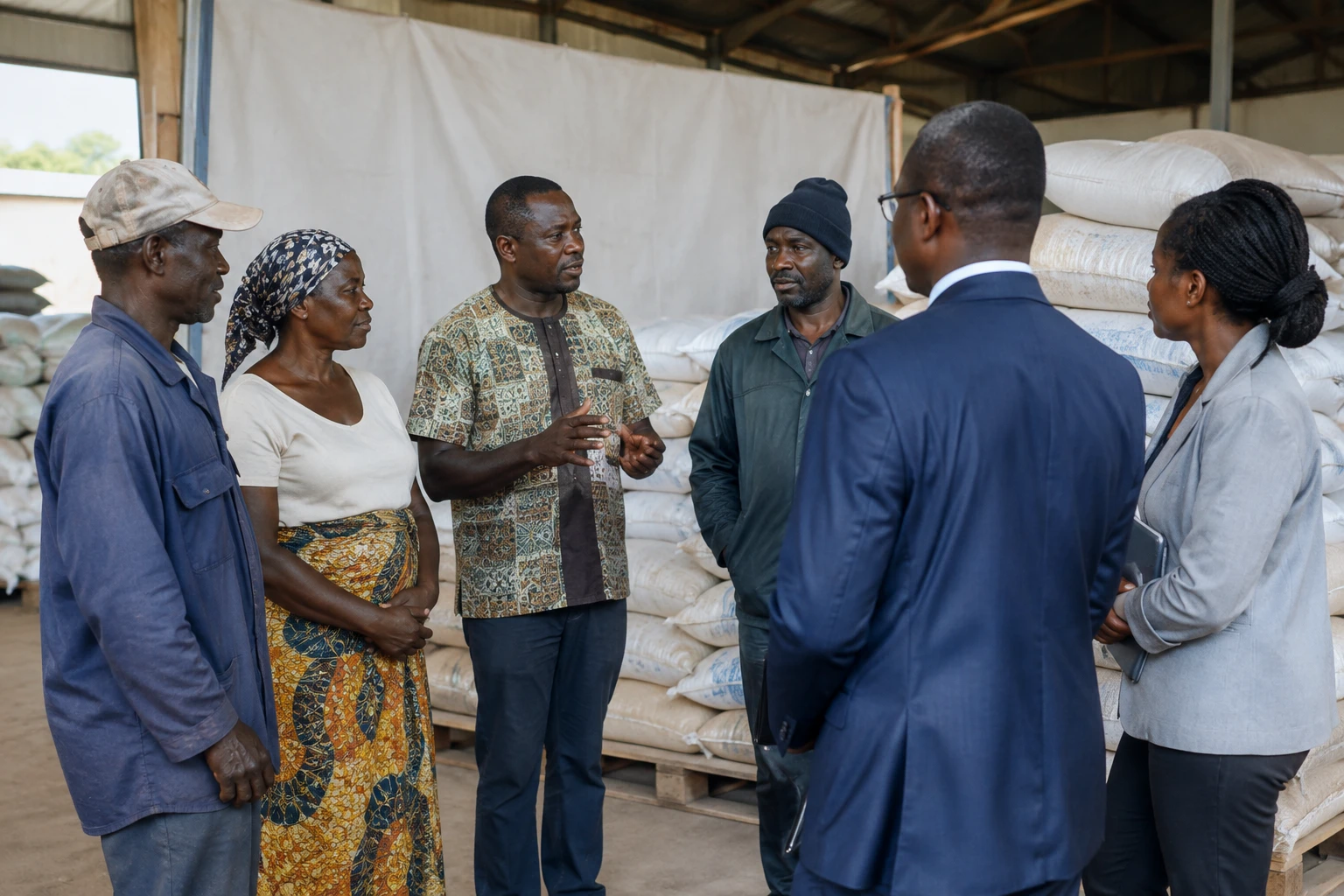
A plentiful harvest can fill granaries without filling producers’ pockets. In Togo, cereal production prospects for the 2026-27 season are favourable. But falling maize prices and difficulties accessing markets are a reminder that producing more does not, in itself, guarantee higher incomes.
Season expected to exceed recent averages
The Famine Early Warning Systems Network (FEWS NET) estimates Togo’s cereal production at 1,955,893 tonnes in 2026-27. This is a forecast: it represents an increase of 4.3% on the previous season and 25.2% on the five-year average.
Growing conditions are considered broadly favourable. Harvests already available in the southern bimodal zone, where two agricultural seasons follow one another, and those expected from October in the north should improve households’ access to their own production. The FAO also reported near-average vegetation conditions in most production areas ahead of the harvest.
This is an encouraging picture, but it does not mean every region or family will benefit in the same way. Rural producer households can consume part of their harvest. In Lomé and in deficit areas, consumers depend more heavily on markets and prices. The outcome therefore depends as much on the availability of cereals as on their distribution and families’ ability to buy them.
Low maize prices benefit buyers but squeeze sellers
In September 2026, the average price of maize, the main staple cereal, stood at 155 CFA francs per kilogram, according to FEWS NET. This was 54% below its level in September 2025 and 44% below its five-year average. Ample stocks and the gradual arrival of the harvest are contributing to the decline.
For households that buy their food, particularly in towns, cheaper maize improves purchasing power. For farms that need to sell, the same price reduces the income earned from harvests. Stockholders are also affected. FEWS NET warns that weaker agricultural incomes can reduce demand for labour and, consequently, paid work opportunities for other rural households.
This tension matters in an economy where trade between regions connects production areas with consumer centres. Cereals must be collected, transported, stored and sold at the right time. A fall in prices does not benefit producers, traders and consumers equally. It can ease food budgets while making it harder to finance seeds, fertiliser and the next season.
In the Kpendjals, insecurity restricts access to harvests
National prospects mask persistent difficulties in the prefectures of Kpendjal and Kpendjal-Ouest, in the Savanes region. FEWS NET reports that insecurity and population displacement are restricting mobility, access to farmland and commercial exchanges. Internally displaced households and refugees, who have less of their own production and depend more heavily on markets, remain particularly exposed.
An earlier FEWS NET analysis of the country’s north had already noted the combined effects of trade disruptions and restricted access to livelihoods. Harvests may improve availability across the country without resolving these local obstacles. Where roads, markets or fields are difficult to access, volumes produced elsewhere do not automatically translate into affordable food or regular incomes.
This regional disparity warrants attention: producers who can access their land and sell their harvest do not face the same conditions as displaced households or farmers whose trading routes have been disrupted. Food security therefore also depends on practical access to resources and markets, not just the announced national total.
Public purchases can support sales, but cannot absorb everything
In October, the National Food Security Agency (ANSAT) launched a purchasing campaign targeting producers. Togo’s official portal says that 12,841 tonnes of cereals were recorded for the operation, with a budget of more than 2.6bn CFA francs. Initial collections included 1,022 tonnes of maize in the localities of Bagré, Ogaro and Mandouri, in the Kpendjals.
ANSAT’s purchases provide an outlet for part of the production and replenish national reserves. The agency can then release stocks onto the market when supply tightens. These two functions — supporting sales and strengthening reserves — directly link producers’ incomes to consumer protection.
The announced collection will not, however, resolve the question of how to sell the entire harvest. Its impact will depend on the volumes actually purchased, producers’ access to the scheme and storage capacity. Timing matters for small farms, too: some need cash quickly, while others can wait, if they have the facilities and resources to do so.
Togo’s challenge is part of West African markets
Togo trades food products with its neighbours and is part of the ECOWAS area, the Economic Community of West African States. Regional flows can help match supply with needs, but disruptions to trade and transport affect prices and supply. The issues therefore go beyond the quantity harvested: they concern the movement of cereals, the stability of rural incomes and access to food in both cities and border areas.
The next step will be to see whether production forecasts are borne out and whether sales take place on sufficiently remunerative terms. Harvest figures indicate expected supply. To assess the impact, it will also be necessary to track the prices producers actually receive, ANSAT purchases and the situation of households in the Savanes through to January 2027.