
 Algeria
 Egypt
 Libya
 Morocco
 Sudan
 Tunisia
 Benin
 Cabo Verde
 Côte d'Ivoire
 Ghana
 Guinea
 Guinea-Bissau
 Liberia
 Mali
 Mauritania
 Niger
 Nigeria
 Senegal
 Sierra Leone
 The Gambia
 Togo
 Cameroon
 Central African Republic
 Chad
 DR Congo
 Equatorial Guinea
 Gabon
 Republic of the Congo
 São Tomé and Príncipe
 Burundi
 Comoros
 Djibouti
 Eritrea
 Ethiopia
 Kenya
 Madagascar
 Malawi
 Mauritius
 Mozambique
 Rwanda
 Seychelles
 Somalia
 South Sudan
 Tanzania
 Uganda
 Angola
 Botswana
 Eswatini
 Lesotho
 Namibia
 South Africa
 Zambia
 Zimbabwe
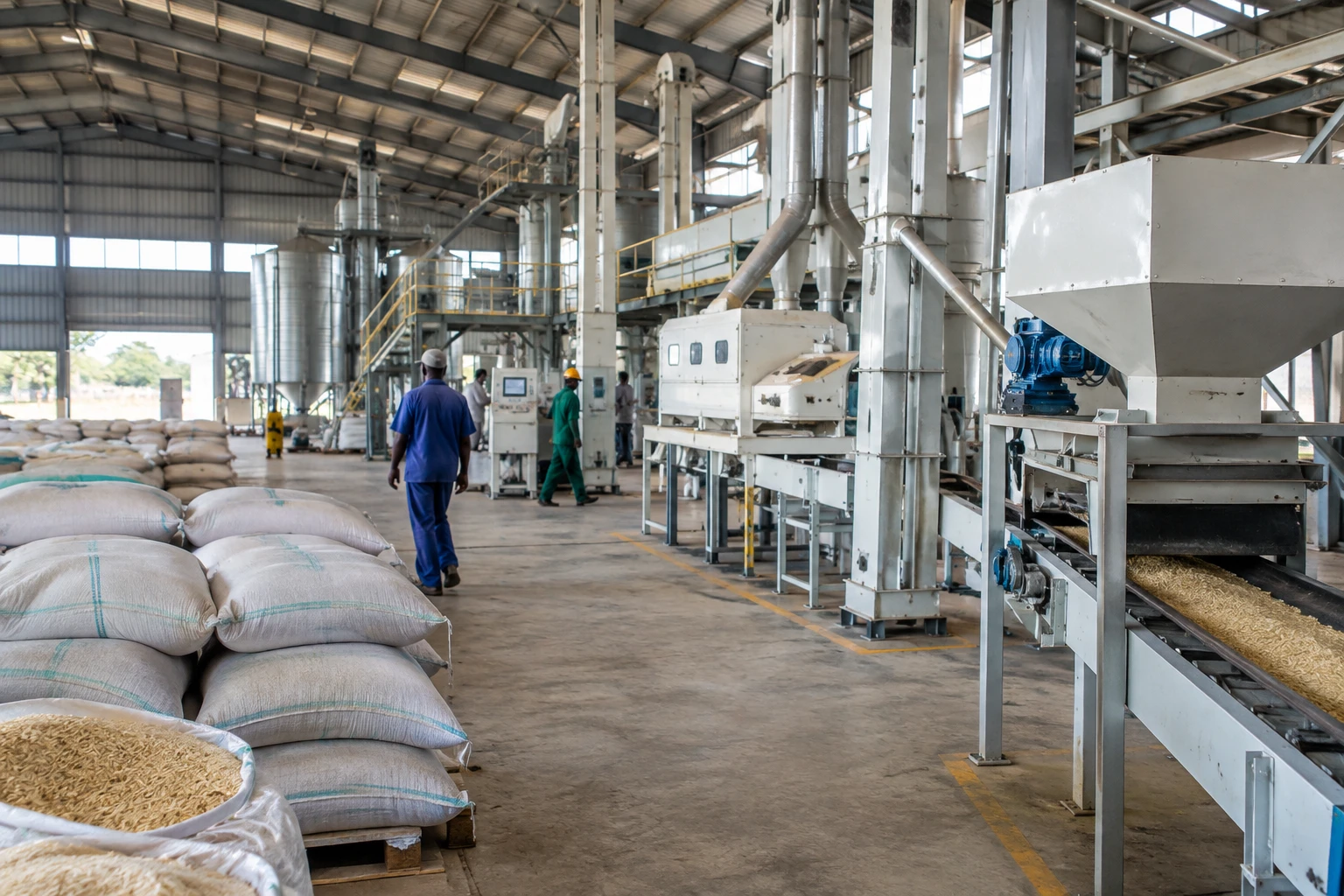
Producing more rice is not enough if part of the harvest cannot be processed and sold at the right time. At Bagré, in the Nakambé region, a new state-run rice mill aims to address this still-critical link in Burkina Faso’s rice sector.
Processing the harvest close to the growing areas
Inaugurated on Tuesday 20 October 2026 by Prime Minister Rimtalba Jean Emmanuel Ouédraogo, the facility is run by state-owned company Faso Agropôles (SOFA). It can process up to 100 tonnes of paddy rice a day. Paddy is grain that has been harvested but is still enclosed in its husk, before milling.
Funded from the state’s own resources, the mill brings together equipment for cleaning, husking, polishing, optical sorting and automated packaging. The aim is to turn local harvests into rice ready for sale. The Burkina Information Agency and Agribusiness TV also report the inauguration and the stated capacity.
The choice of Bagré is part of an agricultural development policy centred on water and mechanisation. Processing facilities can bring treatment closer to production areas. But their usefulness will also depend on regular supplies, machine maintenance and producers’ access to sales channels.
Harvests are growing, but figures must be distinguished
Paddy rice production in Burkina Faso has risen sharply over recent growing seasons. Final data from the National Institute of Statistics and Demography (INSD) put the 2024-2025 harvest at 675,441 tonnes, up from 444,785 tonnes in 2023-2024. The statistical series shows an annual increase of 51.9%.
A report on the Agro-pastoral and Fisheries Offensive, presented by the government, puts production in 2025 at 1,008,737 tonnes. This figure is cited by the pan-African news agency APA, which specifies that it is the offensive’s reported result. However, it is not part of the same series as the INSD’s final data for the 2024-2025 growing season. The two figures should therefore not be presented as directly comparable.
This distinction matters if progress is to be measured without clouding public debate. The INSD publishes the results of its 2024-2025 agricultural survey with a stated margin of error of ±10% for estimates by crop and province. Official statistics remain essential for tracking yields, comparing growing seasons and adjusting investment.
The second phase of the National Rice Development Strategy aims to produce three million tonnes of paddy by 2030. The target is ambitious. Getting closer to it will require, among other things, maintaining infrastructure, securing access to inputs and supporting producers, beyond simply bringing industrial equipment into service.
The challenge also lies in the markets
A paddy harvest does not automatically become rice that consumers can afford. It must be dried, stored, processed, packaged and transported. At every stage, costs and losses can reduce producers’ incomes or push up the final price.
Bagré’s facility will therefore need regular supplies and sufficient throughput to keep costs under control. Producers and collectors will need reliable outlets. Traders, for their part, weigh up price, availability, quality and buying habits. Optical sorting and packaging can help ensure a consistent product, but they alone cannot guarantee its competitiveness.
National consumption still exceeds the volumes of milled rice produced locally, according to estimates cited in data from the US Department of Agriculture. The difference between paddy and milled rice is significant: husking and polishing reduce the weight available for sale. The estimates put milled rice production at 438,000 tonnes in 2024-2025, against estimated consumption of 1.29 million tonnes.
The government suspended rice imports and the issuing of new special authorisations on 29 April 2026, in order to help local stocks find buyers. The decision was reported by several Burkinabè media outlets, including LeFaso.net and Wakat Séra. Restricting imports can create room for domestic processors, but it cannot replace a regular supply or affordable prices. Its effects vary among stakeholders: producers are looking for buyers, while households and retailers remain focused on the cost and availability of rice.
A challenge for the sector and West African integration
Imported rice arrives in Burkina Faso via ports in Côte d’Ivoire, Ghana and Togo. Regional trade therefore connects landlocked markets to the ports of the Gulf of Guinea. National protection or restriction measures can affect these flows and trade between neighbouring countries, where rice production and processing are growing at different rates.
The institutional context has changed since Burkina Faso, Mali and Niger withdrew from ECOWAS, a move that took effect on 29 January 2025. The Economic Community of West African States nevertheless called for trade in goods and certain free-movement arrangements to continue during the transition period. This framework, recalled in the ECOWAS communiqué, highlights how national food policy decisions are part of regional supply chains that do not automatically stop when political arrangements change.
Bagré’s rice mill will therefore be judged on tangible results: the volumes actually processed, the regularity of paddy purchases, the quality of the rice sold and its ability to reach markets beyond the site. Its opening marks an industrial milestone. What happens next will depend on co-ordination between producers, managers, traders and public authorities, as well as the ability to balance support for the local sector with consumer supply.



