Algeria
 Egypt
 Libya
 Morocco
 Sudan
 Tunisia
 Benin
 Burkina Faso
 Cabo Verde
 Côte d'Ivoire
 Ghana
 Guinea
 Guinea-Bissau
 Liberia
 Mali
 Mauritania
 Niger
 Senegal
 Sierra Leone
 The Gambia
 Togo
 Cameroon
 Central African Republic
 Chad
 DR Congo
 Equatorial Guinea
 Gabon
 Republic of the Congo
 São Tomé and Príncipe
 Burundi
 Comoros
 Djibouti
 Eritrea
 Ethiopia
 Kenya
 Madagascar
 Malawi
 Mauritius
 Mozambique
 Rwanda
 Seychelles
 Somalia
 South Sudan
 Tanzania
 Uganda
 Angola
 Botswana
 Eswatini
 Lesotho
 Namibia
 South Africa
 Zambia
 Zimbabwe
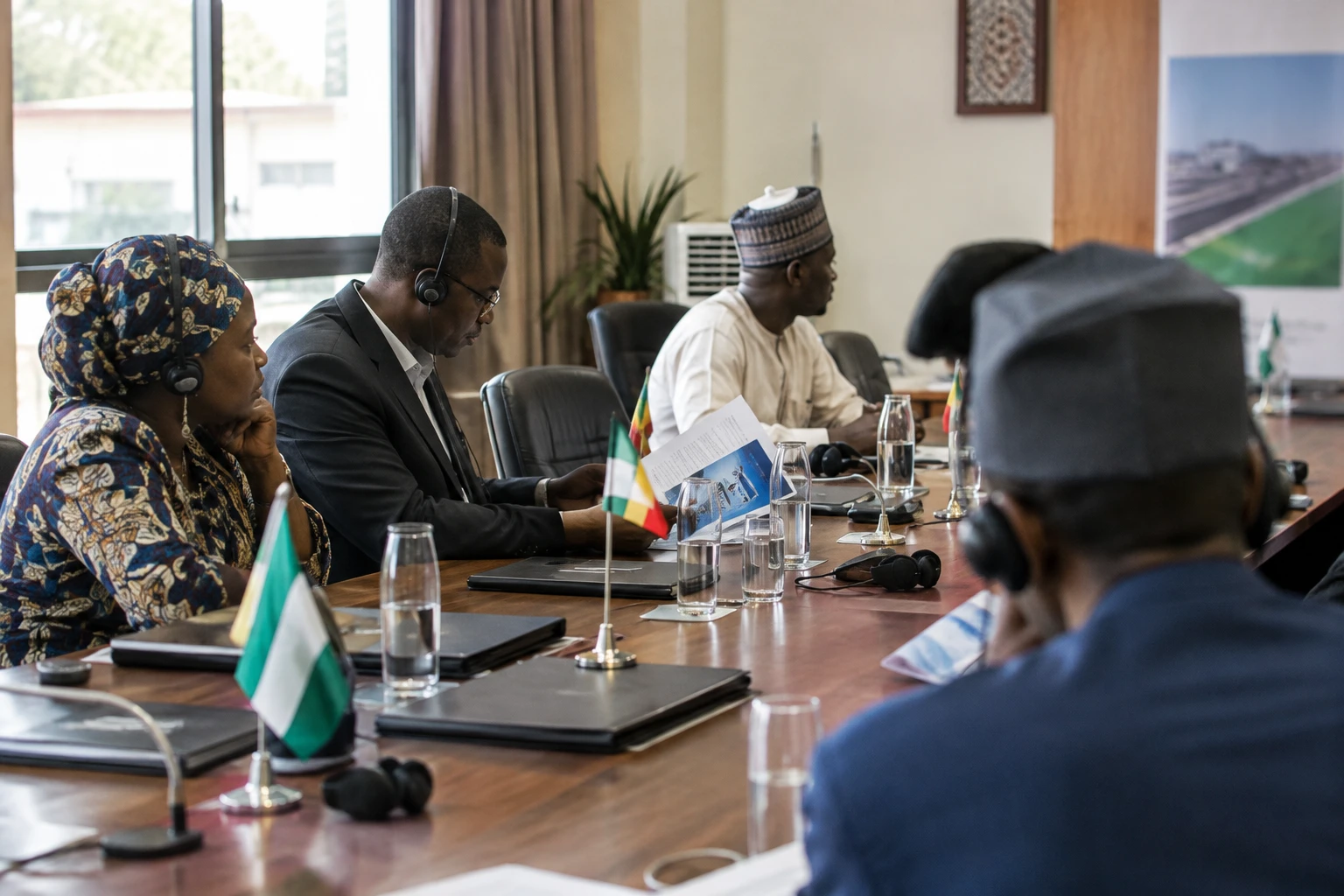
For a driver in Kano, switching to compressed natural gas (CNG) depends on more than the price of fuel. They also need to find a station, then a workshop capable of adapting their vehicle. The opening of new facilities in this state in northern Nigeria brings these two steps closer together, without yet ensuring that the switch is affordable for everyone.
In Kano, refuelling and conversion are coming closer together
On 18 October 2026, private company NU Synergy opened two CNG stations and a conversion centre in Kano. The facilities are on Zaria Road and in Mariri, along Wudil Road. Nigeria’s Presidential Initiative on CNG and Electric Vehicles says the openings bring the state’s total to twelve stations, up from none or almost none a year earlier. Nigerian media have also reported this increase.
The conversion centre equips vehicles to run on gas. Bringing the workshop and refuelling points together in one network can make the process easier for motorists. The head of the federal initiative, Ismaeel Ahmed, praised the private investment and said the company had approached him a few months earlier to explore the sector. The timing and total of twelve stations are reported by programme authorities and Nigerian media.
CNG is natural gas compressed for storage in a vehicle’s tank. In Nigeria, its appeal has grown since the removal of the petrol subsidy in 2023, which contributed to higher travel costs. But the promise of cheaper fuel is not enough: drivers must be able to afford conversion and find gas along their routes.
National rollout remains uneven
Federal policy aims to build a complete industry, from workshops to stations. Launched under President Bola Tinubu in 2023, the Pi-CNG initiative has since expanded its remit to include electric vehicles. Its website reports more than 120,000 conversions and over 90 refuelling stations. It says stations cover 23 states, while conversion centres are present in more areas. These figures come from the programme itself and should be treated as institutional data, not an independent audit.
In August 2026, the president announced plans to roll out a further 500 stations nationwide as part of an effort to reduce transport costs. The announcement gives a sense of the ambition, but also of the work still to be done: facilities must be built, supplied and connected to the routes used by vehicles. In September, the Nigerian presidency also presented an affordable transport programme coordinated with state governors.
Cost remains a central issue. The federal initiative estimates savings of 40 to 60% per kilometre compared with petrol. This is the programme’s estimate; actual savings depend, among other things, on local gas prices, the vehicle, its use and the cost of conversion. For private motorists, the initial outlay may delay the return on investment. For commercial drivers, a nearby station with a reliable supply can have a direct impact on operating costs and, potentially, fares charged to passengers.
Gas resources do not solve everything
Nigeria has substantial gas reserves. The Nigerian Upstream Petroleum Regulatory Commission (NUPRC) put national reserves at 215.19 trillion cubic feet as of 1 January 2026. But geological abundance does not automatically translate into fuel being available in every city. Equipment must be financed, distribution and maintenance secured, and conversions made affordable.
The effects may also vary widely between areas. A station in Kano city does not necessarily solve the problem for a driver serving remote communities or travelling on routes with few refuelling options. In the informal economy, where many drivers depend on their daily earnings, taking a vehicle off the road for conversion or paying for equipment presents a real risk. The benefits will therefore depend as much on how infrastructure is distributed as on the total number announced.
A challenge for West African corridors
Kano plays an important role in trade in northern Nigeria and in links with neighbouring countries. Expanding the gas network could support local and commercial transport if stations effectively serve busy routes. At regional level, ECOWAS — the Economic Community of West African States — provides a framework for cooperation between Nigeria and its neighbours, but the newly announced stations remain a national programme. Their cross-border reach will depend on infrastructure and policies on both sides of the borders.
Kano’s experience thus highlights two realities to watch closely: a private investor can speed up the installation of facilities, but network expansion does not yet guarantee a widespread reduction in transport costs. The next steps will be implementing the 500 announced stations, locating them beyond major centres, and ensuring that federal and state governments can turn access to CNG into real savings for users.
Sources consulted: Nigerian report on the opening in Kano, Voice of Nigeria on the twelve stations, website of the Presidential Pi-CNG & EV initiative, announcement of 500 additional stations, Nigerian presidency on the affordable transport programme, gas reserve data attributed to the NUPRC.