Algeria
 Egypt
 Libya
 Morocco
 Sudan
 Tunisia
 Benin
 Burkina Faso
 Cabo Verde
 Côte d'Ivoire
 Ghana
 Guinea
 Guinea-Bissau
 Liberia
 Mali
 Mauritania
 Niger
 Nigeria
 Senegal
 Sierra Leone
 The Gambia
 Togo
 Cameroon
 Central African Republic
 Chad
 DR Congo
 Equatorial Guinea
 Gabon
 Republic of the Congo
 São Tomé and Príncipe
 Burundi
 Comoros
 Djibouti
 Eritrea
 Ethiopia
 Kenya
 Madagascar
 Malawi
 Mauritius
 Mozambique
 Rwanda
 Seychelles
 Somalia
 South Sudan
 Tanzania
 Uganda
 Angola
 Botswana
 Eswatini
 Lesotho
 Namibia
 Zambia
 Zimbabwe
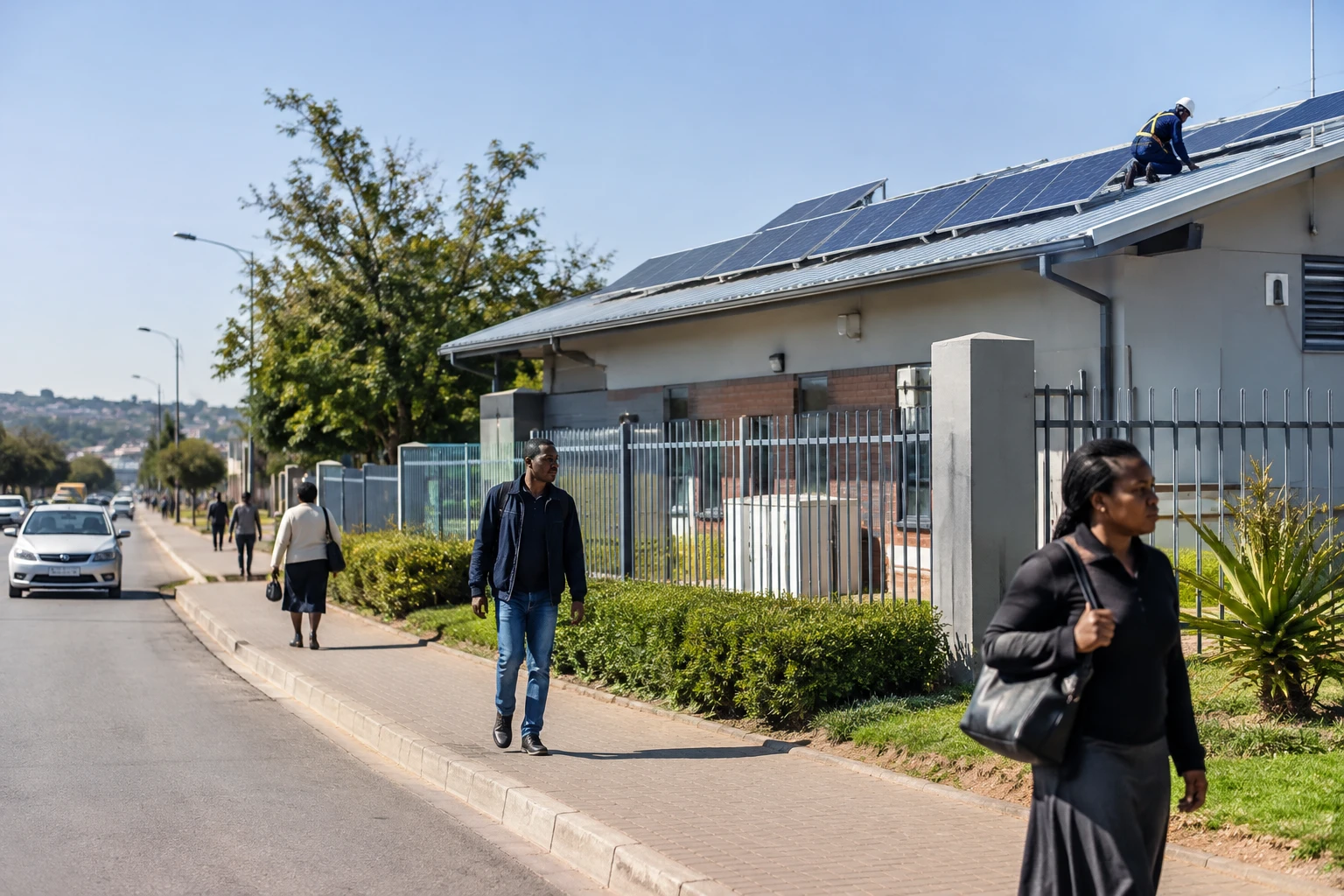
In Ekurhuleni, the next megawatts will no longer come solely from state utility Eskom. The project puts a major municipality at the heart of a shift already under way among South African businesses: buying electricity from multiple producers to improve the security of supply.
Ministerial approval to diversify supply
On 19 October 2026, South Africa’s Minister of Electricity and Energy, Kgosientsho Ramokgopa, announced in Pretoria that the Ekurhuleni metropolitan municipality had been authorised to procure up to 2,400 megawatts from independent producers. The decision, made under Section 34 of the Electricity Regulation Act, paves the way for new projects, but does not mean that all this capacity has already been built or connected to the grid.
The programme envisages 1,237 MW of solar power, 780 MW from natural gas, 183 MW from waste-to-energy and 200 MW set aside for innovative technologies. Some solar and gas generation will be integrated into the local grid or transmitted through the national grid. The city will therefore remain connected to Eskom, even as it aims to reduce its reliance on bulk purchases from the utility.
Municipal authorities estimate that the portfolio could attract 6.2 billion rand in infrastructure investment and generate 36 billion rand in savings over 20 years. These are projections, not savings already achieved. South African media report that the first phases could begin in 2027, with full capacity targeted by 2030. Delivery will depend in particular on contracts, financing and grid connections.
Municipalities enter the energy market
Ekurhuleni, a major industrial hub in Gauteng province, is joining a nascent municipal trend. The city of eThekwini, which includes Durban, has been authorised to seek 400 MW. In Cape Town, two power-purchase agreements totalling 70 MW of solar power were announced on 31 August 2026. These initiatives differ in timing and scale, but signal a shift: cities no longer want merely to distribute Eskom’s electricity; they are also seeking to diversify their sources of supply.
Businesses led the way. Mining and industrial groups have signed agreements with private producers, particularly for renewable energy projects. But the municipal scale changes the scope of the debate. Cities buy electricity in bulk, manage distribution networks and bill households and businesses. Their ability to diversify suppliers can therefore affect both continuity of service and the cost of local electricity.
Ekurhuleni municipality had previously announced an escrow account mechanism to secure payments to producers and facilitate financing. This type of guarantee addresses a practical question for investors: how can they be sure that electricity sales will be paid for over the life of a contract? It does not, however, resolve construction delays, tariff risks or technical constraints on the grid.
Announced savings, benefits to be verified
For residents, the question is whether diversification will lead to more predictable or lower bills. Ekurhuleni’s mayor has cited potential savings of up to 31% for some consumers. This estimate depends on the facilities coming online, contract costs and how savings are passed on through tariffs. Households will therefore not automatically benefit from the projected savings.
The effects could also vary by sector. Factories, shops and large consumers need a reliable power supply to plan their operations. Diversified generation can reduce their exposure to a single source. But residential neighbourhoods, small businesses and workers in the informal economy will still depend on the quality of the local grid and municipal tariff policy. Additional electricity supply alone does not guarantee a more affordable or reliable service in every area.
The energy mix also raises long-term choices. Solar power can reduce reliance on fossil-fuel plants, but its output varies with sunshine and requires flexibility or storage solutions. Gas can provide dispatchable power, but maintains dependence on fossil fuels. Waste-to-energy can combine power generation with urban waste management, provided projects are technically viable and their environmental impacts are monitored.
A test for South Africa’s energy transition
The reform will test municipalities’ ability to organise complex procurement, oversee contracts and integrate new producers without undermining their finances. Ekurhuleni municipality says it wants to mobilise private investment rather than finance all the facilities itself. The allocation of risks, grid-connection rules and tariff transparency will be crucial to ensuring that this arrangement also serves consumers’ interests.
The precedent matters beyond Gauteng. In Southern Africa, electricity grids and regional exchanges link several countries within the Southern African Development Community (SADC). Diversifying South Africa’s supply could strengthen the resilience of the national system, but announcing municipal capacity is not the same as making power available to neighbouring countries. The plants must first be built and connected, and local demand must be met.
The next stage will be measured less by the megawatts announced than by projects actually financed, construction under way and electricity delivered. For residents, the test will be more immediate: the reliability of service and changes in bills. For South Africa, the initiative will show whether municipalities can become energy buyers that complement, rather than simply bypass, the national system.
The decision announced on 19 October was reported by SAnews and corroborated by The Citizen. The municipality outlined its financing mechanism in a statement on its independent producer programme. Cape Town’s solar contracts are detailed by the City of Cape Town, while eThekwini’s procurement framework appears in its medium-term budget document.