Algeria
 Egypt
 Libya
 Morocco
 Tunisia
 Benin
 Burkina Faso
 Cabo Verde
 Côte d'Ivoire
 Ghana
 Guinea
 Guinea-Bissau
 Liberia
 Mali
 Mauritania
 Niger
 Nigeria
 Senegal
 Sierra Leone
 The Gambia
 Togo
 Cameroon
 Central African Republic
 Chad
 DR Congo
 Equatorial Guinea
 Gabon
 Republic of the Congo
 São Tomé and Príncipe
 Burundi
 Comoros
 Djibouti
 Eritrea
 Ethiopia
 Kenya
 Madagascar
 Malawi
 Mauritius
 Mozambique
 Rwanda
 Seychelles
 Somalia
 South Sudan
 Tanzania
 Uganda
 Angola
 Botswana
 Eswatini
 Lesotho
 Namibia
 South Africa
 Zambia
 Zimbabwe
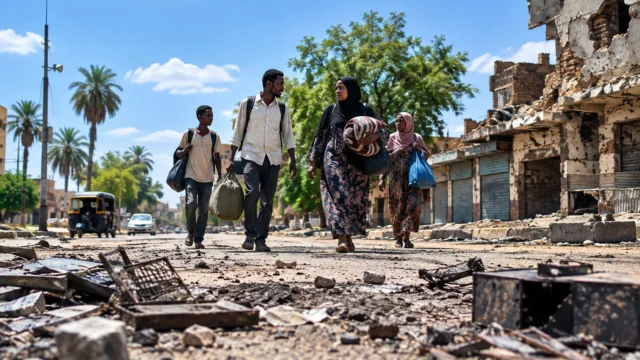
A bus station, a residential neighbourhood and the area around an airport: in less than a day, drone strikes hit civilians in two regions of Sudan. Casualty figures remain attributed to witnesses and medical sources, but the attacks highlight a major shift in the war: front lines no longer shield ordinary places of daily life.
From Kordofan to Khartoum, civilians caught in the crossfire
On the evening of Sunday 18 October, a strike hit a transit point near a market in Al-Dibab, in West Kordofan state. Travellers were waiting for transport to return to their villages after the market. A medical source cited by several media outlets reported about 80 deaths. This toll had not been confirmed by an accessible independent count at the time of publication.
A witness, Ahmed Abakar Wadi, said he had helped bury 50 people, including his brother. According to his account, the attack took place in two stages, ten minutes apart. A medical source said 47 injured people had been transferred to a nearby town and that 30 of them had died there. These figures relate to different stages of care and, on their own, do not establish a definitive toll.
On Monday 19 October, another strike hit a house in the Nasser Extension neighbourhood, east of Khartoum International Airport. A medical source reported four deaths: three children aged between two and six, and a man. A source within the army blamed the drones on the Rapid Support Forces (RSF), the paramilitary group at war with the army. This attribution has not been independently established.
The army also said its air defences had intercepted drones targeting the airport and its surroundings. This military announcement does not, by itself, confirm the origin of the strike on the house. In a third attack reported near Al-Mujlad, a town neighbouring Al-Dibab, four people were said to have been injured, according to a medical source.
Kordofan, a strategic front and vital routes
The war broke out in April 2023 between the Sudanese Armed Forces and the RSF, following a rivalry between the two military establishments and their leaders. Since then, fighting and shifts in control have moved the centre of the conflict. Kordofan, a vast region linking the centre of the country to Darfur, has become a strategic area for movement, supplies and military operations.
Al-Dibab is in West Kordofan, where the RSF exerts strong territorial influence. The reported strike is not, however, enough to establish who controlled the precise location at the time, or to identify who carried out the attack. The Tasis coalition, politically aligned with the RSF, blamed the army. A military source, for its part, blamed the RSF for the drones launched near Khartoum. These opposing accusations must be distinguished from verifiable facts: strikes were reported, but responsibility remains disputed.
Repeated attacks in populated areas are not isolated incidents. In June, the Intergovernmental Authority on Development (IGAD), a regional organisation for East Africa and the Horn of Africa, expressed concern about rising military activity and drone attacks around El-Obeid, in North Kordofan. In April, a joint mission by the African Union and the United Nations also documented the use of air strikes and drones in populated areas.
A war disrupting travel and emergency aid
In Al-Dibab, the reported target was a transit point used by people returning home after a day at the market. The strike therefore threatens far more than the passengers present at the time of impact: it can make journeys more dangerous, disrupt local trade and complicate access to healthcare. In areas where public services are struggling to function, a road or meeting point can also be one of the few links between residents and neighbouring markets.
In Khartoum, the deaths of three children in a house are a reminder that residential neighbourhoods remain exposed, even when fighting is concentrated elsewhere. The military authorities announced the interception of drones near the airport, a strategic piece of infrastructure in the capital. But the proximity of a military or transport site does not turn nearby residents into combatants. The protection of civilians and the distinction between military and civilian objectives remain obligations under international humanitarian law.
Overall figures for the war vary according to the methods and periods used. The World Health Organization cited at least 40,000 deaths and around 12 million displaced people in February 2026, while warning that the real toll could be far higher. In June, the Office of the United Nations High Commissioner for Human Rights said it had recorded more than 1,000 civilians killed by drone strikes between January and May. These estimates do not allow independent verification of the tolls from the attacks of 18 and 19 October.
Regional response remains a practical challenge
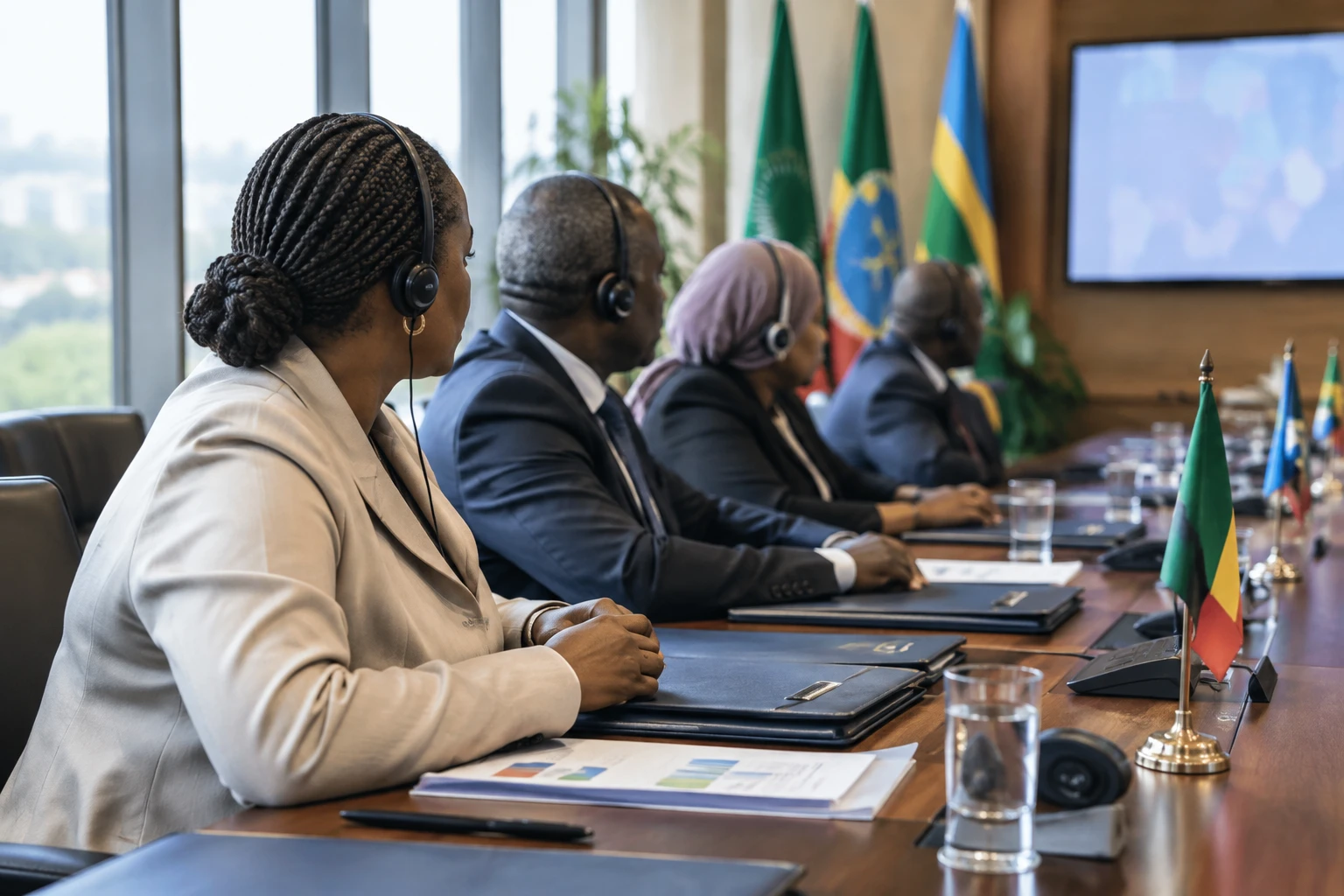
The crisis extends beyond Sudan’s borders. Displacement affects neighbouring countries, while insecurity on roads hampers aid deliveries and trade in a region already weakened by conflict. Sudan resumed full participation in IGAD in February 2026, according to the organisation, which reaffirmed in September the need for a ceasefire and a Sudanese-led political process.
For the African Union and IGAD, the challenge now is to turn these calls into real humanitarian access, protection for civilian infrastructure and a de-escalation mechanism accepted by the warring parties. The reported strikes do not support the conclusion that a new coordinated strategy is under way. They nevertheless show that transit points and residential neighbourhoods remain vulnerable as the conflict spreads and responsibility remains disputed. The next developments to watch are verification of the casualty figures, access for relief workers in Kordofan and the ability of regional mediation efforts to secure observable commitments from both sides.