Algeria
 Egypt
 Libya
 Morocco
 Sudan
 Tunisia
 Benin
 Burkina Faso
 Cabo Verde
 Côte d'Ivoire
 Ghana
 Guinea
 Guinea-Bissau
 Liberia
 Mali
 Mauritania
 Niger
 Nigeria
 Senegal
 Sierra Leone
 The Gambia
 Togo
 Cameroon
 Central African Republic
 Chad
 DR Congo
 Equatorial Guinea
 Gabon
 São Tomé and Príncipe
 Burundi
 Comoros
 Djibouti
 Eritrea
 Ethiopia
 Kenya
 Madagascar
 Malawi
 Mauritius
 Mozambique
 Rwanda
 Seychelles
 Somalia
 South Sudan
 Tanzania
 Uganda
 Angola
 Botswana
 Eswatini
 Lesotho
 Namibia
 South Africa
 Zambia
 Zimbabwe
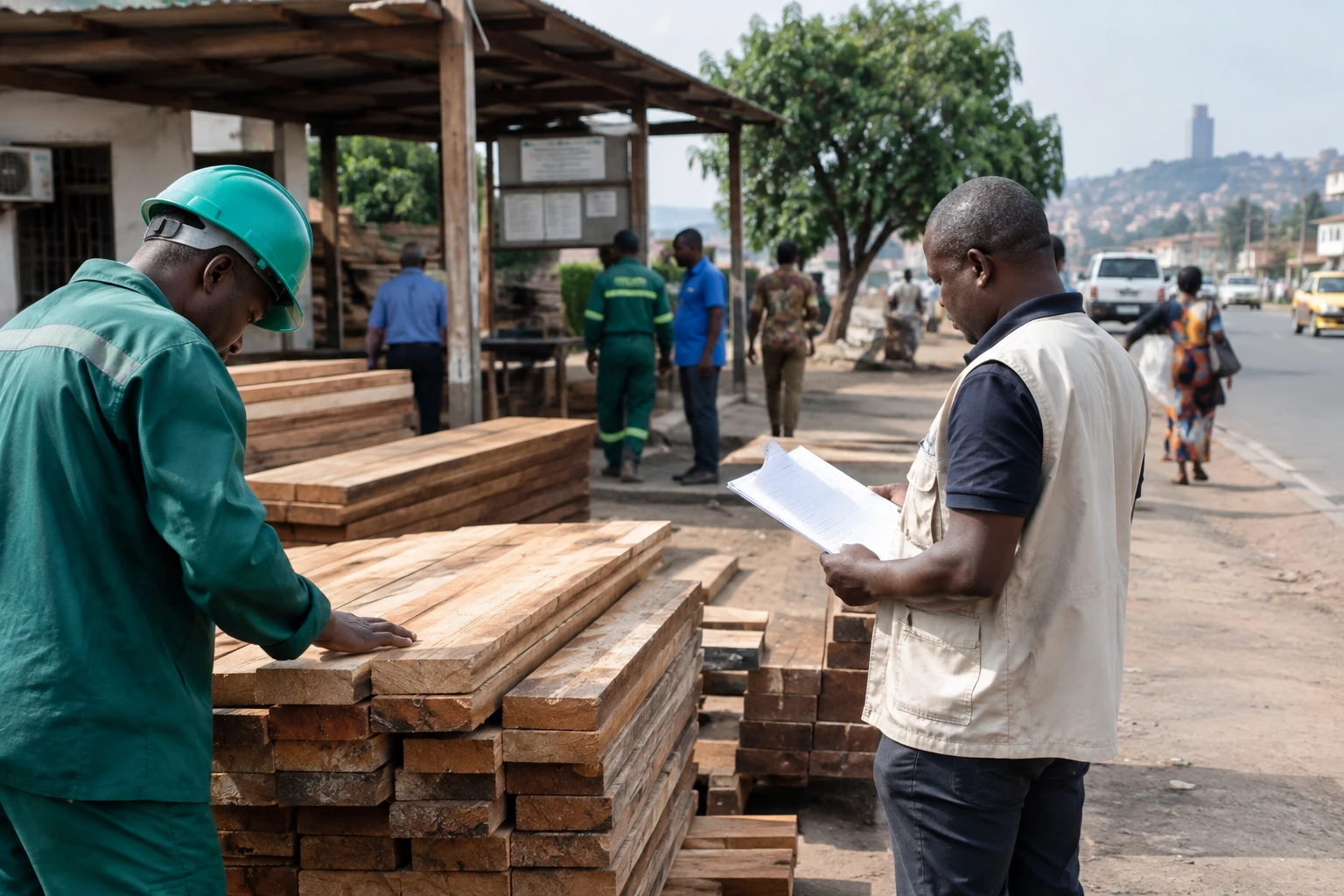
A ban written into law is not enough to transform a sector. In the Republic of the Congo, log exports continue to appear in the statistics, as the country seeks to develop local processing and better control the timber trade.
A reform that must still go before Parliament
On 14 October 2026, the Council of Ministers meeting in Brazzaville approved a bill creating the Agency for the Control of Forest Products for Export and Import (ACPFEI). The text provides for the replacement of the Service for the Control of Forest Products for Export (SCPFE), in place since 2000. It must now be examined by Parliament: approval by the Council of Ministers does not mean that the agency has already been established or is operational.
The official statement presents the reform as a response to the limitations of the current service and the requirements of the 2020 Forestry Code. It cites, in particular, the monitoring of trade, the ban on log exports, and commitments to legality and sustainable management. The proposed agency would also cover imports of forest products, unlike the SCPFE, whose mandate concerned exports.
The reform is also framed by the December 2024 law on public administrative bodies, cited by the government. But changing the name and status alone does not guarantee more effective checks. Resources, procedures and coordination with services already present at the borders will be decisive.
The figures show the gap between the rule and the flows
Article 97 of the Congolese Forestry Code has prohibited the export of unprocessed logs since 2023. A log is a felled trunk exported without having been sawn or processed. The measure is intended to encourage processing in the country, so that more value is retained there and jobs linked to processing are supported.
Yet 2025 data from the Congolese Shippers’ Council report that 764 411.87 cubic metres of timber were exported. Of this, 445 717.65 cubic metres were logs, or 58.31 % of the volume. These figures are also cited in the statistical report consulted, which says that total export volumes fell compared with 2024, while logs accounted for more than half of exports.
These volumes alone are not enough to explain why logs continue to appear in export data despite the ban. They do, however, highlight the importance of monitoring: checking the nature of declared products, their origin and the stages of their transport. The government has listed the ban among the objectives of the future agency. The authorities have not yet set out its monitoring methods or the resources that will be allocated to it.
On 30 September 2026, the Centre for Action for Development (CAD) referred the application of Article 97 to the High Authority for the Fight against Corruption (HALC). The HALC confirmed that it had received a delegation from the organisation and said its department responsible for economic and administrative investigations would work on the case with the CAD and its partners. This action signals concern raised by civil society; it is not, in itself, a finding of an investigation into offences.
Traceability, public revenue and local activity
Several groups have a stake in monitoring these flows. For the state, reliable traceability can help verify trade declarations and collect revenue due. For companies processing timber in Congo, effective enforcement of the ban can reduce competition from exports of unprocessed raw materials. For workers and forest communities, however, the impact will depend on investment, markets and the jobs actually created locally.
The challenges are not limited to export posts. Monitoring must link permits, forestry operations, transport, customs documents and the volumes eventually shipped. If information systems do not communicate, or if checks lack staff and equipment, a new agency risks reproducing the weaknesses it is meant to address. Regular publication of data on checks and results would also make it possible to measure its progress.
The legality of timber also affects the country’s trade relations. The Voluntary Partnership Agreement between Congo and the European Union, signed in 2010 and entering into force in 2013, aims to strengthen forest governance and distinguish products that comply with national law. The computerised legality verification system (SIVL) is intended to contribute to this traceability. Parties to the agreement called in September 2026 for the implementing regulations of the Forestry Code to be accelerated and for the system to receive sustainable funding.
A challenge for the Congo Basin
The reform is being pursued at national level, but its effects extend beyond Congo’s borders. The timber trade involves regional routes, operators and foreign markets. In the Congo Basin, where several countries share challenges around forest management and traceability, consistent monitoring can matter as much as the rules adopted in each capital.
For Congolese people, the practical question is whether more processing will take place in the country, and whether the expected revenue and jobs will follow. For trade partners, the system’s credibility will depend on verifiable evidence of the origin and legality of products. The immediate next step is parliamentary. After that, the composition of the ACPFEI, its budget, its coordination with customs and funding for the SIVL will show whether the reform actually changes practices.