Algeria
 Egypt
 Libya
 Morocco
 Sudan
 Tunisia
 Benin
 Burkina Faso
 Cabo Verde
 Côte d'Ivoire
 Ghana
 Guinea
 Guinea-Bissau
 Liberia
 Mali
 Mauritania
 Niger
 Nigeria
 Senegal
 Sierra Leone
 The Gambia
 Togo
 Cameroon
 Central African Republic
 Chad
 DR Congo
 Equatorial Guinea
 Gabon
 Republic of the Congo
 São Tomé and Príncipe
 Burundi
 Comoros
 Djibouti
 Eritrea
 Ethiopia
 Kenya
 Madagascar
 Malawi
 Mauritius
 Mozambique
 Rwanda
 Seychelles
 Somalia
 South Sudan
 Tanzania
 Uganda
 Botswana
 Eswatini
 Lesotho
 Namibia
 South Africa
 Zambia
 Zimbabwe
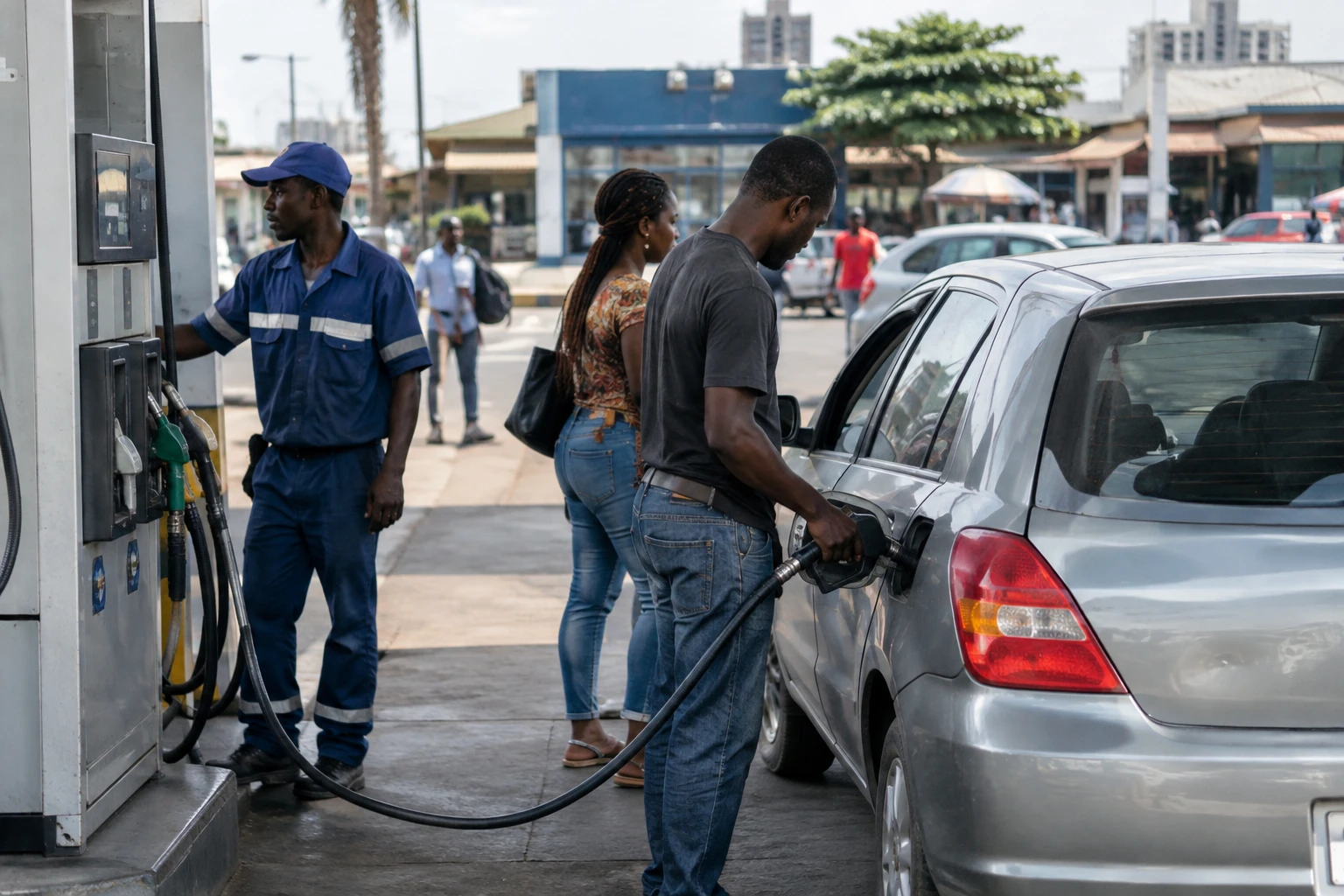
For Angola, the challenge in oil is no longer simply to find investors. It is also to turn potential discoveries into sustainable production, as existing fields decline and the country seeks to reduce its dependence on fuel imports.
A new strategy to open more blocks
The regional context matters. Angola is a member of the Southern African Development Community (SADC), which brings together countries in southern Africa around goals of economic integration. Its oil sector therefore has implications beyond its borders: decisions taken in Luanda can influence investment, supply and energy trade across the region.
The country has also chosen to leave the Organisation of the Petroleum Exporting Countries (OPEC), a decision announced in December 2023 and effective from January 2024. The government had cited the defence of its interests in response to the group’s production decisions. This precedent sheds light on the current priority: retaining room to manoeuvre in developing national resources. The Angolan government confirmed its withdrawal from OPEC.
On 14 October 2026, on the sidelines of African Energy Week in Cape Town, Alcides Andrade, an administrator at the National Agency for Petroleum, Gas and Biofuels (ANPG), presented the main outlines of a 25-year hydrocarbons development plan. Its adoption is expected before the end of the year. The ANPG is the authority responsible for regulating and administering oil and gas activities.
According to information reported after the presentation, Angola wants to move away from tender rounds spaced several years apart. It plans to make more than 100 blocks available, mainly onshore, after the plan is adopted. The target time for awarding a concession would fall from six months to three. These measures have been announced but not yet implemented: their impact will depend on their adoption and execution. Details of the proposal were reported from the Cape Town conference.
Terms tailored to project risk
The proposed reform is not solely about speeding up procedures. The ANPG wants to tailor contractual terms to the characteristics of each block. A mature or modest-sized field does not carry the same risks as an area that has barely been explored. Likewise, onshore exploration does not require the same resources as deepwater drilling.
This differentiation could make some projects more accessible to operators, including where potential reserves are limited or uncertain. It does not, however, guarantee a commercial discovery or higher production. Companies must still commit, fund the work, find exploitable resources and put the necessary infrastructure in place.
The government is targeting production of close to one million barrels a day, a level cited by officials in the context of the reform. More exploration drilling would be needed to halt the decline of mature fields. New blocks could broaden the opportunities, but their effects would be measured over several years, depending on geological results and investment decisions.
The strategy is part of a series of reforms and projects already under way. Groups such as TotalEnergies and Eni have announced investments worth several billion dollars in Angola’s sector. Their presence demonstrates operators’ interest in the country’s resources, but is not enough to establish that new licences will quickly generate additional volumes.
More refining, beyond extraction
Oil policy also covers downstream activities, namely refining and crude processing. The Cabinda refinery began operating in March 2026. Angola’s Ministry of Mineral Resources, Petroleum and Gas says it is currently processing 15 750 barrels a day. Its first phase is intended to help develop national refining capacity. The ministry has provided an update on refining projects.
In Lobito, in Benguela province, the project is larger and still under way. In September 2026, Sonangol, the national oil company, said work was about 26 % complete, after $1.6 billion had been invested. The refinery is expected to start operating in 2029. A petrochemical complex, intended to produce petroleum derivatives, is also under consideration. Angolan authorities have given an update on the Lobito project.
These facilities could reduce the share of refined fuels the country imports and support local industrial activity. However, not all households will automatically benefit in the same way. The gains will depend in particular on jobs created, transport infrastructure, product availability and prices. The refineries in Cabinda and Lobito also do not meet the same local and logistical needs as the facilities in Luanda.
Regional benefits to be assessed
For SADC, the question will be whether increased refining capacity can boost trade in petroleum products between neighbouring countries. Lobito’s position as an Atlantic port and the starting point of the transport corridor linking Angola to the interior of southern Africa gives the project a potential reach beyond the domestic market. But regional exports will depend on actual production volumes, costs and distribution infrastructure.
The next steps are therefore concrete: adoption of the 25-year plan, publication of the terms for access to the blocks, the actual awarding of concessions and progress on the refining projects. For Angolans, the outcome will not be measured by the number of licences or investment announcements alone. It will also be judged by the ability to sustain oil activity, process more resources locally and distribute the benefits beyond operators and economic centres.