Algeria
 Egypt
 Libya
 Morocco
 Sudan
 Tunisia
 Benin
 Burkina Faso
 Cabo Verde
 Côte d'Ivoire
 Ghana
 Guinea
 Guinea-Bissau
 Liberia
 Mali
 Mauritania
 Niger
 Nigeria
 Senegal
 Sierra Leone
 The Gambia
 Togo
 Central African Republic
 Chad
 DR Congo
 Equatorial Guinea
 Gabon
 Republic of the Congo
 São Tomé and Príncipe
 Burundi
 Comoros
 Djibouti
 Eritrea
 Ethiopia
 Kenya
 Madagascar
 Malawi
 Mauritius
 Mozambique
 Rwanda
 Seychelles
 Somalia
 South Sudan
 Tanzania
 Uganda
 Angola
 Botswana
 Eswatini
 Lesotho
 Namibia
 South Africa
 Zambia
 Zimbabwe
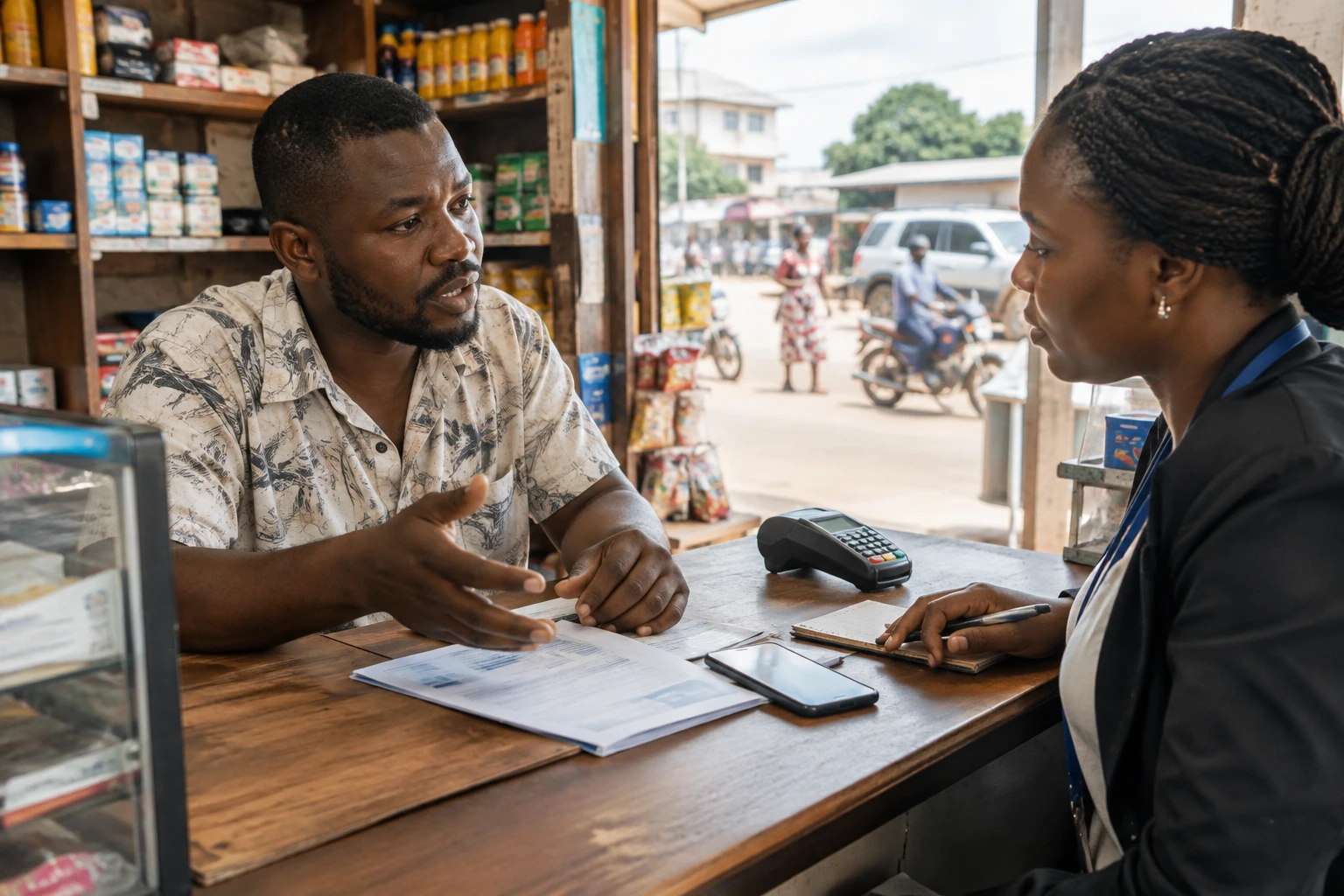
For a small business, securing a loan often depends as much on the quality of its accounts as on its activity. In Central Africa, banks and entrepreneurs are therefore seeking to reduce an obstacle less visible than a lack of capital: the absence of solid information to assess risk and prepare a financeable application.
This issue featured in discussions at the Bangui Financial Days and the CEMAC Bankers’ Days, held in Bangui from 1 to 3 October 2026. The Economic and Monetary Community of Central Africa comprises Cameroon, the Central African Republic, the Republic of the Congo, Gabon, Equatorial Guinea and Chad. Its financial systems share a central bank, BEAC, and a common banking supervision framework.
Capital is available, but difficult to direct
The view put forward at the meetings was that financing must be built collectively. Banks, financial markets, institutional investors, fintechs and public authorities cannot meet the needs of businesses and infrastructure on their own. These actors must be connected to better-prepared projects, with risk shared among several financiers.
This mobilisation also involves savings held by banks, insurance companies and pension funds. To direct them towards longer-term investment, businesses must present viable, well-structured projects. Capital markets and guarantees can then complement bank lending, rather than leaving a single institution to bear all the risk.
BEAC data give an indication of the scale of the issue. In the third quarter of 2025, loans granted to SMEs in CEMAC reached CFA francs 582.8 billion, or 18.46% of total loans issued. The amount was up on a year earlier. These figures show that SME lending exists, but do not in themselves reveal how many businesses can obtain financing suited to their size and needs.
Making businesses and applications easier to assess
Claude Owona, the International Finance Corporation’s (IFC) regional representative for financial institutions in Central and West Africa, puts the quality of information at the heart of the problem. Lenders need reliable data to assess a business’s income, debts and ability to repay. When this information is missing, they may rely more heavily on conventional collateral, which many small businesses are unable to provide.
The answer, then, is not simply to increase the sums available. It also involves better financial management and stronger governance within businesses, as well as tools that allow banks to assess risk in other ways. The IFC says it supports institutions in designing products for SMEs, digitising credit applications and using additional data. It also supports guarantees and risk-sharing mechanisms.
In the Central African Republic, nearly 470 micro, small and medium-sized enterprises are said to have received financial management support between September 2025 and July 2026, according to Owona. She says more than half were led or owned by women. These figures have not been confirmed by an independent publication consulted for this article and are therefore attributed to the IFC representative.
For women entrepreneurs, the issue also concerns the terms on which credit is available. Better-tailored products, assessment methods that do not rely solely on traditional collateral, and management support can help remove some barriers. But their impact will depend on how financial institutions translate them into practice.
Credit bureau infrastructure needs strengthening
BEAC has established a regulatory framework for credit information bureaux, or BICs. These organisations centralise information on loans and repayments to help lenders assess applications more effectively. In theory, a business or individual with a good track record can thus demonstrate their payment behaviour, even without substantial assets to offer as collateral.
Regional regulations require the relevant institutions to submit information. But the existence of the system does not, on its own, guarantee its effectiveness. Data coverage, accuracy, frequency of updating and use by lenders matter as much as the tool itself. Owona considers it too early to measure the bureau’s impact on lending in the region.
Data protection and processing also require particular attention. An incomplete or inaccurate record can penalise a borrower instead of helping them. Confidence in the system will therefore depend on rules being applied rigorously, as well as on financial institutions’ participation.
Digital services can extend access, but cannot replace credit
The IFC also wants to support digital financial services and mobile money, which enable payments and transfers to be made using a phone. Digitisation can reduce some distribution costs and reach customers far from bank branches. For businesses, digital payments can also help document activity, provided the data are available, relevant and used with their consent.
Owona says a regional initiative to encourage the uptake of mobile money and other digital services is being prepared with partners. Its launch remains subject to approval and decisions on how it will be implemented. It is therefore not yet a programme with established results.
Across CEMAC, the challenge will be to turn the priorities discussed in Bangui into concrete measures: better business applications, reliable credit data, risk-sharing tools and services available beyond major urban centres. Banks and regional authorities will also have to ensure that these advances benefit formal businesses as well as smaller enterprises that are less visible in financial channels.
The meetings in Bangui, held from 1 to 3 October, brought together financial-sector stakeholders to discuss these issues. The IFC says its next steps will focus on SME access to credit, digitisation, the use of data and guarantees. Progress will nevertheless have to be measured in observable results: loans actually granted, terms offered and businesses able to finance their growth.