Algeria
 Egypt
 Libya
 Morocco
 Sudan
 Tunisia
 Burkina Faso
 Cabo Verde
 Côte d'Ivoire
 Ghana
 Guinea
 Guinea-Bissau
 Liberia
 Mali
 Mauritania
 Niger
 Nigeria
 Senegal
 Sierra Leone
 The Gambia
 Togo
 Cameroon
 Central African Republic
 Chad
 DR Congo
 Equatorial Guinea
 Gabon
 Republic of the Congo
 São Tomé and Príncipe
 Burundi
 Comoros
 Djibouti
 Eritrea
 Ethiopia
 Kenya
 Madagascar
 Malawi
 Mauritius
 Mozambique
 Rwanda
 Seychelles
 Somalia
 South Sudan
 Tanzania
 Uganda
 Angola
 Botswana
 Eswatini
 Lesotho
 Namibia
 South Africa
 Zambia
 Zimbabwe
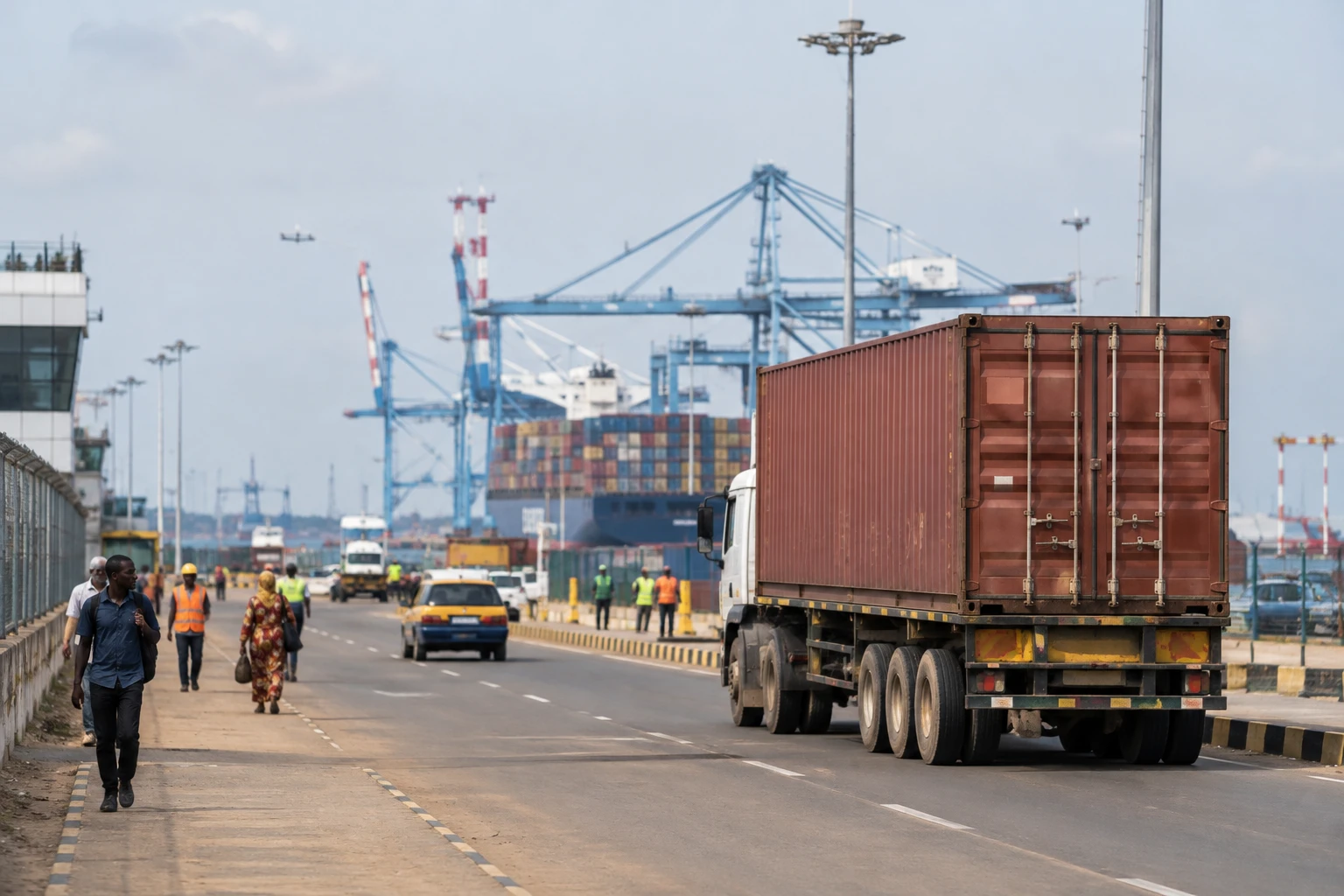
When a port regains traffic, the question is not only how much cargo passes through its quays. It is also important to understand where it comes from, where it is going and whether it will still call there tomorrow. In Benin, Cotonou’s rebound brings this issue back into focus: consolidating activity without relying on a single corridor or a small number of shipping lines.
A rebound after the Niger corridor shock
Cotonou port handled 14.7 million tonnes of goods in 2025, compared with 9.6 million in 2024, an increase of 52%. These figures, attributed to data from the Port of Cotonou and reported by two Beninese media outlets, point to a marked recovery after a year of decline.
The recovery does not, however, mean that transit difficulties have disappeared. The crisis between Benin and Niger, which erupted after the July 2023 coup, disrupted a key route for Niger’s access to the sea. The closure of the Nigerien border kept some traffic away from Cotonou for a long time. In February 2026, Niamey and Abuja nevertheless formalised a corridor allowing goods unloaded in Benin to transit to Niger via Nigeria.
The diplomatic context remains decisive. In June 2026, Beninese and Nigerien delegations discussed in Cotonou the conditions for reopening their border. The talks point to dialogue, but are not enough to establish that the direct corridor has resumed normal operations. For hauliers and traders, predictable checks and road safety matter as much as quay capacity.
Competition also plays out inland
Cotonou competes with neighbouring ports on more than just the size of their terminals. It is also competing with the entire routes linking ships to landlocked markets. Abidjan, Lomé and Tema have established logistics networks and commercial ties with hinterland countries — territories without direct access to the sea.
The Port of Abidjan announced traffic of 46.6 million tonnes in 2025 and around 1.7 million TEU handled. A TEU is a standard twenty-foot container. These results give a sense of the gap in volume with Cotonou, but do not by themselves sum up competitiveness: port delays, transport costs and corridor reliability also influence shippers’ choices.
ECOWAS, which brings together countries in West Africa, is working in particular to smooth cross-border trade. In 2025, it worked with Benin and Nigeria on the operation of the Sèmè-Kraké border post. The quality of these land crossings can strengthen or reduce a port’s advantage. Cargo unloaded quickly becomes less attractive if it is then held up by repeated formalities.
Modernising the quays is not enough
Benin is investing in expanding facilities and modernising equipment. A master plan presented by the authorities aims to increase the port’s capacity to 25 million tonnes. In February 2025, the Port of Cotonou and the African Development Bank signed a CFA franc 60 billion financing agreement for modernisation projects, including equipment and infrastructure intended to ease traffic flows.
The port is also highlighting the digitalisation of operations. This can reduce vessel turnaround times and facilitate the flow of information between stakeholders. But the benefits depend on the entire chain: customs procedures, cargo collection, truck parking and coordination with hauliers. The gains are therefore not the same for a large integrated operator as for a small trader who relies on intermediaries.
The 2025 increase was also driven by several types of traffic. According to data reported by the Beninese press, imports rose by 29.7% and exports by 74.8%. Transshipment, which involves transferring cargo from one ship to another, also increased. This diversification could make activity less dependent on transit to Niger alone, but it does not yet guarantee a lasting position.
Choosing a place in the regional network
The region’s ports perform different roles. Abidjan draws on the Ivorian market and its corridors to Burkina Faso and Mali. Lomé and Tema also attract transshipment operations and transit traffic. For Cotonou, the challenge is therefore less about copying a competitor than convincing shipping lines and shippers of the consistency of its services, costs and land links.
The port can seek new maritime partners, including among companies expanding their links with Africa. But a strategy based on a few major operators would expose Benin to a new dependency. Diversifying shipping lines, destinations and cargo matters as much as increasing terminal capacity.
At the regional level, Cotonou is a link in West African trade, but its future also depends on relations between states and the continuity of corridors. The next steps to watch are concrete: the implementation of port projects, the results of customs reforms at Sèmè-Kraké and developments in talks between Cotonou and Niamey. The 2025 rebound opens up an opportunity; the stability of routes will determine whether it can become a lasting trend.