
 Algeria
 Egypt
 Libya
 Morocco
 Sudan
 Tunisia
 Benin
 Burkina Faso
 Cabo Verde
 Côte d'Ivoire
 Ghana
 Guinea
 Guinea-Bissau
 Liberia
 Mali
 Mauritania
 Niger
 Nigeria
 Sierra Leone
 The Gambia
 Togo
 Cameroon
 Central African Republic
 Chad
 DR Congo
 Equatorial Guinea
 Gabon
 Republic of the Congo
 São Tomé and Príncipe
 Burundi
 Comoros
 Djibouti
 Eritrea
 Ethiopia
 Kenya
 Madagascar
 Malawi
 Mauritius
 Mozambique
 Rwanda
 Seychelles
 Somalia
 South Sudan
 Tanzania
 Uganda
 Angola
 Botswana
 Eswatini
 Lesotho
 Namibia
 South Africa
 Zambia
 Zimbabwe
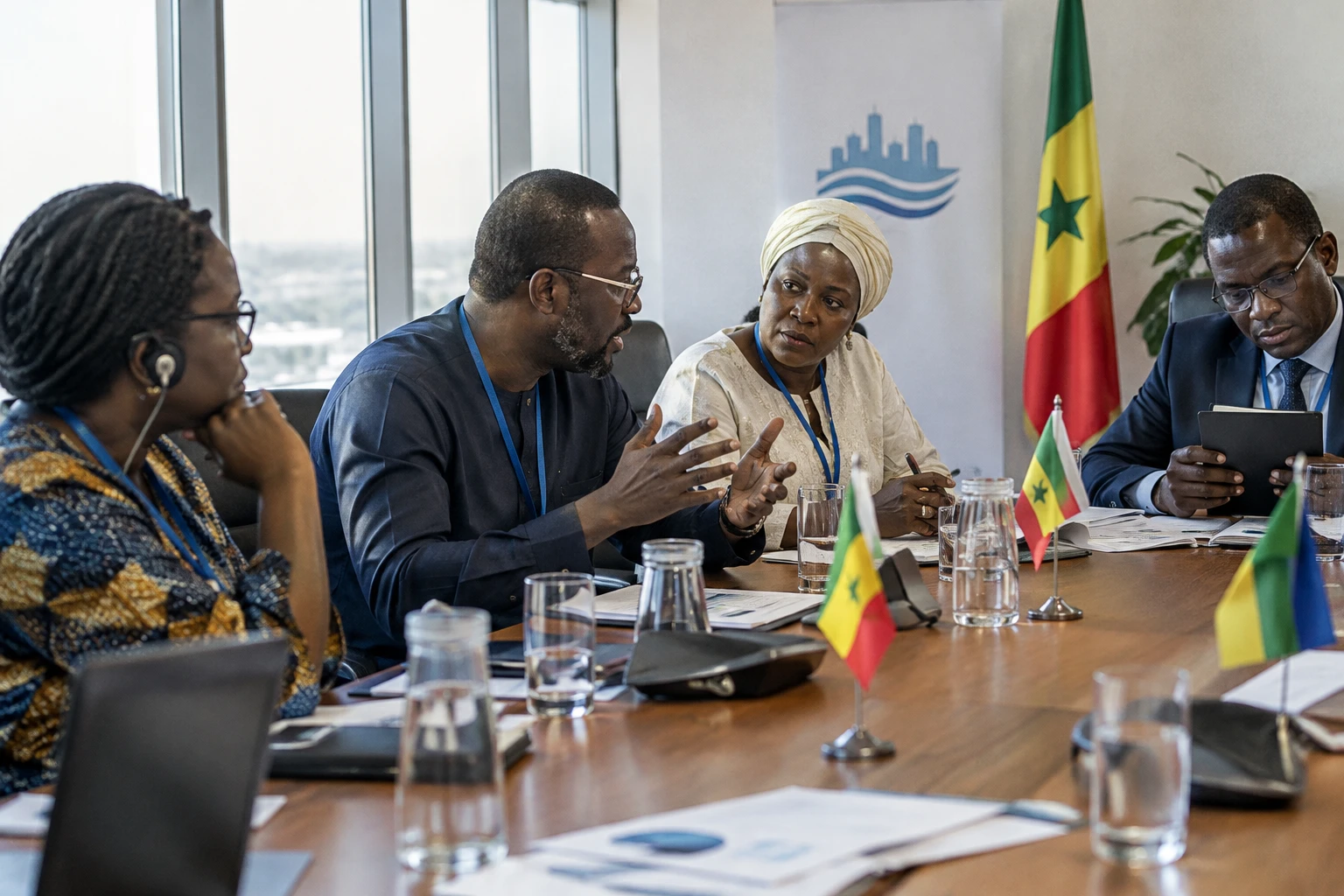
In Dakar, one night of rain can sweep away a wall, belongings and lives. In Parcelles Assainies, the downpour of 4 October 2026 brought a practical question back to the fore: how can residents be protected when water overflows faster than drainage networks can carry it away?
Late-season rain, flooded neighbourhoods
In the Dakar region, provisional readings from the National Civil Aviation and Meteorology Agency (ANACIM) show up to 142 millimetres of rain in 24 hours in Rufisque. The Dakar-Yoff station recorded 138 millimetres. The figures therefore do not refer to the same location, although both areas were badly affected. The meteorological readings reported by RTS were carried by several Senegalese media outlets.
The rain on Sunday 4 October disrupted traffic and flooded neighbourhoods in Dakar and its outskirts. In Parcelles Assainies, a 25-year-old mother and her four-year-old son died after a wall collapsed at their home. The Interior Ministry confirmed a provisional toll of deaths and injuries, without immediately giving details of all the victims. The Senegalese Press Agency reported these details, attributing them to the authorities and local information.
In the municipality, residents were given shelter in a municipal hall. Pape Faye, a mason injured in the leg when part of a wall collapsed, said he had lost his belongings. His account gives a direct measure of the consequences: beyond impassable streets, water destroys homes, clothes and the tools on which families’ livelihoods depend.
An urban risk that goes beyond the emergency
Parcelles Assainies has a dense population, in an area where water collects in some low-lying spots. Municipal officials have also said that some drains may not be large enough for current needs. The combination of heavy rainfall, ground already wet at the end of the rainy season and limited drainage capacity increases the risk of runoff and standing water.
This is part of a wider urban transformation. Dakar and its suburbs are accommodating residents, businesses and infrastructure in a constrained space. Urban planning, network maintenance, waste management and the preservation of natural drainage routes all affect whether rain turns into flooding. Climate change heightens the risks associated with extreme weather, but it alone does not explain the damage in a neighbourhood: the exposure of homes and the quality of infrastructure also matter.
The effects are unequal. Households can lose their belongings and miss several days of work. Vendors and women working in the informal economy, who often rely on travel and daily earnings, have little room to absorb an interruption. Blocked roads also make it harder to reach schools, healthcare and shops, including in suburban municipalities linked to Dakar.
Senegal already has programmes for sanitation and stormwater management. The relevant ministry cites drainage works, the upgrading of pipes and pumping among its activities. The public sanitation and stormwater management programme highlights the role of local authorities, the National Sanitation Office of Senegal (ONAS) and prevention services. The October downpour therefore also raises the question of the continuity and maintenance of infrastructure, not just its construction.
A funding package announced, results to be measured
The prime minister visited Parcelles Assainies on 5 October, the day after the tragedy. He announced a national programme worth about CFA francs 921bn. On 15 October, the minister for water and sanitation said the national integrated flood risk management strategy, covering the period 2025-2040, was valued at CFA francs 921.7bn. The money is to be mobilised gradually, not all at once. Details given to APS indicate that the state and multilateral partners are expected to contribute to the funding.
The announcement addresses a long-term need, but the amount alone is not enough to measure the policy’s effectiveness. Residents are looking for infrastructure that is operational before the next rains, available pumps and swift action in the most exposed areas. Over the longer term, the challenge will be to link sanitation works with urban planning, publish project timetables and explain how funds will be allocated between Dakar and other affected areas.
The government has also begun work to revise national flood prevention and civil protection strategies. In its account of proceedings on 13 October, the presidency called for an audit of failures in sanitation systems and for cities’ master plans to be updated. The communiqué from the Council of Ministers sets the end of November 2026 as the deadline for approving the national civil protection and disaster risk management strategy, among other measures.
A shared challenge in West Africa
Urban flooding does not stop at administrative borders. In West Africa, regional co-operation on weather alerts, climate data and risk preparedness can help states anticipate intense weather events. For Senegal, a member of ECOWAS — the Economic Community of West African States — the challenge is also to share forecasts and prevention practices with neighbouring countries while adapting solutions to local conditions.
In Dakar, the next test will be less about announcing a new funding package than putting it into practice: maintained networks, areas where water collects addressed, and residents informed before the rains. For the families hit on 4 October, the difference will first be measured by the safety of their homes and their ability to resume normal life.



