
 Algeria
 Egypt
 Libya
 Morocco
 Sudan
 Tunisia
 Benin
 Cabo Verde
 Côte d'Ivoire
 Ghana
 Guinea
 Guinea-Bissau
 Liberia
 Mali
 Mauritania
 Niger
 Nigeria
 Senegal
 Sierra Leone
 The Gambia
 Togo
 Cameroon
 Central African Republic
 Chad
 DR Congo
 Equatorial Guinea
 Gabon
 Republic of the Congo
 São Tomé and Príncipe
 Burundi
 Comoros
 Djibouti
 Eritrea
 Ethiopia
 Kenya
 Madagascar
 Malawi
 Mauritius
 Mozambique
 Rwanda
 Seychelles
 Somalia
 South Sudan
 Tanzania
 Uganda
 Angola
 Botswana
 Eswatini
 Lesotho
 Namibia
 South Africa
 Zambia
 Zimbabwe
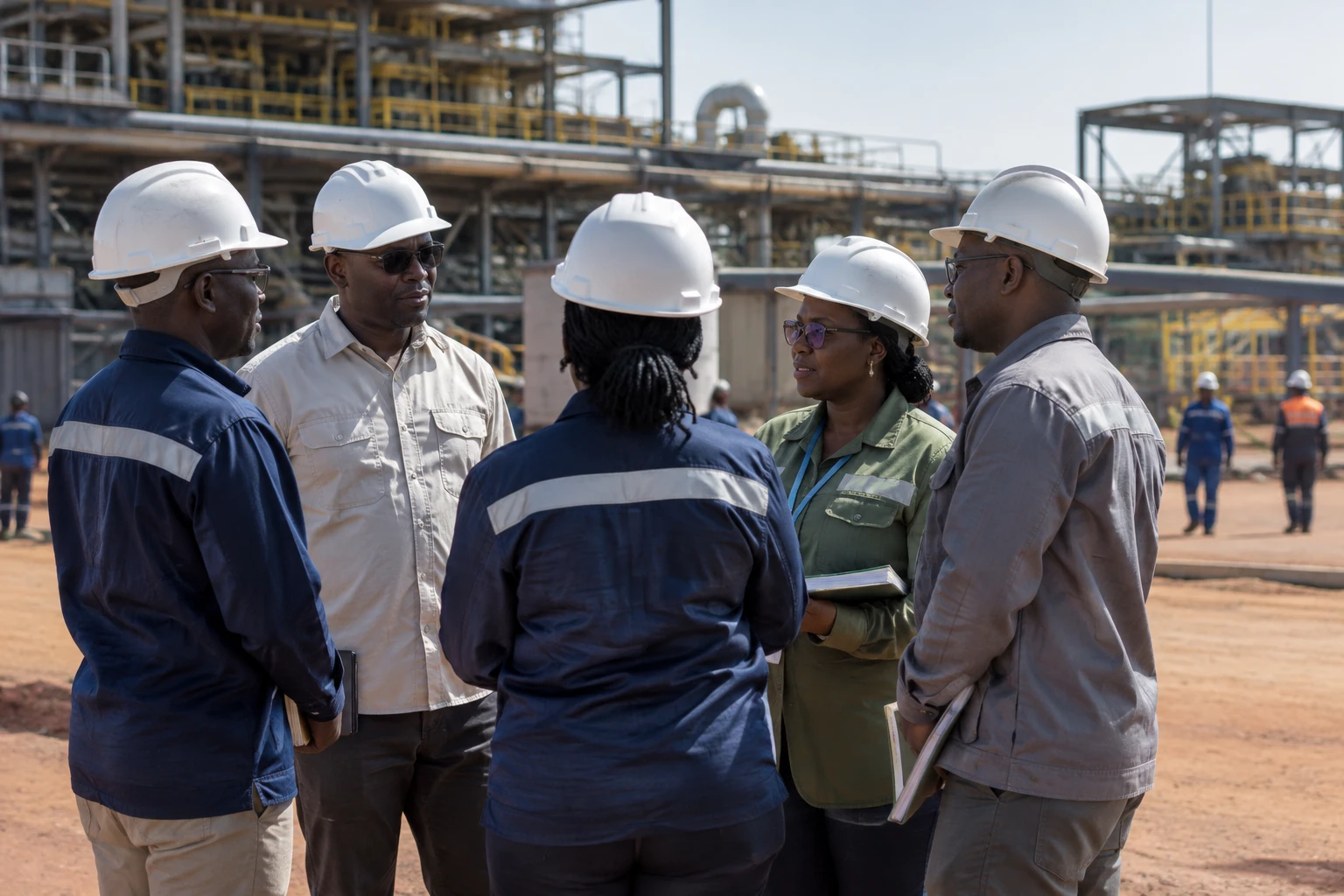
Producing more gold does not automatically mean more revenue for the public finances. At Bomboré, the jump in extraction is putting revenue-sharing rules and the Burkinabè state’s ability to track the flows to the test.
A new plant changes the scale of the mine
Located in Burkina Faso, the Bomboré mine produced 116,188 ounces of gold in the first nine months of 2026. The figure, published on 14 October by its operator, Canadian company Orezone Gold, exceeds the 110,014 ounces produced over the whole of 2025. These figures were provided by the company and indicate strong growth, but do not in themselves constitute a full-year report.
The change is partly due to the plant expansion. The new hard-rock processing plant, with a nameplate capacity of 2.5 million tonnes a year, was completed in 2025. Orezone announced its first gold production in December, then said the plant had entered commercial operation on 16 January 2026. The company is targeting between 160,000 and 180,000 ounces for the year, according to forecasts presented in the available material. This target therefore remains a projection, not a confirmed result.
Orezone’s production results confirm the 116,188 ounces reported at Bomboré between January and September. However, the statements reviewed do not independently confirm the tax and public-participation figures cited in the original material. This distinction matters: a measured increase in production is easier to verify than an estimate of the final revenues accruing to the state.
Revenue will depend on rules and accounts
Burkina Faso revised its mining framework in 2024. The new code provides, among other things, for the state’s free-carried interest to rise from 10% to 15% for new mining permits and certain renewals. But this general rule alone does not establish that the state already holds 15% of Bomboré. In September 2025, Orezone said the government did not intend to acquire an interest in the mine and described Bomboré as 90% owned by the company. The available information therefore does not corroborate the claim that the state has a 15% stake in this specific project.
Taxation is another lever. The 2024 report of Burkina Faso’s Extractive Industries Transparency Initiative (EITI) notes that the gold royalty was increased in 2025. Orezone, for its part, attributes the rise in its reported royalties in 2025 both to the increase in the average selling price of gold and to the new rates. These details shed light on the mechanisms, but are not enough to calculate Bomboré’s net contribution to the national budget.
Revenue is not the same as profit. Royalties are linked to production or the value of sales, while profit tax also depends on costs, investment and tax rules. Dividends are paid to shareholders only if the company declares and distributes them. Finally, Burkina Faso’s EITI report notes that project-level costs are not systematically published. This limitation makes it harder to independently assess the resource rent actually captured by the state.
From the mine site to local authorities
The issue concerns more than the Treasury in Ouagadougou. The Mining Development Fund is used, among other things, to finance locally driven projects and municipal plans. The government announced that CFA francs 85.7bn had been collected for the fund in 2025, of which about CFA francs 34.9bn was allocated to these projects and municipal plans. This total covers the fund as a whole, not Bomboré alone. It nevertheless shows why the arrangements for collection and redistribution matter to local authorities near mining sites as well as to other regions.
Local benefits are not limited to financial transfers. They also depend on jobs, procurement from Burkinabè suppliers, land and water management, and monitoring of environmental commitments. The production data published do not, on their own, make it possible to measure these effects. They may differ for direct employees, subcontractors, local businesses and residents of the municipalities concerned.
A West African transparency challenge
The case is part of a regional trend: several West African states are seeking to capture more value from their resources through taxation, public ownership or local processing. In Burkina Faso, the authorities have also strengthened the state’s direct role in the mining sector, notably through SOPAMIB, the state mining investment company. These policies are unfolding as the country, along with Mali and Niger, has left ECOWAS in January 2025 and participates in the Alliance of Sahel States.
For Bomboré, the next benchmarks will be the detailed 2026 financial results, the volumes actually sold and public payments attributable to the site. Higher production offers an indication of industrial activity. It does not answer the central question: what share of the value created goes to the national budget, municipalities and Burkinabè stakeholders? A robust answer will require published data broken down by mine and reconciled with costs, taxes and transfers actually made.
Bomboré production results for the third quarter of 2026 · Orezone Gold’s 2025 operational review · Orezone’s clarification on the state’s interest in Bomboré · Burkina Faso’s 2024 EITI report · Collection and allocation of the Mining Development Fund in 2025 · Overview of Burkina Faso’s new Mining Code



