Algeria
 Egypt
 Libya
 Morocco
 Sudan
 Tunisia
 Benin
 Burkina Faso
 Cabo Verde
 Côte d'Ivoire
 Ghana
 Guinea
 Guinea-Bissau
 Liberia
 Mali
 Mauritania
 Niger
 Nigeria
 Senegal
 Sierra Leone
 The Gambia
 Togo
 Cameroon
 Central African Republic
 Chad
 DR Congo
 Equatorial Guinea
 Gabon
 Republic of the Congo
 São Tomé and Príncipe
 Burundi
 Comoros
 Djibouti
 Eritrea
 Ethiopia
 Kenya
 Malawi
 Mauritius
 Mozambique
 Rwanda
 Seychelles
 Somalia
 South Sudan
 Tanzania
 Uganda
 Angola
 Botswana
 Eswatini
 Lesotho
 Namibia
 South Africa
 Zambia
 Zimbabwe
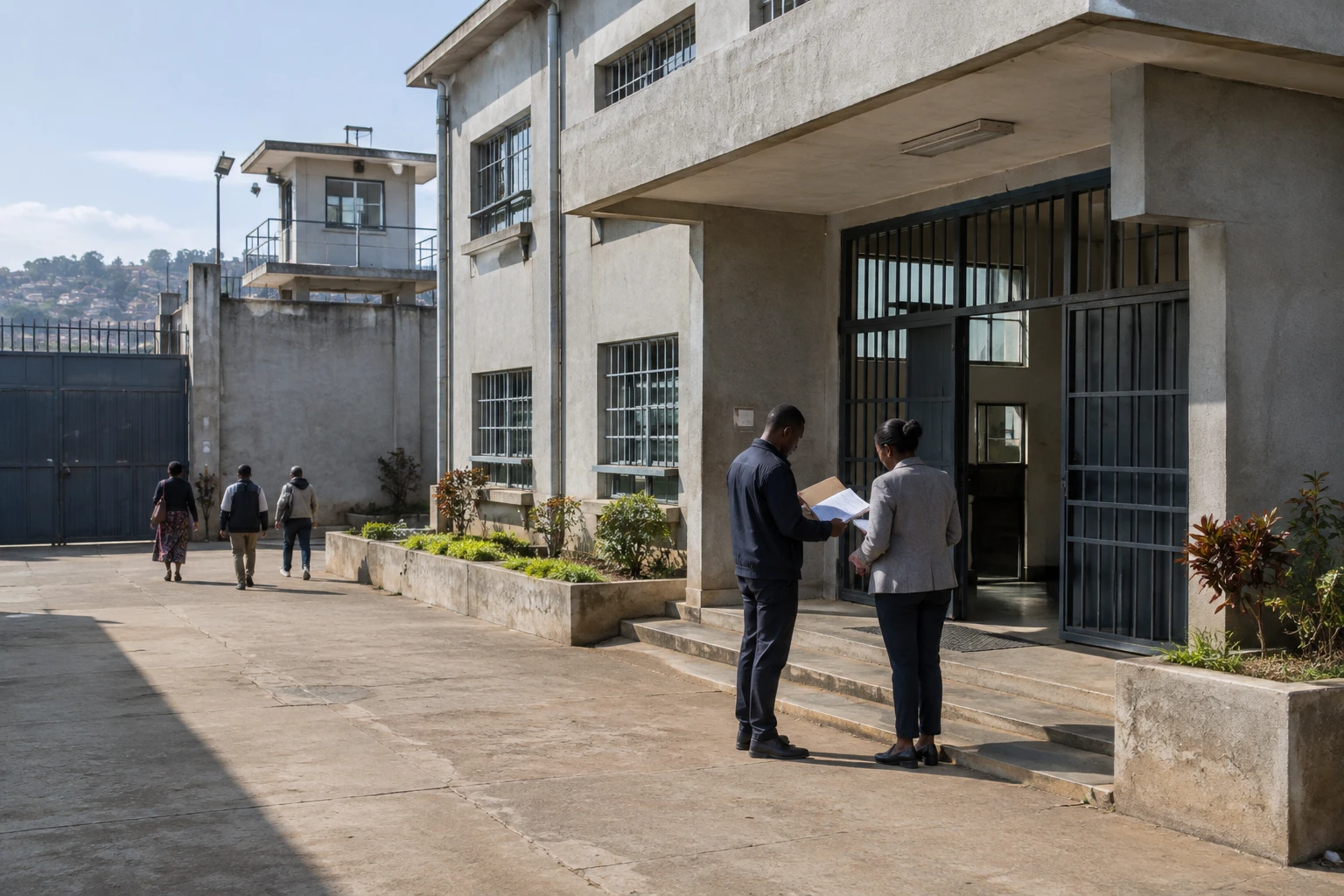
A prison door opens without a court order, then closes on a broader question: who controls the movements of inmates in Madagascar? The disappearance of eleven Chinese nationals is testing prison procedures as the country pursues international cooperation against online fraud.
A case that extends beyond prison walls
In Antananarivo, the Malagasy capital, the authorities reported the irregular release of eleven Chinese inmates who were supposed to be held at Avaradrano prison. The reported events took place in two stages, on 21 and 25 August 2026, at Antanimora prison. The Ministry of Justice said the inmates had been admitted and then released without written authorisation or notification to senior officials.
According to details attributed to the ministry, five men entered Antanimora at 19:10 on 21 August and left 50 minutes later. On 25 August, six other inmates reportedly remained there for 32 minutes. These precise timings were reported by the Malagasy press on the basis of the ministry’s statement; they have not been confirmed by a publicly disclosed judicial investigation.
The request was reportedly presented as a transfer prompted by altercations between inmates. Such a procedure, however, must follow the prison administration’s chain of command and be reviewed by a commission, according to explanations reported. The authorities are now seeking to establish who organised these movements and whether the eleven men have left the country.
Responsibility yet to be established
The ministry announced an investigation and administrative measures. The director of Avaradrano prison has been suspended, according to reports published by several Malagasy media outlets. The case also implicates the secretary-general of the prison officers’ union, but individual responsibility remains to be established by the courts.
The union disputes that prison officials could have decided on the release alone, a report carried by AllAfrica says. This differing account is a reminder that ministerial allegations are not a verdict. The investigation will have to distinguish between decisions, actions and any failures of oversight, while safeguarding the rights of those implicated.
Prison procedure is at the heart of the case. A transfer between facilities is not a release: it requires a traceable decision, authorisation and monitoring of movements. If the details put forward by the ministry are confirmed, the absence of these safeguards would raise questions of administrative responsibility as well as security.
The context: the fight against online fraud
The eleven inmates were linked to an online fraud case being handled by the Malagasy authorities. The ministry said they belonged to a network dismantled with support from US and Chinese investigators. In September, the Malagasy Ministry of Justice also announced the transfer to China of a first group of 50 Chinese nationals convicted of offences linked to this fraud, in cooperation with Interpol and the Chinese embassy.
This cooperation is part of a transnational case: alleged perpetrators may operate from one country while their victims and financial flows are elsewhere. Coordination between investigators can facilitate investigations. But it does not replace decisions by Malagasy courts or oversight of their implementation within the country.
The ministry also said that around 200 Chinese nationals had been arrested in the initial operations. This figure refers to the arrests reported in the wider case; it does not mean that all these people were convicted or held in the same facilities. The distinction between arrest, prosecution and conviction is essential, particularly in a case where some people may be victims of deceptive recruitment or trafficking—a possibility raised by the justice minister in connection with other operations against “scamming”, or organised online fraud.
A test of trust for Madagascar and the region
For the authorities, the immediate task is to find the eleven men and determine whether accomplices helped them leave. For the public, the case touches on a concrete question: are court decisions being implemented in a verifiable way, whatever the profile of the inmates? In the capital, prisons and courts are directly concerned; nationwide, the administration’s credibility will depend on the transparency of the investigation and what follows.
The regional dimension also matters. Madagascar is a member of the Southern African Development Community (SADC), a framework for cooperation among southern African states. Its position in the Indian Ocean and the judicial ties established with China, the United States and Interpol give the case a reach beyond the island nation. International cooperation will be sustainable only if it is accompanied by robust, accountable domestic procedures.
The next step is judicial: the public prosecutor’s office must be notified, and the investigation must clarify each actor’s role, the inmates’ exact status and their whereabouts. The suspension of one official does not yet answer these questions. The course of the case will depend on the ability of Malagasy institutions to establish the facts without prejudging guilt.