Algeria
 Egypt
 Libya
 Morocco
 Sudan
 Tunisia
 Benin
 Burkina Faso
 Cabo Verde
 Côte d'Ivoire
 Ghana
 Guinea
 Guinea-Bissau
 Liberia
 Mali
 Mauritania
 Niger
 Nigeria
 Senegal
 Sierra Leone
 The Gambia
 Togo
 Cameroon
 Central African Republic
 Chad
 DR Congo
 Equatorial Guinea
 Republic of the Congo
 São Tomé and Príncipe
 Burundi
 Comoros
 Djibouti
 Eritrea
 Ethiopia
 Kenya
 Madagascar
 Malawi
 Mauritius
 Mozambique
 Rwanda
 Seychelles
 Somalia
 South Sudan
 Tanzania
 Uganda
 Angola
 Botswana
 Eswatini
 Lesotho
 Namibia
 South Africa
 Zambia
 Zimbabwe
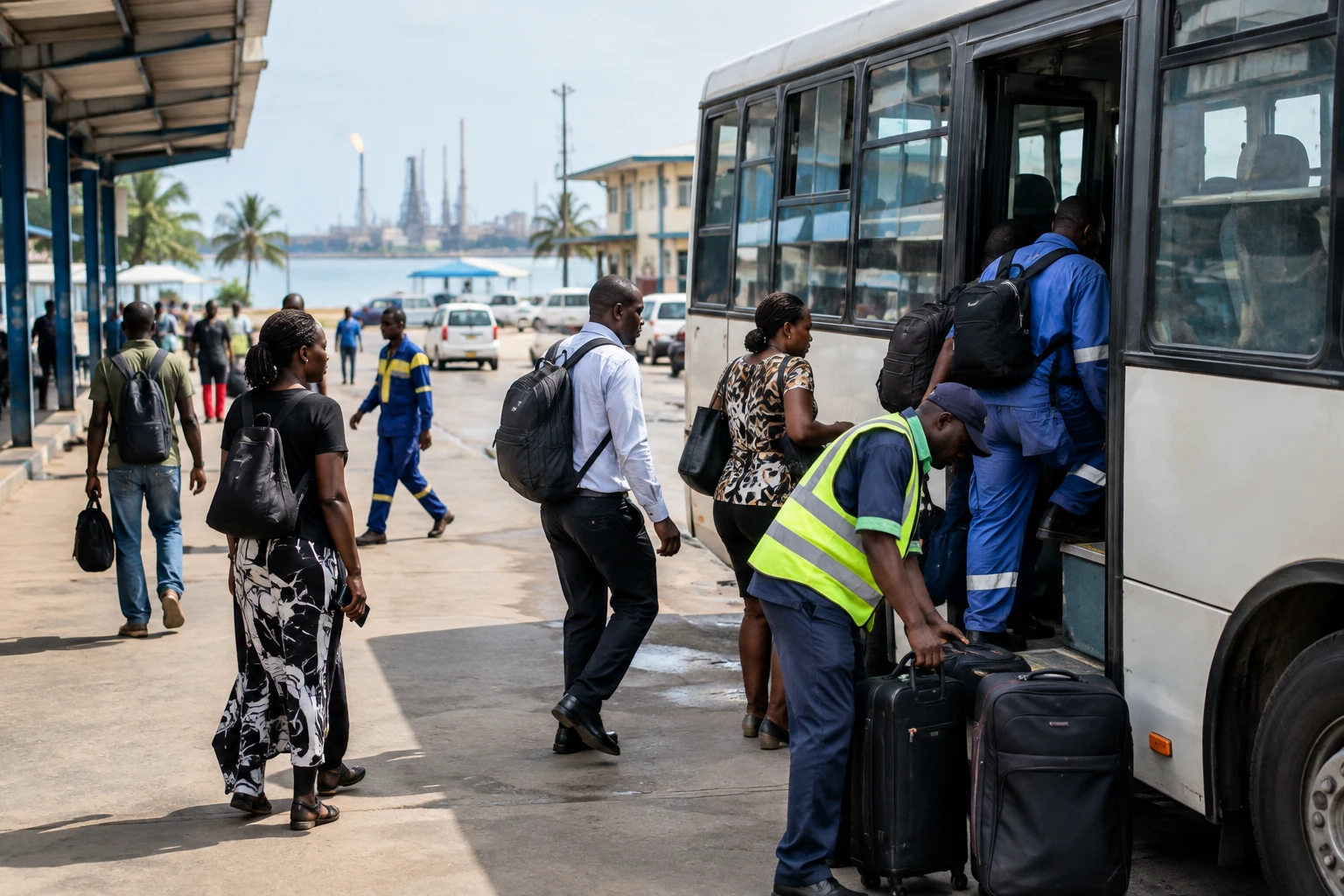
In the ultra-deep waters of the Gulf of Guinea, attracting oil companies is not enough: Gabon must also negotiate the share of revenues that will go to the state if exploration leads to discoveries. This equation lies at the heart of discussions on the country’s future oil framework.
Finding a balance between investment and public revenues
On 14 October 2026, in Cape Town, consultancy Wood Mackenzie presented options for changing how revenues from Gabonese offshore projects are shared. The proposal comes as Libreville prepares a new hydrocarbons code and seeks to revive offshore exploration, particularly in ultra-deepwater areas.
These projects are costly and take time. Drilling a single ultra-deepwater well can require considerable investment, while results remain uncertain. The challenge for the authorities is therefore to make the blocks sufficiently attractive without excessively reducing public revenues once production begins.
The government has already opened talks with major companies. ExxonMobil signed a memorandum of understanding in 2025. Shell concluded its own in June 2026, according to the Gabonese government statement. Preliminary agreements are not, in themselves, production contracts. In April, the Minister of Oil and Gas, Clotaire Kondja, said it would take four to six months to reach production-sharing contracts with some companies, according to Reuters, as reported by Boursorama.
The budgetary context adds to the pressure. The 2027 draft finance bill, adopted by the Council of Ministers on 18 September, assumes a Gabonese oil price of $70 a barrel. The budget framework projects an approximately 9% fall in oil revenues compared with estimates for 2026, reports Gabonese media outlet EcoMatin. Oil remains a major source of public finance, although its importance leaves the budget exposed to fluctuations in prices and production.
Remuneration linked to project profitability
The option put forward by Wood Mackenzie involves a mechanism known as an “R-factor”. Put simply, the state’s share would vary according to the project’s actual profitability, rather than solely according to the volume extracted. The consultancy also proposes a 19% royalty on the value of oil produced and a minimum 20% share for the state of volumes remaining after investment costs have been recovered.
Another suggested change is to scrap bonuses paid when contracts are signed. These immediate payments provide revenue to the country but increase the company’s upfront costs. Removing them could lower the barrier to entering the riskiest blocks. In return, the state would depend more heavily on the project’s future results. The proposal will therefore need to be assessed against the revenues expected over the full term of the contract, not only the investment it might attract.
At this stage, these are recommendations presented by a consultancy, not rules adopted by Gabon. The existing framework distinguishes between several types of oil contracts, including exploration and production-sharing contracts, as the Gabonese Ministry of Oil and Gas notes. The content of the new code and how it is implemented will determine whether Wood Mackenzie’s proposals are adopted, amended or rejected.
Different effects for stakeholders and communities
For the state, a more flexible regime could increase the chances of companies funding exploration. But the benefits would be neither immediate nor guaranteed: an agreement to study an area does not mean a deposit will be discovered, let alone that it will be profitable to exploit. Companies, meanwhile, will seek to limit financial risks and secure predictable terms before committing capital.
The effects would also extend beyond negotiations between Libreville and the oil groups. Public revenues help fund services and investment, while jobs and contracts linked to operations can benefit Gabonese businesses, particularly in oil hubs such as Port-Gentil. However, ultra-deepwater exploration requires specialised skills and equipment: local benefits will depend on local-content requirements, training and the ability of domestic suppliers to access contracts.
The issue also concerns CEMAC, the Economic and Monetary Community of Central Africa, of which Gabon is a member. Oil revenues weigh on national finances and regional economic balances. But attracting new investment alone will not solve dependence on oil: diversifying revenues and economic activity remains a challenge for Libreville and the other economies in the subregion.
The next test will be legal and contractual
Timing matters as much as fiscal terms. Gabonese officials said in October that the new code was expected to be published in the coming weeks, while talks with companies continue, according to S&P Global. The text will show how the country balances sovereignty over its resources, risk-sharing and the attractiveness of projects.
Angola is often cited in debates on African oil-sector reforms. It is not, however, a guarantee of success for Gabon: geology, contracts, infrastructure and public-policy choices differ from one country to another. For now, the decisive signal will come from the provisions of the code, followed by the contracts actually concluded. That is when the share of risk accepted by investors, and the share of its offshore resources that Gabon intends to retain, will become clear.