Algeria
 Egypt
 Libya
 Morocco
 Sudan
 Tunisia
 Benin
 Burkina Faso
 Cabo Verde
 Côte d'Ivoire
 Ghana
 Guinea
 Guinea-Bissau
 Liberia
 Mali
 Mauritania
 Niger
 Nigeria
 Senegal
 Sierra Leone
 Togo
 Cameroon
 Central African Republic
 Chad
 DR Congo
 Equatorial Guinea
 Gabon
 Republic of the Congo
 São Tomé and Príncipe
 Burundi
 Comoros
 Djibouti
 Eritrea
 Ethiopia
 Kenya
 Madagascar
 Malawi
 Mauritius
 Mozambique
 Rwanda
 Seychelles
 Somalia
 South Sudan
 Tanzania
 Uganda
 Angola
 Botswana
 Eswatini
 Lesotho
 Namibia
 South Africa
 Zambia
 Zimbabwe
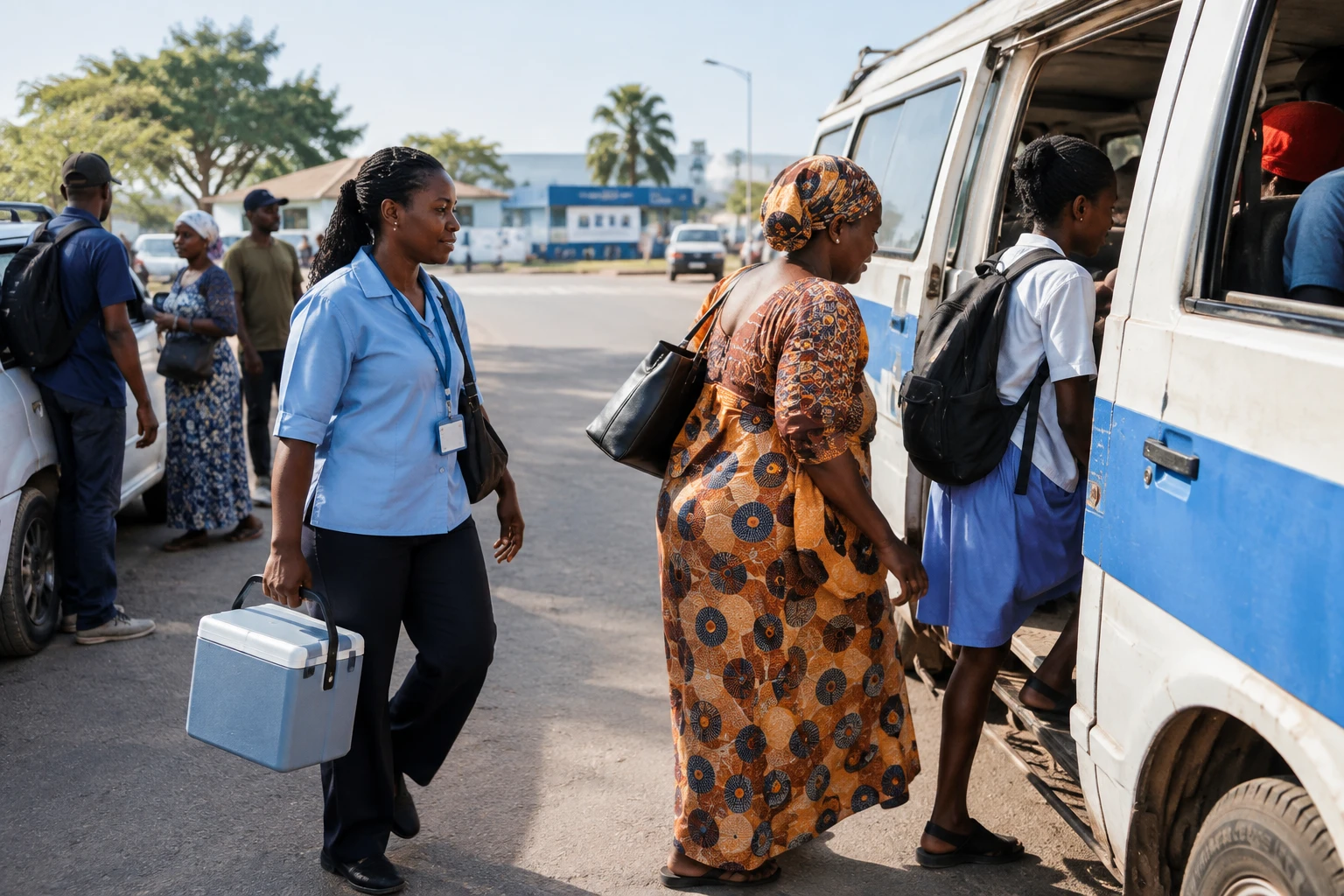
Preventing cancer is about more than vaccination. In The Gambia, protecting adolescent girls against human papillomavirus (HPV) and enabling women to be screened in time are two steps in the same care pathway, access to which remains unequal.
Prevention must cover the whole pathway
Cervical cancer is linked, in the vast majority of cases, to a persistent infection with high-risk HPV. Vaccination prevents a significant proportion of these infections. Screening detects precancerous lesions before they become cancer. An abnormal result must then be followed by diagnosis and care.
Globally, the World Health Organization (WHO) has set three targets for 2030: fully vaccinate 90% of girls before the age of 15, screen 70% of women at the recommended ages and treat 90% of women with a lesion or cancer. This strategy is a reminder that a vaccination campaign alone is not enough to eliminate the disease as a public health problem.
The Gambia introduced the HPV vaccine into its national programme in 2019, according to the Gambian Ministry of Health. The country therefore already has an established prevention tool. The challenge is to maintain coverage and reach girls who miss campaigns or school-based vaccination.
Catch-up campaign in three regions
In April 2026, a week-long campaign targeted unvaccinated girls aged 9 to 14 in three regions. Run by the Ministry of Health with education services and partners, it combined activities in schools, madrassas and communities. The aim was also to reach adolescent girls who do not attend school.
WHO reports that more than 11,000 eligible girls remained unvaccinated after the 2025 national campaign. The catch-up operation targeted nearly 9,000 of them; about 8,500 received the vaccine, representing reported coverage of 95% among the girls targeted. This result applies to this campaign and these areas: it does not mean that 95% of all adolescent girls in the country are now vaccinated. WHO’s report on the catch-up vaccination campaign in The Gambia highlights the role of health teams, schools and community mobilisers.
This approach addresses a practical challenge: a national campaign can leave girls behind if it relies solely on health facilities or schools. Coordination between health and education services and communities helps reduce these blind spots. It does not, however, replace regular services, which are needed to vaccinate new cohorts and provide follow-up.
Screening and care remain the decisive link
Estimates show the scale of the need, but they are not all based on the same year or methodology. The International Agency for Research on Cancer (IARC) fact sheet, published as part of the WHO global strategy, estimates that The Gambia recorded 325 new cases and 204 deaths in 2023. The Gambian national strategy draws on an earlier estimate of 286 cases and 199 deaths a year. These figures are estimates, not a comprehensive count of patients.
The national cancer control strategy also notes that the national cancer registry has been inactive since December 2019. This interruption limits the ability to track changes in cases and compare estimates with diagnoses actually recorded. It also complicates the planning of screening, equipment and treatment.
The national document describes screening activities at health centres, district hospitals and referral facilities. However, it reports a shortage of trained staff and equipment. Specialist diagnosis depends on capacity concentrated in tertiary facilities; radiotherapy is not available in the country, according to the strategy. For a woman living far from these facilities, distance, travel costs and delays can therefore affect access to diagnosis and care.
Vaccination protects adolescent girls, while screening is for adult women, in line with health recommendations. The two policies must advance together. Without regular screening and rapid referral after a concerning result, progress in prevention will not sufficiently reduce the risk for women who have already been exposed or are not covered by vaccination campaigns.
A Gambian issue and a West African priority
The Gambia is a member of ECOWAS, the Economic Community of West African States. Tackling cancers affecting women is therefore also part of regional health priorities: prevention, access to diagnosis and continuity of care beyond major urban centres. Regional cooperation can facilitate the sharing of expertise and access to specialist services, but it does not remove the need for each country to strengthen its national capacity.
The Gambian cancer control strategy, covering 2025-2030, places prevention, screening, diagnosis and care within a single framework. Progress will not be measured solely by the number of doses administered. It will also be necessary to track vaccination coverage in all regions, the restoration of the registry, women’s access to screening and the capacity to refer those who need care. The Gambian national cancer control strategy identifies these needs and the health system’s current limitations.