
 Algeria
 Egypt
 Libya
 Morocco
 Sudan
 Tunisia
 Benin
 Burkina Faso
 Cabo Verde
 Côte d'Ivoire
 Ghana
 Guinea
 Guinea-Bissau
 Liberia
 Mali
 Mauritania
 Niger
 Nigeria
 Senegal
 Sierra Leone
 The Gambia
 Togo
 Central African Republic
 Chad
 DR Congo
 Equatorial Guinea
 Gabon
 Republic of the Congo
 São Tomé and Príncipe
 Burundi
 Comoros
 Djibouti
 Eritrea
 Ethiopia
 Kenya
 Madagascar
 Malawi
 Mauritius
 Mozambique
 Rwanda
 Seychelles
 Somalia
 South Sudan
 Tanzania
 Uganda
 Angola
 Botswana
 Eswatini
 Lesotho
 Namibia
 South Africa
 Zambia
 Zimbabwe
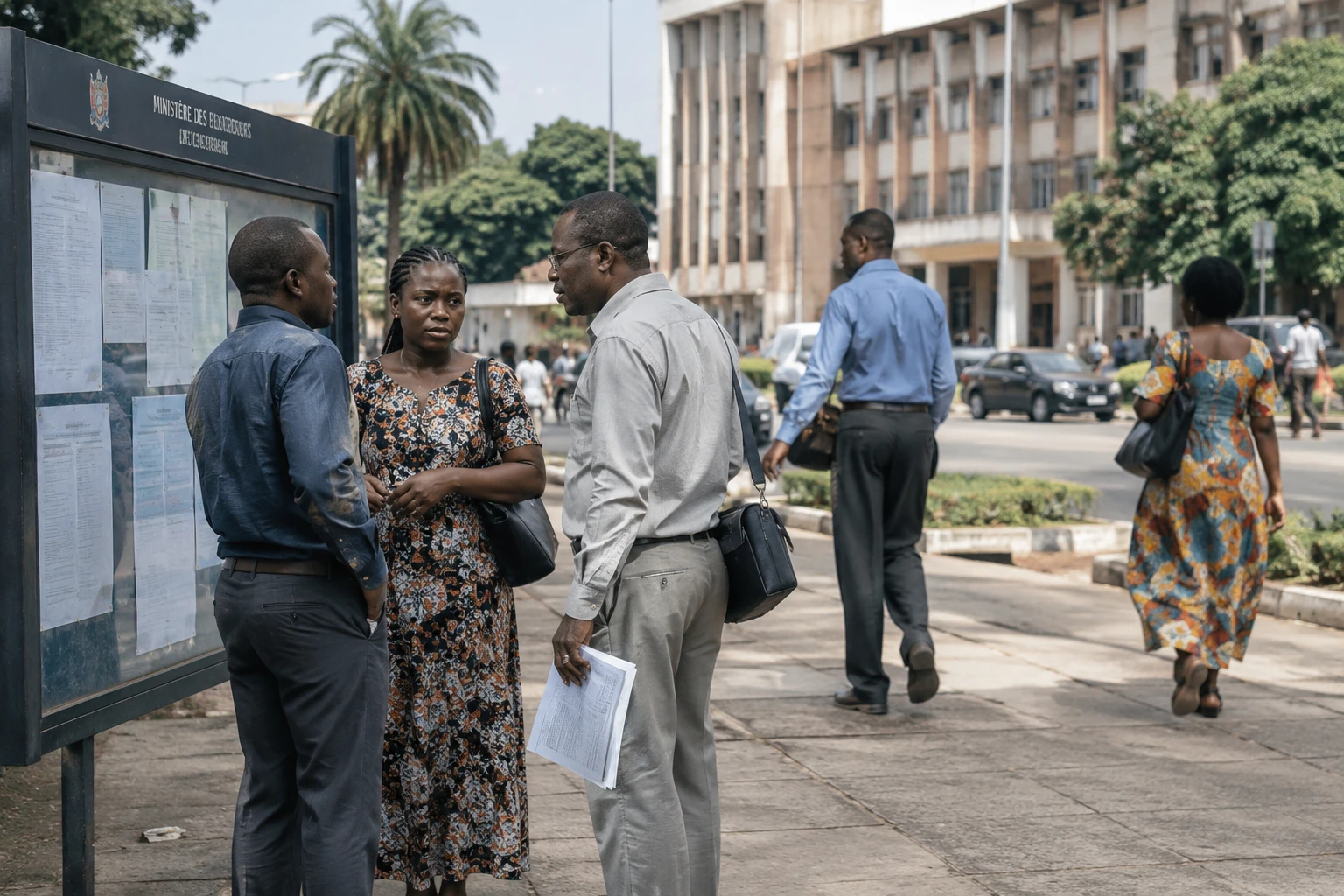
In Cameroon, a constitutional post intended to ensure continuity of power has existed for six months, but remains unfilled. The delay raises a practical question: who would exercise the responsibilities set out in the Constitution if the presidency became vacant today?
A reform adopted amid debate over political succession
The question goes beyond the choice of a name. It concerns how power is transferred, as Paul Biya has led Cameroon since 1982 and debate about the post-Biya era is regularly revived in the country.
Cameroon is a member of the Economic and Monetary Community of Central Africa (CEMAC), which coordinates, among other things, certain economic and monetary policies among six states. But the appointment of the vice-president is the responsibility of national institutions: neither CEMAC nor a regional organisation chooses the head of state’s successor.
Parliament, meeting in Congress in Yaoundé, adopted the constitutional amendment on 4 April 2026. Paul Biya promulgated it on 14 April. The text reinstates a post that had disappeared from Cameroon’s political structure and gives the president the power to appoint and dismiss its holder. The role is therefore not filled by a direct vote of Cameroonians.
A central role, but no appointment yet
The reform provides for the vice-president to exercise responsibilities delegated by the head of state. In the event of the president’s death, resignation or permanent incapacity, the vice-president is expected to complete the current term. If the post is vacant, the Constitution provides for another succession mechanism, with a presidential election held within a specified period.
As of 15 October 2026, no official appointment has been announced. This absence matters: the succession rule exists, but the person expected to apply it first has not been appointed. It does not, however, by itself mean that the constitutional procedure has already been triggered.
Speculation about the future holder has circulated in the press and on social media. In April, a fake decree purporting to appoint Franck Emmanuel Biya, the president’s son, fuelled the rumours. Independent fact-checks concluded that the document was fabricated. Names raised in public debate must therefore be distinguished from an officially published decision.
In June, another episode highlighted the risks associated with the wait. According to a government statement reported by the Cameroonian press, an individual allegedly delivered a fake appointment decree to CRTV, the public broadcaster. The newsroom did not broadcast it, and an investigation was announced. The incident shows how an institutional vacuum can become fertile ground for false announcements; it does not prove that an appointment was imminent.
The debate is also about the balance of power
The reform is contested by part of the opposition. The Cameroon Renaissance Movement (MRC) has criticised its legality and the process behind it. Other political figures, including Cabral Libii, leader of the Cameroon Party for National Reconciliation (PCRN), have instead stressed the risks of creating a post and leaving it vacant.
These positions are not contradictory on every point. It is possible to challenge the concentration of appointment power in the president’s hands while also judging that a poorly prepared succession creates institutional uncertainty. The disagreement concerns, among other things, the future holder’s legitimacy, safeguards for oversight and the role left to citizens in the choice.
The mechanism gives the vice-president major responsibility in the event of a vacancy, but does not confer an electoral mandate of their own. The holder would be chosen by the president and could be dismissed by him. Supporters of the reform argue that this arrangement could prevent a disruption of the state. Critics say it makes a decisive stage of succession depend on a presidential decision rather than a popular vote.
The debate also concerns how institutions establish permanent incapacity. The Constitutional Council has a role in vacancy procedures, while the vice-president would be at the heart of the revised system. The relationship between these responsibilities and the independence of institutions will therefore be crucial, beyond the name ultimately chosen.
What the wait means for Cameroonians
For political leaders and public administrations, the immediate issue is the predictability of the rules at the top of the state. For the public, the question is more tangible: does the continuity of public services and national decisions depend on rules that are clear, known and applicable in a crisis? An unoccupied post does not automatically paralyse the state, but it leaves part of the succession mechanism without a holder.
The implications extend beyond Cameroon, without making the country a unique model for all of Central Africa. Constitutions in the region organise transitions at the top in different ways. Cameroon’s experience will be watched for a simple reason: stability depends not only on a written text, but also on confidence in the procedure, transparent decisions and institutions’ ability to act without improvisation.
The next step to watch for is a possible appointment published through official channels, followed by a public definition of the responsibilities assigned to the holder. Until an appointment is announced, lists of names and rumours cannot reveal the president’s choice. The post exists in the Constitution; its real place in Cameroon’s political balance remains to be tested.



