Algeria
 Egypt
 Libya
 Morocco
 Sudan
 Tunisia
 Benin
 Burkina Faso
 Cabo Verde
 Côte d'Ivoire
 Ghana
 Guinea
 Guinea-Bissau
 Liberia
 Mali
 Mauritania
 Niger
 Nigeria
 Senegal
 Sierra Leone
 The Gambia
 Togo
 Cameroon
 Central African Republic
 Chad
 DR Congo
 Equatorial Guinea
 Gabon
 Republic of the Congo
 São Tomé and Príncipe
 Burundi
 Comoros
 Djibouti
 Eritrea
 Ethiopia
 Madagascar
 Malawi
 Mauritius
 Mozambique
 Rwanda
 Seychelles
 Somalia
 South Sudan
 Tanzania
 Uganda
 Angola
 Botswana
 Eswatini
 Lesotho
 Namibia
 South Africa
 Zambia
 Zimbabwe

A patient can cross several borders before their infection is identified. The death, on 5 October 2026, of a Kenyan national diagnosed after arriving in Nairobi is a reminder that the response to Ebola depends as much on local care as on the rapid sharing of information between countries.
An outbreak spreading across eastern DR Congo
Declared on 15 May in Ituri, the 17th Ebola outbreak in the Democratic Republic of the Congo is caused by the Bundibugyo virus. This strain, less common than the Zaire strain, currently has neither an approved vaccine nor a validated specific treatment. Supportive care, rapid testing and the prevention of transmission therefore remain essential.
As of 6 October, the World Health Organization (WHO) had recorded 8,728 confirmed cases and 4,205 deaths in DR Congo. Cases were spread across 64 health zones in seven provinces: Ituri, North Kivu, South Kivu, Haut-Uele, Bas-Uele, Tshopo and South Ubangi. Ituri remained the main hotspot, while North Kivu was recording a worrying increase. These figures, also published in the Congolese health ministry’s daily reports, exceed the toll reported in mid-September by the International Committee of the Red Cross.
Geography complicates operations. In the east, armed violence, population displacement and long distances make some communities difficult to reach. Households, healthcare workers and contact-tracing teams face different obstacles: isolated rural areas lack nearby services, while cities and transport routes multiply journeys and contacts.
Faster detection, contact tracing
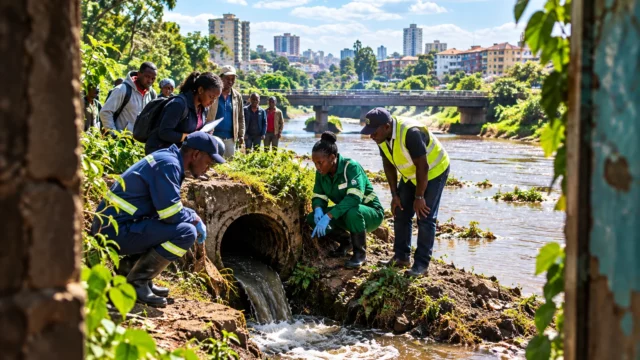
In Kinshasa, the health ministry is coordinating the national response with the National Institute for Biomedical Research (INRB), provincial authorities and partners, including WHO and Africa CDC, the African Union’s public health agency. On the ground, the response combines surveillance, laboratory testing, care, infection prevention, community engagement and safe burials.
The decentralisation of testing is a tangible improvement. At the start of the outbreak, samples had to be sent to Kinshasa to identify the virus. Equipment installed in places including Mongbwalu and Bunia can now produce some results in less than an hour. WHO says daily testing capacity in Bunia and Mongbwalu has risen from 30 to 80 tests. This reduces delays, but does not replace field teams or regular access to care.
Contact tracing remains a weak point. According to WHO, 23,741 of 29,535 contacts were being monitored as of 4 October, or 80.4%, below the operational target of 85%. The same organisation reports that 264 of 372 recent deaths for which the location was specified occurred in communities rather than treatment centres. These indicators suggest that some patients are still going unidentified or accessing care late.
Teams must also protect their own members. The medical evacuation on 1 October of a healthcare worker infected while working on the response in DR Congo underlines this risk. The availability of protective equipment, its correct use and adherence to protocols in health facilities are conditions for safety, but also for continuity of services for other patients.
Community trust, an operational necessity
Technical systems are not enough if people cannot or do not wish to report symptoms, welcome teams or go to a health centre. Rumours and mistrust complicate surveillance. Information must therefore be easy to understand, delivered in local languages and conveyed by people known to the communities. DR Congo Red Cross volunteers are helping to raise awareness and organise dignified, safe burials.
Prime Minister Judith Suminwa announced on 7 October that protection for teams, surveillance and communications would be strengthened. The government also said a health checkpoint was monitoring boats on the Congo River, about 65 kilometres from Kinshasa. At that time, the authorities said no cases had been recorded in the capital. This official statement does not mean that vigilance can be relaxed.
The death in Kenya illustrates the cross-border challenge. According to WHO, the patient had stayed in DR Congo, travelled by road to Kampala, then flown to Nairobi, where he arrived on 3 October. Kenyan and Ugandan health authorities have begun contact tracing, including among travellers. The episode highlights the need for regional coordination on alerts and investigations, without turning borders into a substitute for testing and care.
A challenge for Central Africa and the continent
DR Congo is part of several regional groupings, including the Economic Community of Central African States (ECCAS), whose neighbouring countries are expected to work together to address health risks. But journeys to Uganda and Kenya show that human movement extends beyond Central Africa’s borders. Africa CDC and WHO have announced a continental preparedness and response plan for the Bundibugyo virus to support coordination and preparations in countries at risk.
For the Congolese authorities, the immediate challenge is to identify cases more effectively in affected provinces and maintain routine care. For residents, the priority is rapid access to diagnosis and dignified treatment. For neighbouring countries, it is to share alerts without unnecessarily restricting travel. Sustainable funding, resources for frontline teams and laboratory capacity will remain critical as the outbreak evolves.
Monitoring sources: WHO epidemiological update of 8 October 2026, situation reports from the Congolese health ministry, ICRC information on the outbreak in DR Congo, WHO Africa report on decentralised laboratories, Associated Press investigation into the challenges facing the response and statement from the Congolese prime minister’s office.