Algeria
 Egypt
 Libya
 Morocco
 Sudan
 Tunisia
 Benin
 Burkina Faso
 Cabo Verde
 Côte d'Ivoire
 Ghana
 Guinea
 Guinea-Bissau
 Liberia
 Mali
 Mauritania
 Niger
 Nigeria
 Senegal
 Sierra Leone
 The Gambia
 Togo
 Cameroon
 Central African Republic
 Chad
 DR Congo
 Equatorial Guinea
 Gabon
 Republic of the Congo
 São Tomé and Príncipe
 Burundi
 Comoros
 Djibouti
 Eritrea
 Ethiopia
 Kenya
 Madagascar
 Malawi
 Mauritius
 Mozambique
 Rwanda
 Seychelles
 Somalia
 South Sudan
 Tanzania
 Uganda
 Angola
 Eswatini
 Lesotho
 Namibia
 South Africa
 Zambia
 Zimbabwe
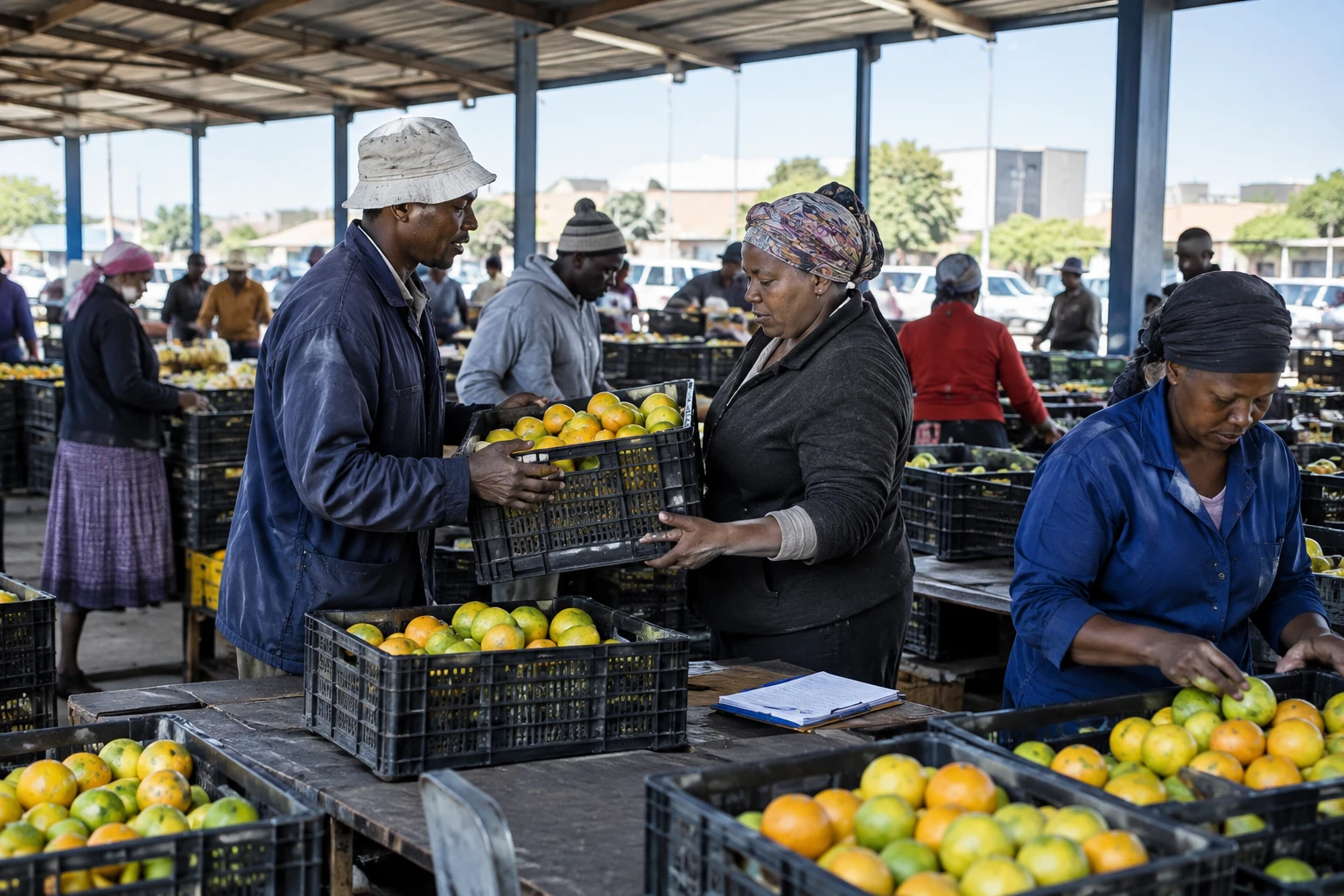
Easier access to the Chinese market could open up outlets for Botswana’s citrus and beef. But for Botswana’s producers, the challenge will also be to turn these sales into local revenue, jobs and processing capacity.
In Beijing on 13 October 2026, Presidents Duma Boko and Xi Jinping elevated relations between their countries to a comprehensive strategic cooperative partnership. The announcement provides a new political framework for trade that is already growing. It does not, however, guarantee agricultural contracts or immediate investment.
A more accessible market, subject to conditions
Duma Boko’s state visit to China, from 12 to 17 October, put trade and investment at the centre of discussions. The Chinese presidency referred in particular to opportunities opened up by its duty-free treatment scheme for African countries that maintain diplomatic relations with Beijing. In July 2026, the Botswana government had presented the measure as an opportunity to broaden its products’ access to the Chinese market.
This opening could remove a tariff barrier, but that alone is not enough to get a product into a market. Exporters must also meet health rules, quality standards and logistical requirements. For beef as well as citrus, consistent volumes and the cold chain matter as much as customs duties.
Agricultural products are central to the prospects announced. Botswana aims in particular to develop sales of beef and citrus. These sectors are already export-oriented, but their ability to supply a distant market will depend on infrastructure, veterinary and phytosanitary controls, and the organisation of producers.
One indicator shows both the potential and the challenges. According to data presented to Botswana’s parliament by the Ministry of Lands and Agriculture, citrus exports rose from 2 790.7 tonnes in 2024 to 13 721.2 tonnes in 2025. The same ministry said that agriculture accounted for just 1.7 % of gross domestic product in 2023. The increase in volumes is therefore significant, but it does not by itself show what share of the revenue goes to farms, workers or local businesses.
Bilateral trade is also growing. China’s Ministry of Foreign Affairs puts its value at $1.01 billion in 2024, up 42.1 % in a year. It says Chinese imports from Botswana reached $770 million that year, compared with $240 million in Chinese exports to the country. For 2025, a publication by the Chinese embassy cites bilateral trade of $1.222 billion. These official figures point to growth, but do not in themselves show the diversity of products or the value added in Botswana.
Value added, the decisive factor
The announced partnership extends beyond agriculture. The two governments also discussed mining, manufacturing, digital technologies, infrastructure, health and training. Several cooperation documents were signed during the visit, including on green minerals, health and human resources. The challenge will be to define the projects, their funding and timetable, and the skills they will draw on in the country.
For Gaborone, attracting capital is only a first step. Local processing of agricultural or mineral products can generate more activity than exporting raw materials alone. But Botswana’s businesses must be able to access the finance, equipment and skills they need. The promised jobs and technology transfers remain goals until concrete investments are documented.
The benefits could also vary between different players. Large farms and established exporters are often better placed to meet the requirements of a distant market quickly. Small businesses and producers far from infrastructure risk being left out if collection, certification and transport systems do not keep pace. The distribution of benefits will therefore depend on the rules governing access to supply chains and the support offered to producers.
Beef illustrates this dependence on production conditions. The ministry reported to parliament that exports by the Botswana Meat Commission generated 2.36 billion pula between 2020 and 2025, despite periodic disruption linked to foot-and-mouth disease. Access to new buyers does not eliminate these risks: health monitoring and the capacity to maintain shipments remain decisive.
A foothold in Southern Africa
Botswana is a member of the Southern African Development Community (SADC), which coordinates trade and industrialisation initiatives among its member states. This membership gives the country a regional dimension: processing, logistics and inspection capacity developed for exports to China could also support trade with its neighbours, if local businesses can access it.
SADC nevertheless notes that several economies in the region depend on primary products, leaving them exposed to fluctuations in global markets. The Sino-Botswana partnership’s emphasis on industry and value added therefore aligns with a broader regional challenge. The aim is not simply to sell more, but to increase the share of production carried out locally and strengthen links with African supply chains.
At continental level, the agreement forms part of the deepening of relations between China and African countries. For Botswana, the test will be concrete: track signed contracts, investment actually committed, export volumes and jobs created. The next project announcements and their implementation will show whether the new diplomatic status turns prospects for market access into lasting capacity for Botswana’s businesses and workers.
Botswana parliament data on agricultural exports ; trade statistics from China’s Ministry of Foreign Affairs ; announcement of discussions between Xi Jinping and Duma Boko ; trade data and context for the state visit ; Botswana’s presentation of duty-free access ; SADC industrialisation strategy ; regional trade competitiveness and market access programme.