Algeria
 Egypt
 Libya
 Morocco
 Sudan
 Tunisia
 Benin
 Burkina Faso
 Cabo Verde
 Côte d'Ivoire
 Ghana
 Guinea
 Guinea-Bissau
 Liberia
 Mali
 Mauritania
 Niger
 Nigeria
 Senegal
 Sierra Leone
 The Gambia
 Togo
 Cameroon
 Central African Republic
 Chad
 DR Congo
 Equatorial Guinea
 Republic of the Congo
 São Tomé and Príncipe
 Burundi
 Comoros
 Djibouti
 Eritrea
 Ethiopia
 Kenya
 Madagascar
 Malawi
 Mauritius
 Mozambique
 Rwanda
 Seychelles
 Somalia
 South Sudan
 Tanzania
 Uganda
 Angola
 Botswana
 Eswatini
 Lesotho
 Namibia
 South Africa
 Zambia
 Zimbabwe
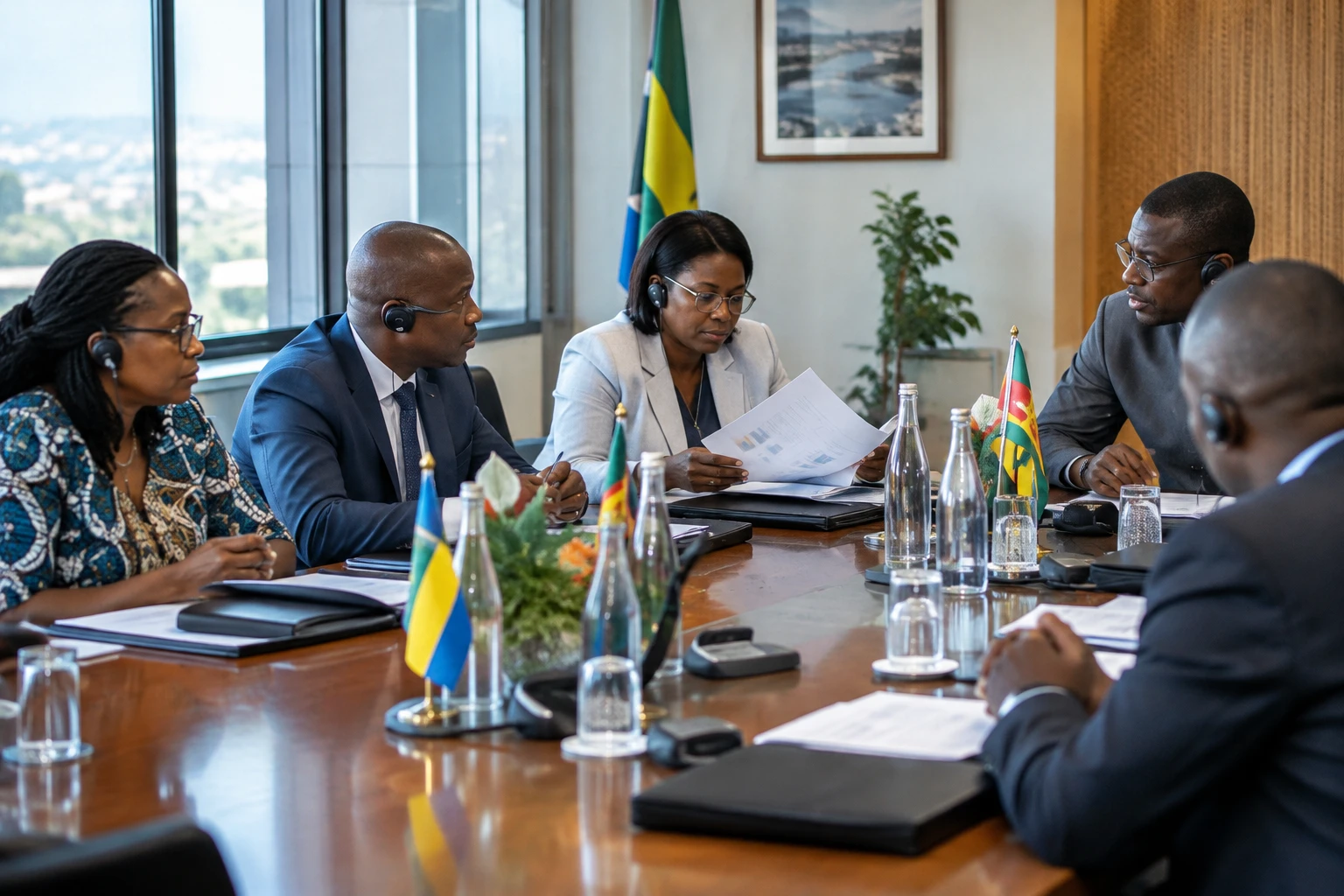
A blocked bank account may result from a court decision. But who should verify its scope when the client concerned is a former head of state, the bank a major regional player and the case linked to the aftermath of a coup? In Gabon, the action taken by Ali Bongo Ondimba has brought these questions to the fore.
On 12 October 2026, the former president petitioned the Central African Financial Market Supervisory Commission (Cosumaf), the CEMAC financial markets regulator, to raise his dispute with BGFIBank Gabon. The move takes the case to the regional level, without prejudging the legality of the freeze or the outcome of the appeals.
A case in the wake of the coup
On 30 August 2023, military officers ousted Ali Bongo, shortly after the announcement of the presidential election results. The change of power ushered in a political and judicial transition. It also brought sensitive issues under scrutiny: the responsibility of former leaders, the protection of assets and respect for judicial safeguards.
Since that period, Ali Bongo has said he has been unable to access his accounts held with BGFIBank Gabon. The case also concerns his wife, Sylvia Bongo Ondimba. According to information reported by several Gabonese media outlets, the bank justifies the block by citing an order placing the accounts in receivership, issued by an investigating judge in Libreville. A receivership is a measure that temporarily places assets under judicial control; it does not, in itself, amount to permanent confiscation.
Accounts differ over the procedure. The former president’s entourage maintains that the decision was not notified to him and challenges the continued freeze. The bank, for its part, cites a court decision. Without access to the full text of the order and the procedural documents, it is not possible to establish its exact scope publicly or to resolve these claims.
The chronology reported by the Gabonese press refers to a formal notice sent to the bank on 8 June 2026, seeking statements and an explanation for the block. BGFIBank is said to have replied on 17 June, citing the order. On 22 June, Ali Bongo is said to have petitioned the Libreville court of first instance for a copy and initiated summary proceedings, which allow a party to seek an interim measure quickly. These steps and dates have been reported by the media; their current status before the courts is not established in the information available.
Separate roles for Libreville and the region
The petition to Cosumaf adds a regional interlocutor, but does not replace Gabonese courts. Cosumaf supervises the CEMAC financial market. The Economic and Monetary Community of Central Africa (CEMAC) comprises six countries sharing a common currency. The Central African Banking Commission (Cobac), also mentioned in reports, supervises banking institutions in the sub-region.
The two bodies therefore do not have the same role. The validity or application of a court order is primarily a matter for the competent courts. Within their remits, regulators may examine issues related to financial supervision and the operation of institutions. The petition to Cosumaf does not mean that it has ordered the freeze to be lifted, or that it has ruled on ownership of the funds.
The distinction also matters for BGFIBank, a group based in Gabon and operating in several African countries. In a sector where trust rests on the security of deposits and compliance with court decisions, a high-profile case can raise reputational questions. But a bank’s reputation alone is not grounds for concluding that it has acted improperly. The applicable decisions, their scope and the available appeals must be known.
Transparency at the heart of the dispute
For Ali Bongo, the immediate issue is access to his assets and to the documents that would justify their immobilisation. For the bank, the stated issue is compliance with a court order. For those concerned by any proceedings, the question is also one of safeguards: notification, the ability to challenge the measure and an individual review of the accounts.
Caution is essential. A bank freeze does not establish that the funds are of illicit origin. Conversely, challenging a measure or its notification is not enough to prove that it does not exist or is irregular. Only judicial documents and decisions can clarify the situation. At this stage, the information available does not make it possible to confirm the amount involved or the detailed legal status of each account.
The case thus goes beyond a stand-off between a former leader and a bank. It comes as a country seeks, since the political rupture of 2023, to rebuild its institutions and ensure that justice functions amid intense public scrutiny. Gabonese people have an interest in procedures being clear, decisions being reasoned and rules being applied without preferential treatment or arbitrary punishment.
A precedent watched across CEMAC
The regional significance will depend on what happens next with the appeals. Will Cosumaf make its position known? Will the Libreville courts clarify the content of the order and the fate of the application for summary proceedings? Will BGFIBank publish further information, within the limits imposed by banking secrecy and the legal process? The answers will help distinguish established facts from the positions advanced by each party.
For other CEMAC countries, the case is a reminder that a politically sensitive asset freeze can involve several levels of oversight: national justice, banking supervision and financial market regulation. It does not automatically create a legal precedent. However, the way institutions handle the case will be watched by financial players and citizens across the region.
The decisive issue, therefore, is less the number of petitions than transparency about the grounds for the freeze and the existence of effective judicial oversight. Until the key documents are made available or examined by the courts, the freezing of the accounts and the challenge to it should be presented as opposing positions in an unresolved dispute.