Algeria
 Egypt
 Libya
 Morocco
 Sudan
 Tunisia
 Benin
 Burkina Faso
 Cabo Verde
 Côte d'Ivoire
 Ghana
 Guinea
 Guinea-Bissau
 Liberia
 Mali
 Mauritania
 Nigeria
 Senegal
 Sierra Leone
 The Gambia
 Togo
 Cameroon
 Central African Republic
 Chad
 DR Congo
 Equatorial Guinea
 Gabon
 Republic of the Congo
 São Tomé and Príncipe
 Burundi
 Comoros
 Djibouti
 Eritrea
 Ethiopia
 Kenya
 Madagascar
 Malawi
 Mauritius
 Mozambique
 Rwanda
 Seychelles
 Somalia
 South Sudan
 Tanzania
 Uganda
 Angola
 Botswana
 Eswatini
 Lesotho
 Namibia
 South Africa
 Zambia
 Zimbabwe
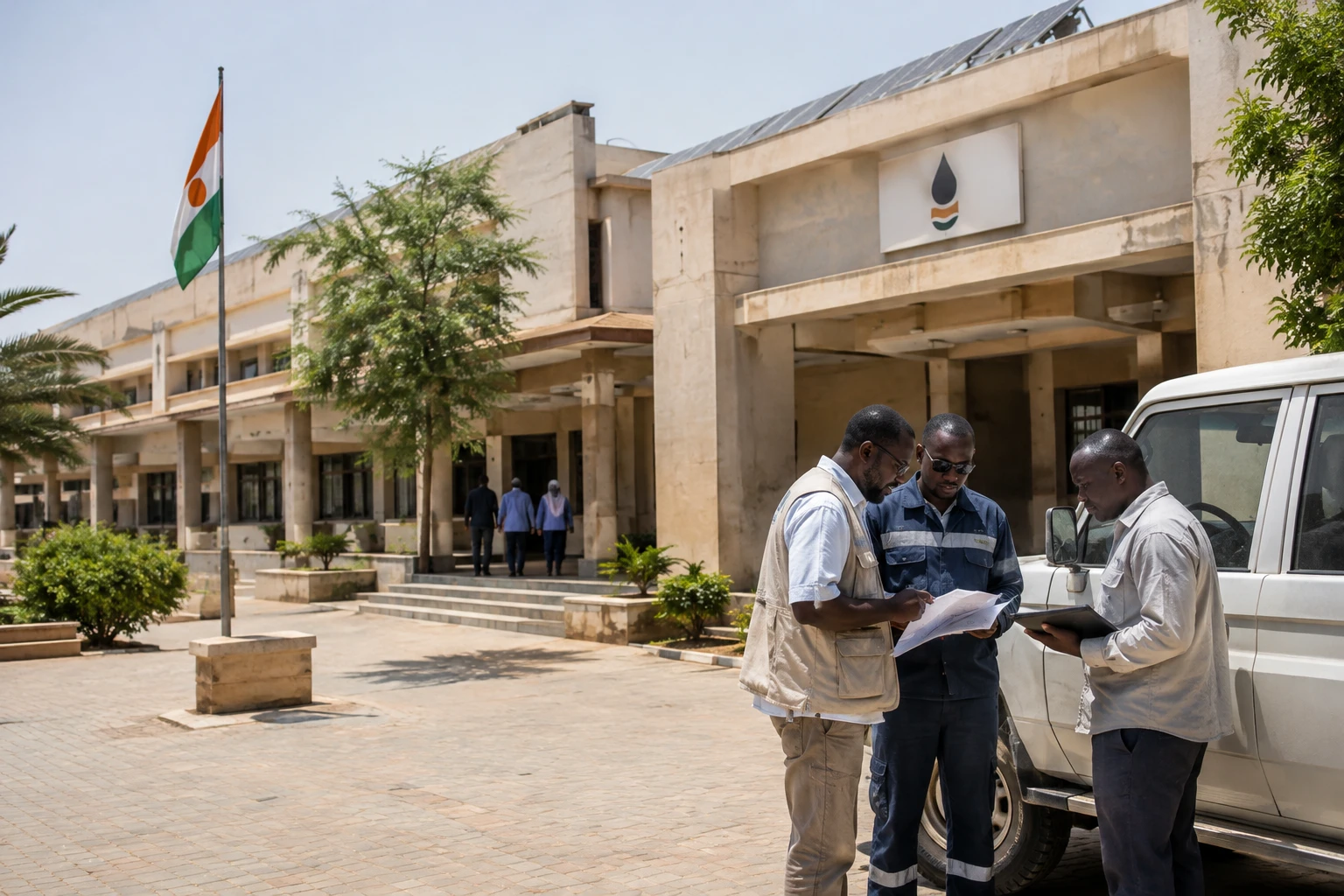
At Agadem, the immediate priority is to regain control of a well. But the incident is also testing worker protection, site monitoring and accountability in a sector that has become strategic for Niger’s revenues.
An oil site at the heart of Niger’s interests
The Agadem block is in the Diffa region of eastern Niger. It is operated by CNPC Niger Petroleum, the local subsidiary of China National Petroleum Corporation. Oil has been produced there since 2011. The development of the block and the pipeline linking Niger to Benin subsequently opened an export route to the coast.
This expansion has increased the site’s economic importance. In 2024, national production exceeded 20 million barrels, according to figures from the Ministry of Petroleum reported by the Agence Nigérienne de Presse. The Niger-Benin pipeline, about 1,950 kilometres long, links the Agadem fields to the Sèmè terminal in Benin. The safety of Nigerien facilities therefore lies at the intersection of national and cross-border interests. Niger’s oil production data for 2024 and ITIE Niger’s overview of the extractive sector detail this development.
Goumeri W-8 well still under monitoring
The incident began on 25 September 2026 at the Goumeri W-8 well. In a statement made public on 12 October, Niger’s Ministry of Petroleum described crude oil and gas being ejected to a height of more than ten metres. The following day, the Agence Nigérienne de Presse confirmed that specialist teams were working to contain the spills and stop the blowout.
As of 12 October, the situation was partly contained but not fully under control. The platform is badly damaged. It also hosts the Goumeri W-3 and W-4 wells, whose integrity has been compromised, according to the ministry. Two employees were injured and taken to hospital. The authorities have reported no deaths in the information published.
The authorities have announced an investigation and said that Algerian experts would be involved in the work. The causes have not been established. The ministry said that, according to initial findings, criminal and terrorist theories had been ruled out. This preliminary indication does not replace the investigation’s conclusions. The official statement on Goumeri W-8 and the Agence Nigérienne de Presse’s coverage corroborate the main details.
Safety of wells, workers and local residents
The risk is not limited to the well that is blowing out. The proximity of two other facilities means the entire platform must be secured. Spilled oil may also affect the soil around the site. So far, public information provides no independent assessment of pollution or precise measurement of the areas affected. The scale of the environmental damage should therefore not be presented as already established.
The authorities have asked local residents to respect the safety perimeter. Further updates will need to specify fire-prevention measures, the condition of the neighbouring wells and arrangements for environmental monitoring. They will also need to shed light on the care provided to the injured workers and the operator’s operational responsibilities, without prejudging the outcome of the investigation.
For people living far from Niamey, the distance from decision-making centres makes the circulation of verifiable information particularly important. Monitoring should not be limited to announcing that the well is technically under control: it should also report on field inspections and any effects on local activities.
Implications beyond Niger
Agadem is linked to an energy corridor that runs through Niger and Benin. A prolonged incident could therefore raise questions about operational continuity and infrastructure monitoring, even though no interruption to exports attributable to the blowout has been confirmed in the information available. The issue also concerns the division of responsibilities between the state, the operator and the bodies tasked with oversight.
The regional context has changed: Niger’s withdrawal from the Economic Community of West African States (ECOWAS), a West African integration organisation, took effect on 29 January 2025. Relations with Benin and practical cooperation on cross-border infrastructure therefore remain factors to watch, without equating the technical incident with a diplomatic crisis. ECOWAS specified the effective date of Niger’s withdrawal.
What happens next will depend on facts still awaited: full control of the well, an assessment of neighbouring facilities and the findings of the independent investigation. These will show whether the incident remains a contained accident or leads to a review of safety and oversight practices in a sector central to Niger’s economic ambitions.