
 Algeria
 Egypt
 Libya
 Morocco
 Sudan
 Tunisia
 Benin
 Burkina Faso
 Cabo Verde
 Côte d'Ivoire
 Ghana
 Guinea
 Guinea-Bissau
 Liberia
 Mali
 Mauritania
 Niger
 Nigeria
 Senegal
 Sierra Leone
 The Gambia
 Togo
 Cameroon
 Central African Republic
 Chad
 DR Congo
 Equatorial Guinea
 Gabon
 Republic of the Congo
 São Tomé and Príncipe
 Burundi
 Comoros
 Djibouti
 Eritrea
 Ethiopia
 Kenya
 Madagascar
 Malawi
 Mauritius
 Mozambique
 Rwanda
 Seychelles
 Somalia
 South Sudan
 Tanzania
 Uganda
 Angola
 Botswana
 Eswatini
 Lesotho
 Namibia
 Zambia
 Zimbabwe
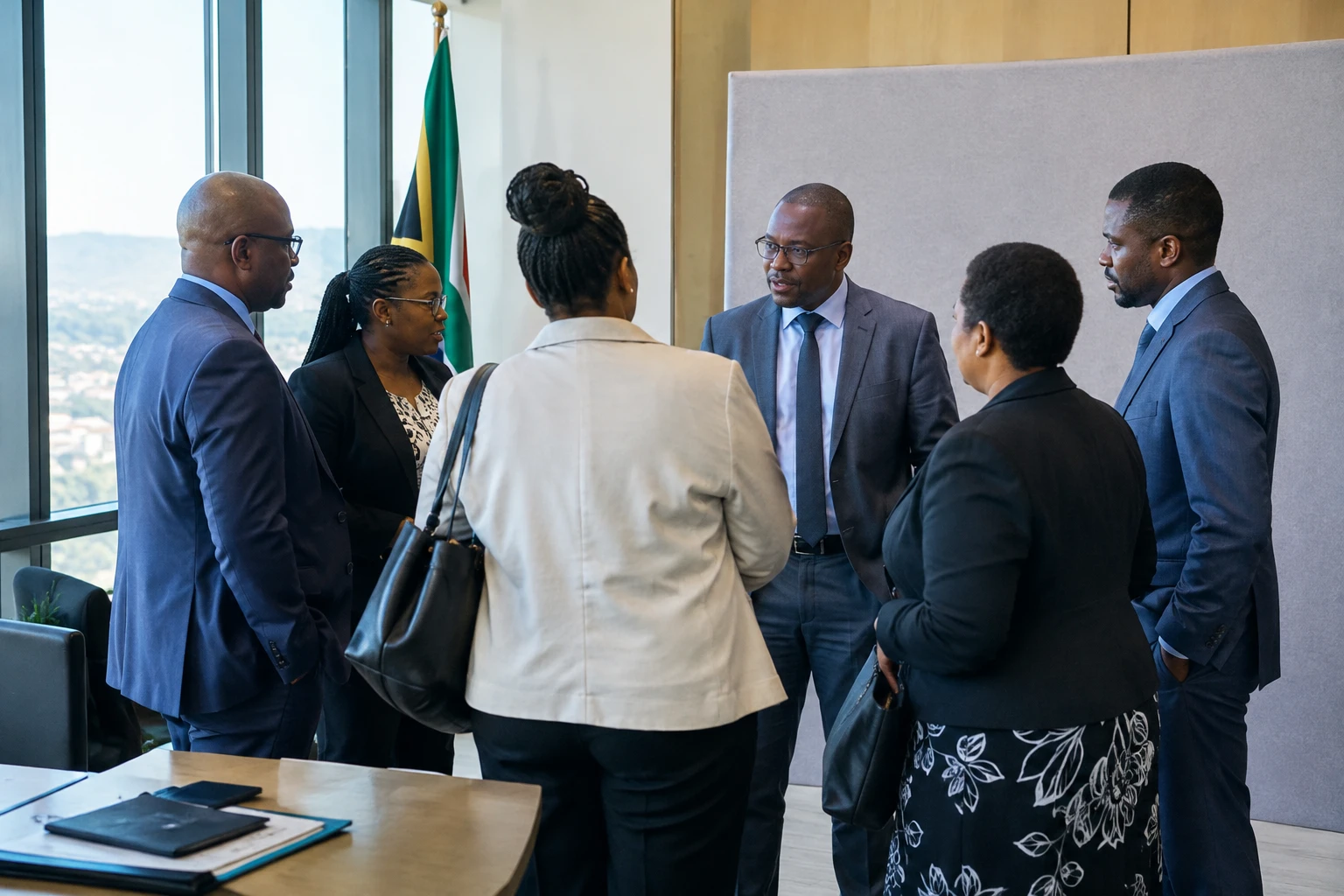
When electricity is in short supply or goods are held up before reaching a port, the problems facing South Africa’s state-owned companies go far beyond their balance sheets. They affect households, jobs and the country’s ability to trade with its neighbours.
In Pretoria, the government is now seeking another way to oversee these companies. A commission chaired by Cyril Ramaphosa is to coordinate their governance and restructuring, after a plan for a centralised state holding company was abandoned.
A change of approach after a bill was withdrawn
On 7 October, Maropene Ramokgopa, the minister in the Presidency responsible for planning, monitoring and evaluation, announced that the commission would be established. According to reports in the South African press, it will be chaired by the head of state and is expected to begin work before a new bill is finalised.
The change is significant. The National State Enterprises Bill, tabled in Parliament on 24 January 2024, proposed, among other things, bringing the state’s shareholdings together in a holding company. The bill envisaged a central company tasked with exercising shareholder functions and monitoring the enterprises concerned. Its withdrawal marks a retreat from this option, but does not mean the reform has been abandoned.
The new commission is to review the strategy defining the role of state-owned companies and make the state’s approach to exercising its shareholding more coherent. Its announced remit includes aligning governance practices, strengthening oversight and coordinating restructuring intended to reduce duplication. Practical details — its membership, powers, timetable and resources — have yet to be made public.
This transition comes amid an institutional landscape that has already been reshaped. In 2024, the government transferred responsibility for several strategic companies to sectoral ministries. It remains to be determined how the commission will work with those ministries, company boards and the National Treasury. Much of its credibility will depend on this.
Budgetary costs, but also everyday consequences
The financial question shows the scale of the challenge. Figures attributed to the finance ministry put public support for state-owned enterprises at about 521 billion rand over 15 years, or nearly $31.5 billion at the exchange rate cited. The estimate varies according to the periods and forms of support included, so it should not be confused with direct payments alone.
Eskom accounts for a large share of this support. The figure of 496 billion rand cited for the company includes forms of assistance and debt relief. It does not, on its own, represent an annual expenditure or a single transfer. For several years, the Treasury has documented the dependence of some companies on public bailouts and the risks these commitments pose to state finances.
For South Africans, the consequences are not limited to the public accounts. The reliability of electricity affects shops, services and industrial activity. Disruption to Transnet’s railways and ports can delay mineral and agricultural exports, as well as complicate businesses’ supplies. The effects vary by sector: a large exporting company and a small shop do not have the same margins or alternatives.
Ongoing logistics reforms also show that restructuring does not necessarily mean selling infrastructure. The government supports opening some rail operations to private operators, while keeping the tracks and ports in public hands. The challenge is to clarify responsibilities and improve services without diluting the state’s accountability.
Governance: the commission’s decisive test
A commission chaired by the president could provide political impetus and bring together ministries that often work in silos. But this centralisation also comes with a requirement: publish measurable objectives, distinguish political decisions from day-to-day management, and report on results. Without such safeguards, a new structure could add another layer of administration without resolving operational problems.
The reform will also have to balance objectives that sometimes conflict. A state-owned company must provide an essential service and support economic activity while limiting losses and repeated calls on the budget. Cutting costs too quickly can undermine services or employment; maintaining support without clear conditions can prolong deficits. The commission will need to make these choices clear.
South Africa’s recent trajectory is therefore less about a simple bailout than about redefining the state’s role in the economy. Debates over Eskom, Transnet, South African Airways and Denel concern service quality, competition and the state’s ability to steer strategic sectors. They are also part of the search for more robust growth, although institutional restructuring alone cannot guarantee better results.
An issue that extends beyond South Africa’s borders
Within the Southern African Development Community (SADC), energy networks and transport corridors link economies. The performance of Eskom and Transnet can therefore have effects beyond the South African market, particularly on regional trade and the movement of goods to ports. The issue also matters for the African Continental Free Trade Area, which depends on logistics links capable of supporting trade between countries.
For now, the announcement sets a direction, not a result. The next developments to watch are the commission’s formal establishment, the publication of its remit and the timetable for the new legislation. Above all, it will be important to see whether its decisions lead to tangible improvements in governance, service reliability and control of public support, without mistaking administrative reorganisation for an economic turnaround.



