
 Algeria
 Egypt
 Libya
 Morocco
 Sudan
 Tunisia
 Benin
 Burkina Faso
 Cabo Verde
 Côte d'Ivoire
 Ghana
 Guinea
 Guinea-Bissau
 Liberia
 Mali
 Mauritania
 Niger
 Nigeria
 Senegal
 Sierra Leone
 The Gambia
 Togo
 Cameroon
 Central African Republic
 Chad
 DR Congo
 Equatorial Guinea
 Gabon
 Republic of the Congo
 São Tomé and Príncipe
 Burundi
 Comoros
 Djibouti
 Eritrea
 Ethiopia
 Kenya
 Madagascar
 Malawi
 Mauritius
 Mozambique
 Rwanda
 Seychelles
 Somalia
 South Sudan
 Tanzania
 Uganda
 Angola
 Botswana
 Eswatini
 Lesotho
 Namibia
 Zambia
 Zimbabwe
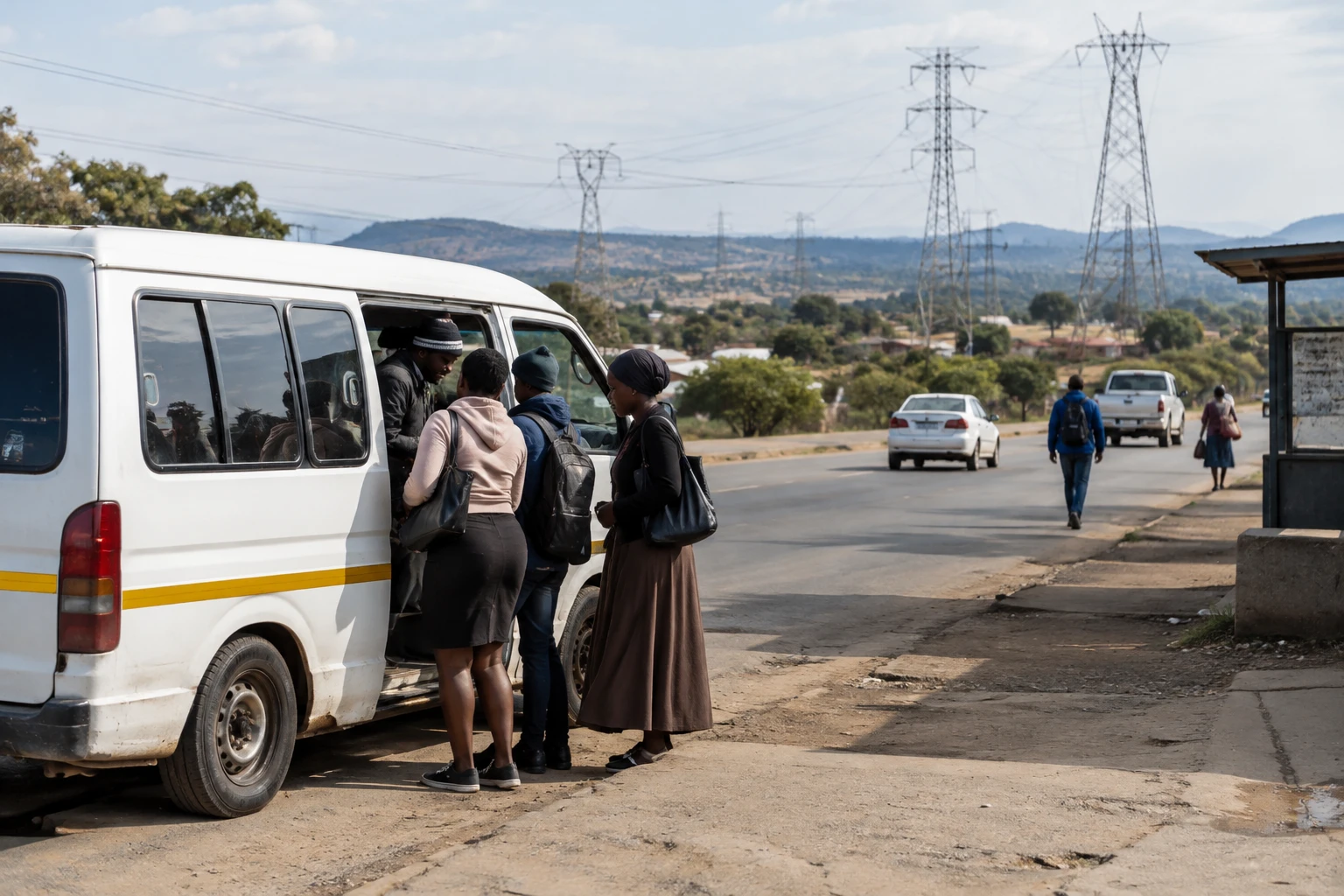
As the sun sets and the wind dies down, South Africa’s electricity grid needs reserves that can be brought online quickly. In Limpopo, a long-duration storage project could help maintain that balance. But its delivery will still depend on financing, electricity contracts and the selection of a private partner.
A Limpopo project in a changing grid
South Africa is gradually reorganising its electricity sector after years of shortages and load-shedding. The growth of solar and wind power brings another requirement: generating more low-carbon electricity while having the means to store it when supply exceeds demand and release it during peak hours.
This shift is also taking place within an interconnected regional system. A member of the Southern African Development Community (SADC), South Africa trades electricity with neighbouring countries through the Southern African Power Pool, the regional electricity market. Greater flexibility in the national grid can therefore have an impact beyond the country’s borders, although Tubatse remains primarily a South African project.
On 13 October 2026, Eskom launched a prequalification process to find a strategic partner to help develop, finance and deliver Tubatse. The state-owned company plans a second competitive stage for qualified candidates. Responses to the first phase are due by 10am South African time on 30 November 2026. Eskom sets out the conditions of its process for the Tubatse project.
Fourteen hours of generation at full capacity
Planned near Roossenekal, in Limpopo province, the site would have a power capacity of 1,500 megawatts (MW) and could store 21 gigawatt-hours (GWh). At full capacity, it would supply electricity for about 14 hours. If these specifications are confirmed during the development stages, Tubatse would surpass Eskom’s existing pumped-storage power stations: Ingula, Drakensberg and Palmiet.
Pumped storage works like a large-scale energy reserve. When electricity is available in surplus, pumps move water uphill to a reservoir. When the grid needs power, the water flows back down through turbines to generate electricity. The system does not create energy; it shifts it through time and meets needs that shorter-duration batteries cannot always cover.
Eskom says the project could also provide grid-stability services. The company says grid-connection studies have progressed, environmental approvals have been obtained and water availability has been confirmed from the De Hoop Dam. These are important steps, but they do not mean construction is ready to begin: the partner, financing structure and arrangements for selling the electricity remain decisive.
A major investment, with funding still to be structured
South Africa’s 2026 investment book estimates the project’s cost at 40 billion rand. It also mentions a €6.5 million grant secured in 2024 from the French Development Agency to support project preparation. This funding covers preparatory work; it represents only a fraction of the stated cost and is not a financing agreement for construction. The Tubatse entry in the 2026 investment book describes the project as being in the design phase.
Bringing in a private partner could help share capital requirements and development risks. However, the investment will be viable only if future revenues are predictable enough to attract lenders and investors. Eskom says it is considering several commercial options, including allocating capacity under the integrated resource plan and selling electricity on a bilateral or competitive market. The choice of model will therefore have direct implications for the cost of electricity and the guarantees required from public-sector players.
For Limpopo residents, the announcement does not yet make it possible to quantify local jobs or economic benefits. These will depend in particular on construction contracts, the skills employed and commitments made by the future partner. Benefits for consumers, meanwhile, will depend on how much storage capacity is actually built and how it is integrated into the grid, not just on the stated capacity.
The next step will also be commercial
Tubatse is part of Eskom Green’s strategy. The renewable-energy business was established by the group in June 2026. Eskom has set targets of about 6 gigawatts of low-carbon capacity by 2030 and a portfolio of up to 32 gigawatts by 2040. These ambitions point to a major transformation, but they remain development targets, not capacity already installed. Eskom Green’s presentation details these capacity targets.
The search for a Tubatse partner comes as Eskom is also seeking partners for a separate renewable-energy and storage programme. For South Africa’s electricity sector, the challenge is to advance several projects without undermining security of supply or passing their costs on to households and businesses.
A second independent source, South African media outlet Eyewitness News, has also reported the launch of the process and the site’s stated specifications. It notes that storage would allow energy to be released when demand rises or solar and wind generation falls. The timetable, award conditions and decisions on electricity purchases will be the next tangible milestones. Eyewitness News’s report on the call for partners.



