Algeria
 Egypt
 Libya
 Morocco
 Sudan
 Tunisia
 Benin
 Burkina Faso
 Cabo Verde
 Côte d'Ivoire
 Ghana
 Guinea
 Guinea-Bissau
 Liberia
 Mali
 Mauritania
 Niger
 Nigeria
 Senegal
 Sierra Leone
 The Gambia
 Togo
 Cameroon
 Central African Republic
 Chad
 DR Congo
 Equatorial Guinea
 Gabon
 Republic of the Congo
 São Tomé and Príncipe
 Burundi
 Comoros
 Djibouti
 Eritrea
 Ethiopia
 Kenya
 Malawi
 Mauritius
 Mozambique
 Rwanda
 Seychelles
 Somalia
 South Sudan
 Tanzania
 Uganda
 Angola
 Botswana
 Eswatini
 Lesotho
 Namibia
 South Africa
 Zambia
 Zimbabwe
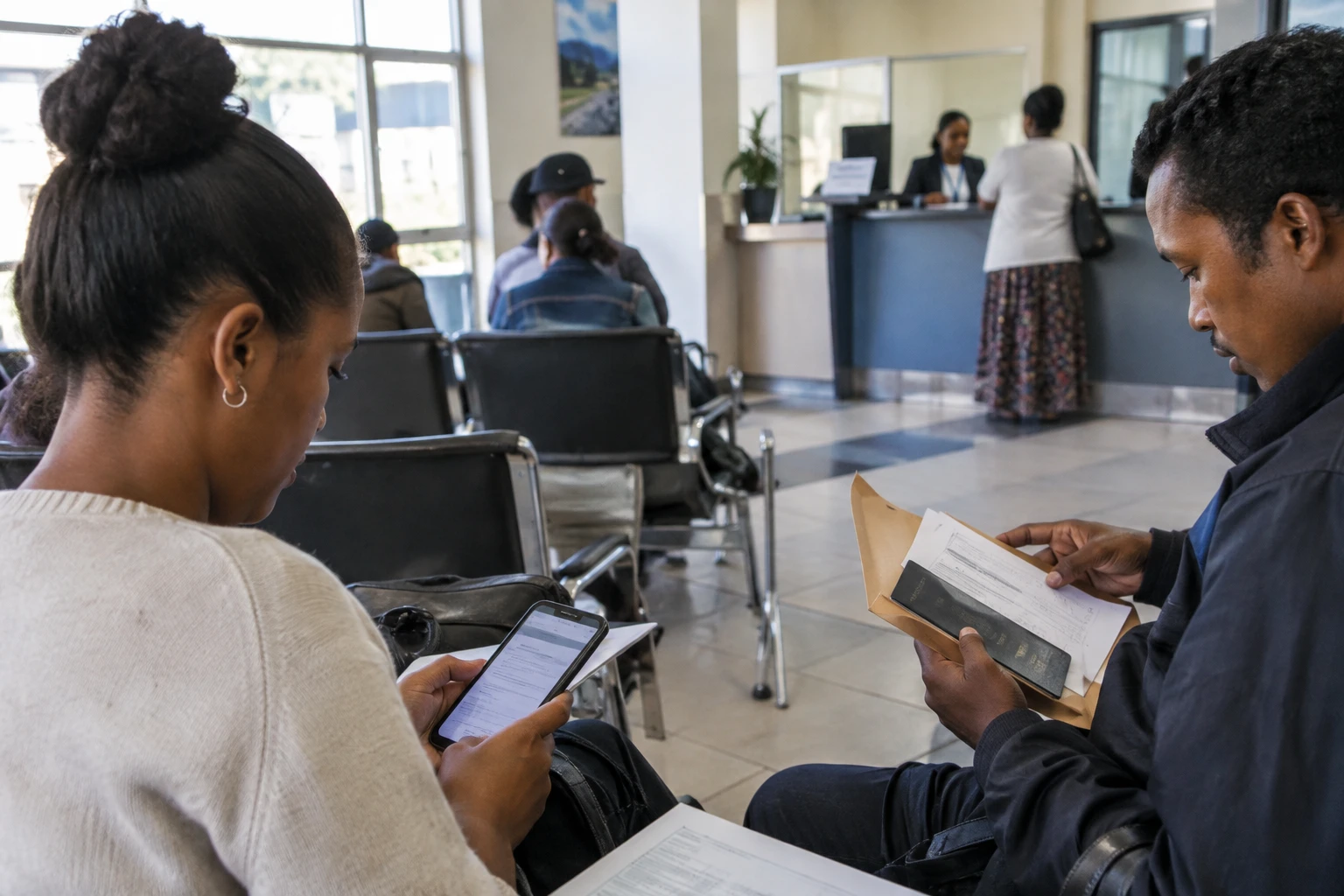
Applying for a passport involves more than filling in a form: it can require several documents, appointments and journeys. In Madagascar, a new portal currently being tested promises to bring some of these steps online. Its value, however, will be measured against a practical test: does the service genuinely reduce the time and journeys required of applicants, in the capital and in the regions?
From online appointments to a digital application
The initiative builds on a transition already under way. On 8 April 2024, Madagascar’s Ministry of Foreign Affairs announced the launch of an appointment platform for passport applications and renewals by members of the diaspora. The service, then centred on the embassy in Paris, was intended to make appointments easier to book and consular applications easier to process.
In Antananarivo, the passport service at the Ministry of Public Security also offers online appointments, with or without documents submitted in advance. This is progress, but a digital appointment alone does not eliminate the need to prepare an application or visit the counter. Original documents must still be presented for verification.
The e-Pasipaoro portal would extend this approach. According to the information displayed on its demonstration version, applicants could create an account, fill in the form, submit supporting documents, pay the fees and track the progress of their application. The service would cover first-time applications, renewals and replacements.
The ministry responsible for digital development says functional testing is under way. No date for opening the service to the public has been announced. It is therefore important to distinguish between the functions planned and a service that is actually available: the portal is not yet being presented as fully operational.
Digital services cannot replace every step
Passport applications involve identity checks. The collection of biometric data — including fingerprints and a photograph — as well as the signature, will have to remain in person, according to information provided about the project. The aim, then, is not to eliminate all visits to the service, but to reduce the steps that can be completed remotely.
This distinction matters for people who live far from Antananarivo and administrative offices. If forms and documents can be submitted before an appointment, the journey could be better prepared and less likely to need repeating. But if the platform requires an internet connection that is difficult to access, an online process may simply shift the difficulty rather than solve it.
The processing times displayed on the demonstration site should also be treated with caution. The site gives an estimate of around 18 working days for applications submitted in Madagascar and 12 days at a consulate, once a complete application has been received. It says these figures exclude the physical production and collection of the passport. These estimates are not yet results measured under real-world conditions.
Completeness of applications will be crucial. The official passport service lists several supporting documents, depending on whether the application is for a first passport, a renewal or a replacement. An effective portal will need to clearly identify missing documents, explain the reasons for rejection and allow applicants to correct an error without starting the entire process again.
An issue of access and trust
The expected benefits will not be the same for everyone. People living near service counters already have easier access to information and appointments. For those in the regions, the benefit will depend on whether they can avoid costly trips to a processing centre. For the diaspora, coordination between consulates and Antananarivo will remain essential, since biometric data collection and document production will not be entirely online.
Internet access, digital skills and the availability of payment methods will also affect uptake. An inclusive process requires clear instructions that work on a phone, assistance for people less familiar with digital tools and offline alternatives. It also requires robust protection of personal data: identity documents and biometric information are particularly sensitive.
Rwanda’s experience offers a regional point of reference, though not a direct comparison. The public portal IremboGov states that an electronic passport application takes four working days to process. This figure shows the level of service the country advertises, but does not establish that digitisation alone accounts for the speed: administrative structures, volumes and production processes differ.
A test of Madagascar’s administrative capacity
Madagascar is a member of the Southern African Development Community, or SADC, the regional organisation bringing together 16 states in southern Africa. For administrations in the region, modernising services is not measured solely by the number of platforms launched. It is also judged by their availability, the consistency of procedures and whether users can get a response.
For e-Pasipaoro, the next indicators will therefore be very concrete: the public launch date, actual processing times, the proportion of incomplete applications, any service interruptions and how often journeys are still necessary. It will also be important to establish whether consulates have the resources to process applications according to the same rules.
If the portal delivers on its promises, it could make an administrative process more predictable for Malagasy people at home and in the diaspora. If it merely transfers forms to a screen without improving the processing behind the counter, the change will remain largely cosmetic. The real test will be the transition from testing to a reliable service.
An update on testing of the e-Pasipaoro portal in Madagascar · Madagascar’s official passport service · The consular platform launched in 2024 · Rwanda’s official information on passport applications · SADC member states