Algeria
 Egypt
 Libya
 Morocco
 Sudan
 Tunisia
 Benin
 Burkina Faso
 Cabo Verde
 Côte d'Ivoire
 Ghana
 Guinea
 Guinea-Bissau
 Liberia
 Mali
 Mauritania
 Niger
 Nigeria
 Senegal
 Sierra Leone
 The Gambia
 Togo
 Cameroon
 Central African Republic
 Chad
 DR Congo
 Equatorial Guinea
 Gabon
 Republic of the Congo
 São Tomé and Príncipe
 Burundi
 Comoros
 Djibouti
 Eritrea
 Ethiopia
 Kenya
 Madagascar
 Mauritius
 Mozambique
 Rwanda
 Seychelles
 Somalia
 South Sudan
 Tanzania
 Uganda
 Angola
 Botswana
 Eswatini
 Lesotho
 Namibia
 South Africa
 Zambia
 Zimbabwe
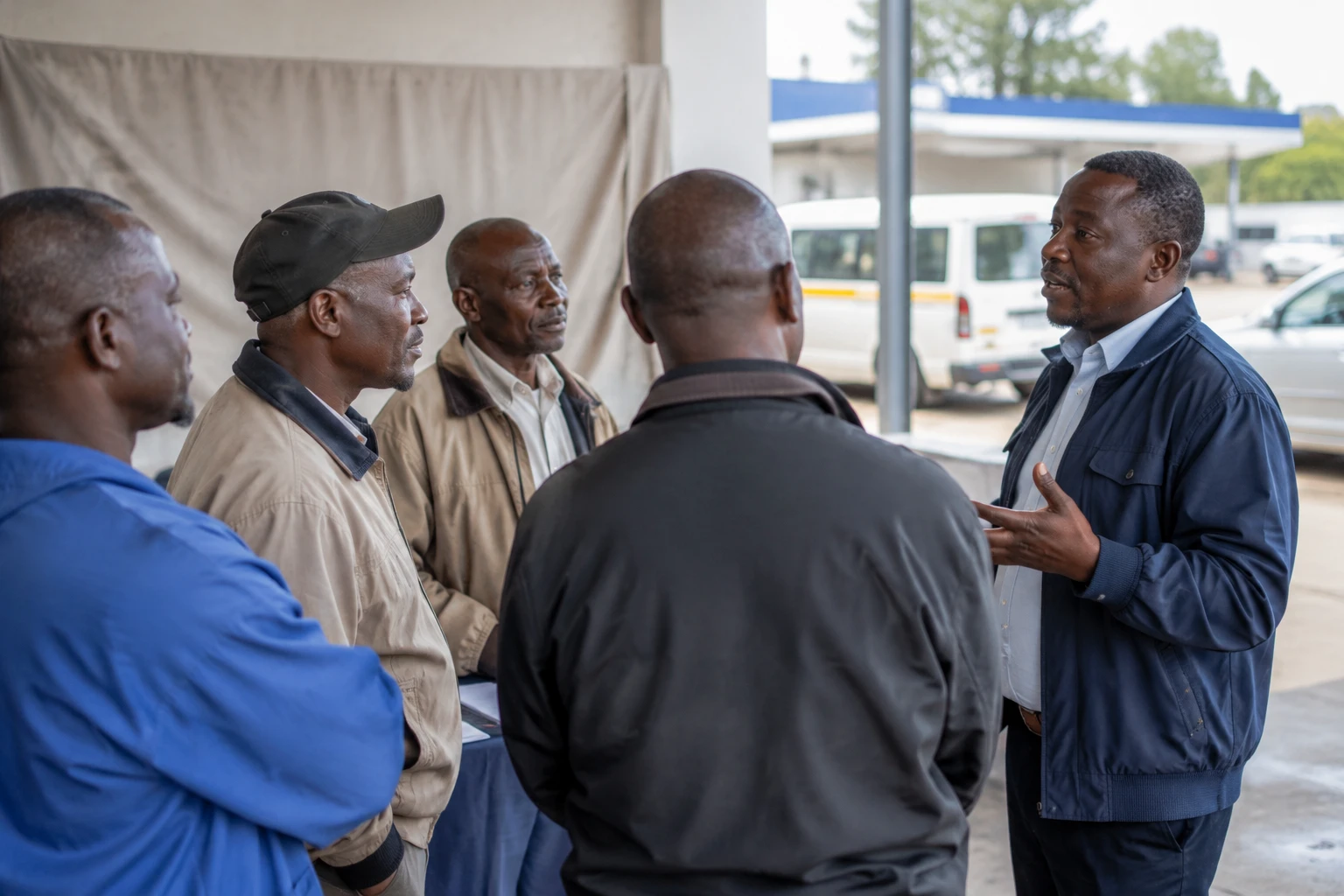
When fuel runs short in Malawi, the crisis does not stop at the pumps. It affects commutes, market stalls and small businesses that rely on minibuses or deliveries. For households already under pressure, a few extra kilometres or a fare increase can be enough to disrupt the day.
A shortage that exposes deeper fragilities
Malawi, a landlocked country in southern Africa, depends on imports to supply its fuel market. Products are transported along corridors that pass through ports in Mozambique and Tanzania, among others. Purchases must therefore be financed in foreign currency, before shipments are carried by road. Financial or logistical difficulties can quickly affect stations across the country.
This vulnerability is longstanding. In its 2025 economic report, the International Monetary Fund noted that fuel accounted for an average of more than 16% of Malawi’s imports. It also said that shortages of foreign currency and fuel had held back economic activity. These factors shed light on the current situation, but are not enough to establish the precise cause of each stockout.
Management of the sector has also changed. The government has revised its purchasing and supply mechanisms. In its 2025 analysis, the IMF described a shift to government-to-government purchasing agreements after the tender system was suspended. Malawi’s finance ministry later announced its intention to return to open tenders and diversify suppliers. These decisions show that supply security depends as much on the availability of foreign currency as on contracts and their implementation.
Queues and fares under pressure
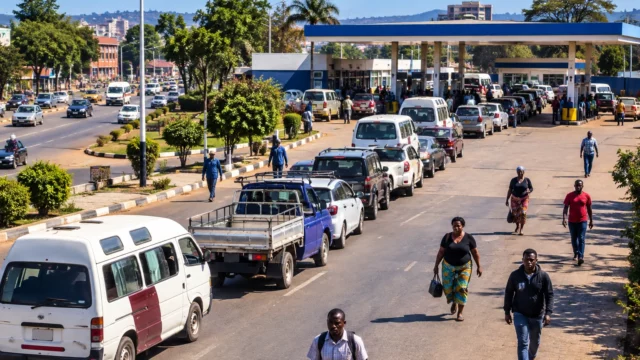
By mid-October 2026, reports indicated that the shortage had entered its second week. Motorists were waiting outside stations, sometimes sleeping in their vehicles in the hope of a restock. The regulatory authorities and the energy ministry had not given a precise timeline for a return to normal, according to information reported by Africanews with AFP.
The fuel shortage is also affecting public transport. Minibus operators say they have to spend longer looking for supplies or buy fuel at higher prices on the parallel market. Coaxley Kamange, secretary-general of the Malawi Minibus Owners Association, has called on the authorities to intervene. The association represents operators, but its statements alone do not amount to a nationwide measure of fare trends.
Articles published in early October by Malawian outlet Nyasa Times describe fare increases on several routes, in Lilongwe and elsewhere. The amounts cited vary by route and according to individual accounts, and should therefore be understood as local examples rather than a uniform fare across the country. The same outlet reports that fuel is being sold on the parallel market at prices far above official levels. The Consumers Association of Malawi, for its part, has accused some stations of making distribution unpredictable and encouraging diverted sales. These are its allegations and have not been established as a general finding.
The consequences are not the same for everyone. Transport operators who buy fuel at inflated prices seek to cover their costs, while passengers absorb some of the increase or give up certain journeys. Market vendors, day labourers and small businesses often have less room to pass on additional expenses. People living far from major centres may be penalised by longer journeys and fewer transport options.
External pressures and expected responses
The international context can drive up purchase costs and make transport more difficult. However, the explanation in the original material concerning a blockade of the Strait of Hormuz is not sufficiently corroborated by the sources consulted to be presented as an established fact. Malawian media instead point to a combination of factors: foreign currency shortages, difficulties paying suppliers and regional logistical disruptions. These structural factors must be distinguished from the immediate causes of the current shortage, which the authorities have not publicly detailed in the available information.
Price regulation and purchasing arrangements also involve trade-offs. Official price controls can protect consumers from sharp increases, but if importers cannot cover their costs or obtain the necessary foreign currency, delivered volumes may fall. The parallel market, by contrast, directly penalises users and is less subject to public oversight. The IMF has described tensions between pricing mechanisms, financial losses in the sector and supply difficulties; its analysis concerns the situation documented in 2025, not an updated assessment of the October 2026 crisis.
General announcements will not be enough to assess whether the situation is improving. Key indicators will include the regularity of deliveries, distribution between cities and less well-served areas, and operators’ ability to buy and distribute fuel without resorting to informal channels. Regular communication about stocks and deliveries would also help motorists and transport operators decide when and where to refuel.
A challenge for southern Africa’s transport corridors
Malawi is a member of the Southern African Development Community (SADC), which brings together countries in the region to promote economic cooperation and infrastructure. Its landlocked position makes transport corridors essential: a disruption at a port or along a transit road can affect the Malawian economy, even if neighbouring countries are not experiencing shortages at the same time.
The crisis is a reminder that regional energy security depends on more than access to ports. It also relies on foreign currency availability, reliable contracts, storage capacity and coordination between transit and importing countries. In Lilongwe, the immediate priority is to restore predictable supplies and protect users from additional costs. At regional level, attention will need to focus on Malawi’s decisions on purchasing and supplier diversification, as well as the continuity of flows through the corridors in Mozambique and Tanzania.