Algeria
 Egypt
 Libya
 Morocco
 Sudan
 Tunisia
 Benin
 Burkina Faso
 Cabo Verde
 Côte d'Ivoire
 Ghana
 Guinea
 Guinea-Bissau
 Liberia
 Mali
 Mauritania
 Niger
 Nigeria
 Senegal
 Sierra Leone
 The Gambia
 Togo
 Cameroon
 Central African Republic
 Chad
 DR Congo
 Equatorial Guinea
 Gabon
 Republic of the Congo
 São Tomé and Príncipe
 Burundi
 Comoros
 Djibouti
 Eritrea
 Ethiopia
 Kenya
 Madagascar
 Malawi
 Mauritius
 Mozambique
 Rwanda
 Seychelles
 Somalia
 South Sudan
 Tanzania
 Angola
 Botswana
 Eswatini
 Lesotho
 Namibia
 South Africa
 Zambia
 Zimbabwe
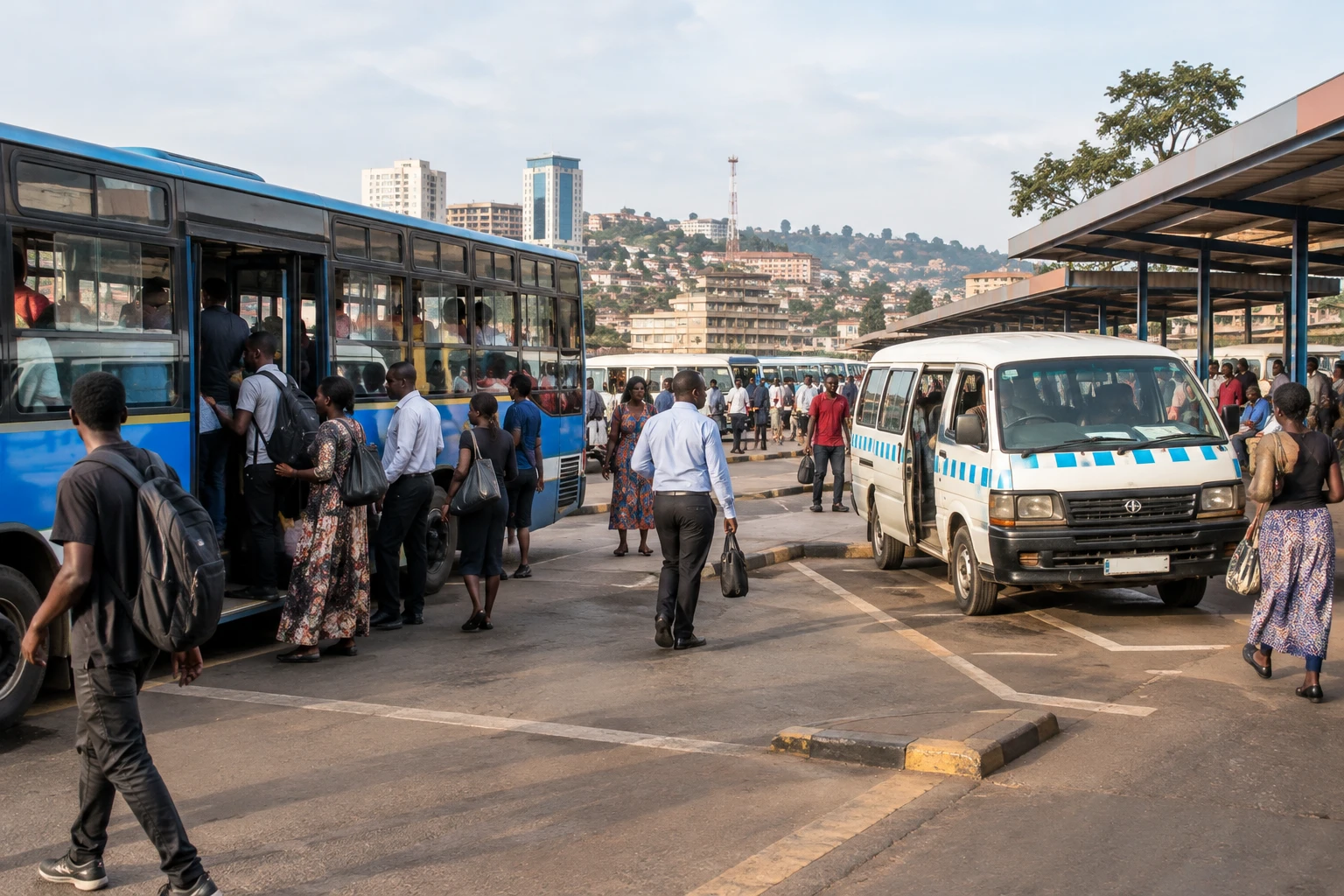
In Kampala, the question is not simply how to find billions. It is also who will mobilise them, where they will go, and whether the projects they fund will create jobs and incomes beyond the major urban centres. That is the challenge posed by Uganda’s new development financing strategy.
A five-year plan to change scale
On 8 October 2026, Minister for the Presidency Milly Babirye Babalanda called for the country’s financing mechanisms to be reviewed. She was speaking at a high-level dialogue in Kampala attended by public officials, financial institutions, development partners and private-sector representatives. The government wants to increase Uganda’s gross domestic product (GDP) from about $50bn to $500bn by 2040.
This ambition, dubbed the tenfold growth strategy, is built on four sectors: agro-industry, tourism, mineral resources — including oil and gas — and science, technology and innovation. The stated aim is to increase output and productivity, process more raw materials locally, and then expand exports and employment.
The first step is the fourth National Development Plan, or NDP IV, covering the 2025/2026 to 2029/2030 financial years. Its projected cost is 593,646bn Ugandan shillings. According to the Ministry of Finance, 69.6% is expected to be financed by the public sector and 30.4% by the private sector. These figures are estimated needs, not funding already secured.
Mobilising savings without shifting all the risks
The government wants to strengthen domestic tax revenues and direct public spending towards its priorities. But state finances alone cannot cover the entire programme. The minister therefore cited private investment, public-private partnerships, deeper capital markets, blended finance — combining public or concessional funds with private capital — and Islamic finance.
This diversification could open up long-term funding sources for infrastructure and productive businesses. It also raises a practical question: who will bear the losses if a project disappoints? In a public-private partnership, a public guarantee or poorly negotiated contract can shift a significant share of the risk to taxpayers. The quality of project preparation, transparency and oversight of implementation will therefore matter as much as the volume of capital mobilised.
Financing must also reach businesses that cannot easily access financial markets. Major infrastructure and mining projects attract investors more readily than small businesses, agricultural co-operatives or informal enterprises. Yet the latter play an essential role in employment and household incomes. Tailored mechanisms — accessible credit, targeted guarantees or business support — will be needed to ensure the strategy does not benefit only established players.
High targets, real constraints
NDP IV aims to raise GDP to $158bn in 2029/2030, from $53.2bn in 2023/2024. It also seeks to increase household incomes and reduce the share of households relying primarily on subsistence farming. These projections set out a trajectory to follow, but they are not results already achieved. They depend, among other things, on production growth, investment and the state’s ability to deliver the projects it has announced.
Available data point to an expanding economy, but also to mounting pressure on fiscal headroom. The International Monetary Fund estimates real growth at 6.3% for the 2024/2025 financial year. Over the same period, the public deficit stood at 6% of GDP, up from 4.7% the previous year. A deficit does not automatically prevent investment, but financing it and servicing debt reduce the resources available for other spending.
The implementation challenge goes beyond the national accounts. The benefits will depend on how investment connects rural producers with processing facilities and markets, and on cities’ ability to provide energy, transport and services. For households, success will be measured less by the overall GDP figure than by changes in incomes, jobs and the cost of living.
An East African trajectory to watch
Uganda is placing this programme within Vision 2040 and a development trajectory monitored by the National Planning Authority. The country is a member of the East African Community (EAC), which brings together economies linked by trade and regional integration projects. Stronger value chains and better-connected infrastructure could expand opportunities for Ugandan businesses beyond the domestic market.
The regional impact will nevertheless depend on concrete choices: the share of value added created in Uganda, local jobs, businesses’ access to finance and the allocation of risks associated with major projects. In the mining and oil sectors, a central question will also be how revenues are managed and converted into lasting capacity, rather than one-off spending.
The next test will be the implementation of NDP IV, the first step in the strategy to 2040. Annual budgets, revenues actually collected and private investments realised will show the gap between announcements and results. For now, the $500bn target remains a government ambition: its credibility will depend on project quality and the benefits for Ugandans, from Kampala to rural regions.