Algeria
 Egypt
 Libya
 Morocco
 Sudan
 Tunisia
 Benin
 Burkina Faso
 Cabo Verde
 Côte d'Ivoire
 Ghana
 Guinea
 Guinea-Bissau
 Liberia
 Mali
 Mauritania
 Niger
 Nigeria
 Senegal
 Sierra Leone
 The Gambia
 Togo
 Cameroon
 Central African Republic
 Chad
 DR Congo
 Equatorial Guinea
 Gabon
 Republic of the Congo
 São Tomé and Príncipe
 Burundi
 Comoros
 Djibouti
 Eritrea
 Ethiopia
 Kenya
 Malawi
 Mauritius
 Mozambique
 Rwanda
 Seychelles
 Somalia
 South Sudan
 Tanzania
 Uganda
 Angola
 Botswana
 Eswatini
 Lesotho
 Namibia
 South Africa
 Zambia
 Zimbabwe
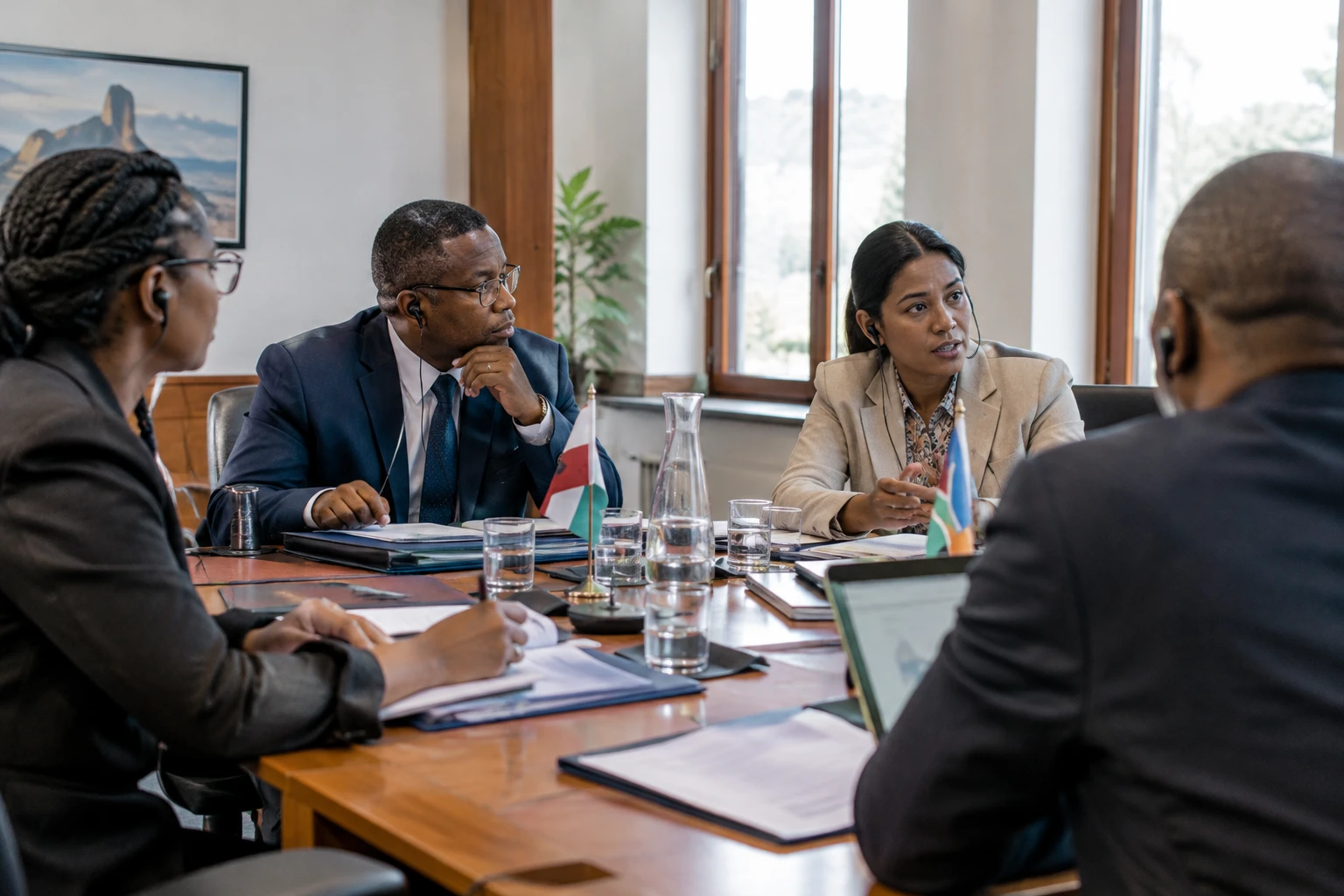
At Ampasindava, in north-west Madagascar, an administrative milestone for a rare earths project raises a broader question: who will decide its terms, and what benefits will reach neighbouring communities? The answer will depend on more than the mining permit. Environmental authorisations, consultations and financing remain decisive.
Permit formalised, but construction not yet cleared
On 12 October 2026, Harena Rare Earths announced that the Ampasindava mining permit had been formalised. The company says this confirms social, environmental, technical and financial commitments agreed with Madagascar’s Ministry of Mines. It follows the signing on 11 August of the mining specifications, which set out the operator’s obligations. Harena’s regulatory announcement on Ampasindava nevertheless states that an environmental permit and management plans must still be obtained or completed before infrastructure work for the pilot phase can begin.
The distinction matters. Formalisation of the mining permit does not mean commercial mining can start. Harena says it must carry out an environmental and social impact assessment, as well as the public consultations required under Madagascar’s regulatory framework. A pilot plant must then test extraction and processing methods. Its results would feed into a definitive feasibility study, before any final investment decision.
The company’s stated timetable envisages securing financing and beginning construction in 2027. Commercial production is targeted for 2028. These dates remain company objectives, not deadlines guaranteed by the authorisations already announced.
Forecast figures and questions still unanswered
According to pre-feasibility data released by Harena, the project would require an initial investment of $142 million. The company estimates that it could produce 71,000 tonnes of rare earth oxides over 20 years. The elements sought include dysprosium and terbium, used in some permanent magnets for electric motors and electronic equipment. These volumes and costs remain technical estimates: the pilot plant and definitive study must still establish feasibility.
The global context helps explain the industrial interest in these minerals. Countries are seeking to diversify supplies of materials used in advanced technologies, while rare earth separation and processing remain highly concentrated. Ampasindava could contribute to that diversification, but the deposit will not in itself create a local value chain. Processing, offtake contracts, infrastructure and available skills will also affect how benefits are distributed.
For Madagascar, the challenge is therefore to turn a mineral resource into public revenue, jobs and sustainable economic activity without shifting the costs on to residents or the natural environment. The capital, Antananarivo, and national administrations are negotiating the project framework; its direct effects, however, will first be felt in communities near the peninsula. Construction jobs may be temporary, while needs for roads, energy and services may persist. Expected revenues will depend on whether production starts, on prices and on the levies set out in law.
Communities at the centre of the next test
Disagreement over local participation is already public. On 13 August, the Centre de recherches et d’appui pour les alternatives de développement – Océan Indien (CRAAD-OI) and Malagasy organisations challenged the process. They say residents of 18 fokontany, local administrative units, oppose the project and denounce the absence of prior consultation. These are the organisations’ claims; they do not, by themselves, constitute a court ruling or an independent assessment of the project’s effects. They nonetheless make the quality and accessibility of forthcoming consultations an unavoidable issue. The Malagasy organisations’ statement on Ampasindava sets out their objections.
The objections are a reminder that commitments written into mining specifications must be verifiable on the ground. Residents need clear information about water, soil, agricultural land, possible resettlement and grievance mechanisms. The authorities, for their part, will have to explain how feedback will be taken into account. Consultation is measured not by the number of meetings, but also by whether people have a genuine opportunity to influence decisions.
Madagascar’s mining code, revised in 2023, governs mining and provides, among other things, for mining royalties allocated to local authorities. It is the legal framework for the project, but does not automatically settle questions of transparency or local benefit-sharing. The official text of Madagascar’s Mining Code distinguishes, in particular, between royalties collected by the state and payments reserved for local authorities.
A Malagasy issue with regional resonance
Madagascar is a member of the Southern African Development Community (SADC), a regional organisation for economic and political co-operation. The country can therefore bring its mining choices into regional discussions on trade, infrastructure and resource processing. Madagascar’s profile on the SADC website recalls this membership. Across the continent, Ampasindava raises a familiar question for several African countries: how to attract investment and meet demand for strategic minerals while retaining a greater share of the value and protecting the rights of affected populations.
The next steps will show whether regulatory progress translates into a project genuinely ready for construction. The environmental permit, the substance of consultations, the launch of the pilot phase and the announced financing will all need to be tracked. For the Malagasy people affected, Ampasindava’s credibility will be judged as much by these concrete safeguards as by promises of production and revenue.