Algeria
 Egypt
 Libya
 Morocco
 Sudan
 Tunisia
 Benin
 Burkina Faso
 Cabo Verde
 Côte d'Ivoire
 Ghana
 Guinea
 Guinea-Bissau
 Liberia
 Mali
 Mauritania
 Niger
 Nigeria
 Senegal
 Sierra Leone
 The Gambia
 Togo
 Cameroon
 Central African Republic
 Chad
 DR Congo
 Equatorial Guinea
 Republic of the Congo
 São Tomé and Príncipe
 Burundi
 Comoros
 Djibouti
 Eritrea
 Ethiopia
 Kenya
 Madagascar
 Malawi
 Mauritius
 Mozambique
 Rwanda
 Seychelles
 Somalia
 South Sudan
 Tanzania
 Uganda
 Angola
 Botswana
 Eswatini
 Lesotho
 Namibia
 South Africa
 Zambia
 Zimbabwe
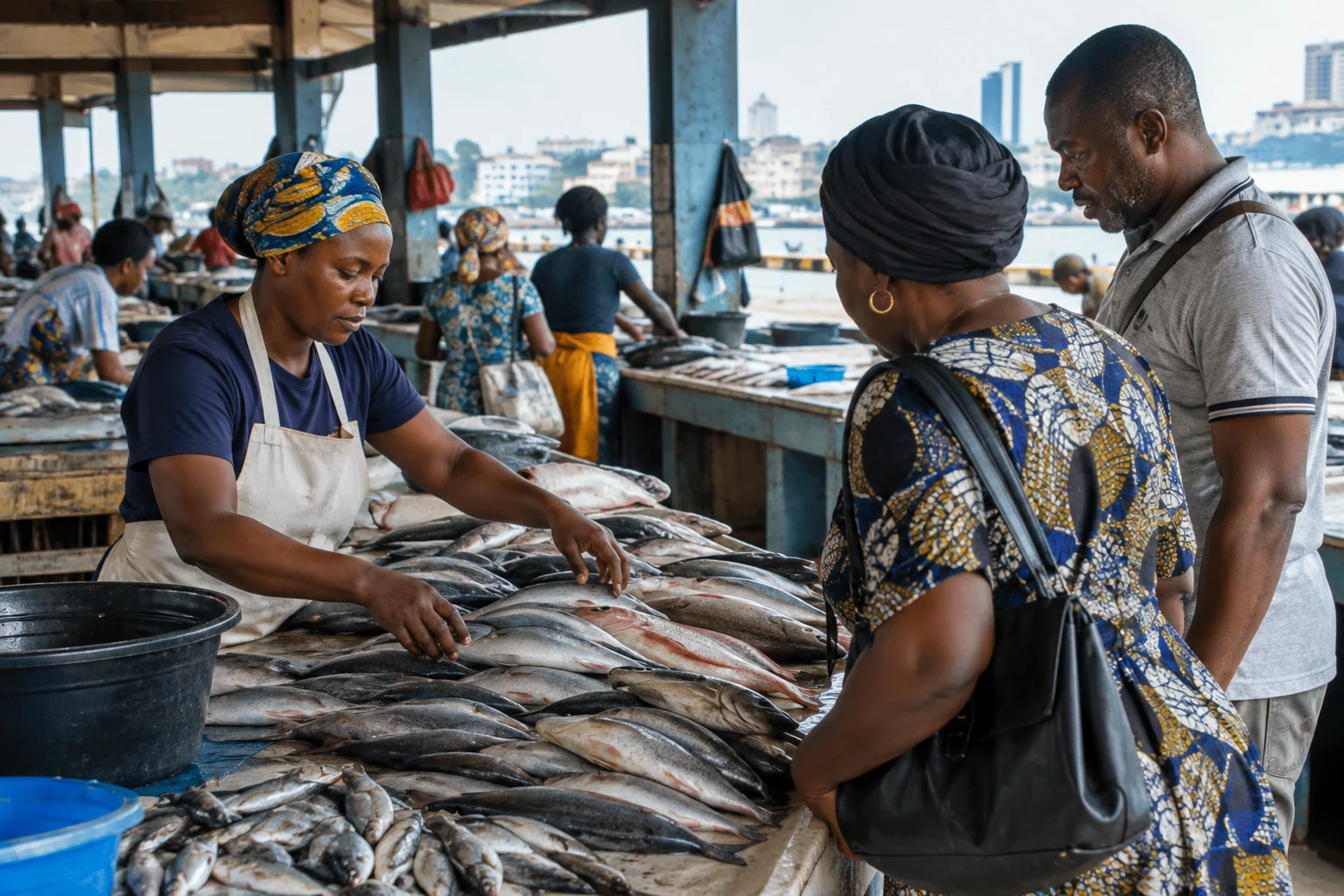
Can a Saturday market in Libreville reveal the vulnerabilities of a supply chain linking fishermen in southern Gabon with consumers in the capital? Fish sold under the name Mayumba attracts buyers. But the idea that its popularity has caused a shortage is not confirmed by available independent data.
From the southern coast to Libreville’s stalls
Mayumba, in Nyanga province, lies in Gabon’s far south. The town borders the Atlantic Ocean and the Banio Lagoon. Artisanal fishing is an important local activity, while Libreville accounts for a large share of urban demand.
Information published about a seasonal Saturday market in Libreville describes fresh fish being brought in from Mayumba for sale. It also refers to strong demand from consumers in the capital. However, it does not specify the volumes transported, the species involved, or the duration or scale of any possible supply disruption. The reported commercial appeal must therefore be distinguished from a proven shortage.
This caution matters. In September 2025, vendors interviewed in Libreville reported that fresh fish was becoming scarce and prices were rising. However, the director of the Libreville Artisanal Fishing Support Centre disputed the term “shortage”: she attributed the decline in catches to seasonality and expected supply to improve with the change of season. This conflicting testimony is not, on its own, enough to establish a single cause or a situation identical to that in Mayumba.
Strong demand, vulnerable supply
The national context helps explain the interest in fish from the south. According to the FAO, fish consumption in Gabon is about 35 kilograms per person per year. In 2022, the organisation estimated that the country imported nearly 25,000 tonnes of fish each year to meet demand. These figures describe an overall dependence; they do not measure Mayumba’s stocks or sales at the Libreville market.
The supply chain does not end with the catch. Fish must be stored, transported in suitable conditions and sold quickly enough. A cold room, ice or a suitable vehicle can limit losses and extend the period in which fish can be sold. Without data on landings, prices and journeys, it remains difficult to know whether a fall in local supply is due to the seasons, fishing conditions, transport or increased demand.
The effects of supply pressures are not the same for everyone. Consumers on modest incomes may switch to cheaper products, particularly frozen ones. Vendors have to balance purchase prices, transport costs and their margin. Fishermen may benefit from a profitable outlet if prices rise, but remain exposed to fluctuations in catches and material costs.
Mayumba at the heart of fishing policy
On 14 March 2025, the Gabonese government handed equipment to the Mayumba artisanal fishing centre. The announced donation included a cold room, a generator, cool boxes, scales, fishing equipment and a vehicle. This equipment can strengthen storage and logistics, but its handover is not enough to establish that supply problems have been resolved. Its operation, maintenance and effective access for local stakeholders also matter.
The FAO is also supporting the development of fishing centres and training for industry stakeholders in several Gabonese localities, including Mayumba. The challenge is to better organise value chains, from catch to sale, without increasing pressure on resources. Artisanal fishing and fish farming can contribute to employment and local supply; however, they require equipment, skills and reliable catch data.
Fisheries management also concerns the waters and economies of the sub-region. Gabon belongs to the Economic Community of Central African States, or ECCAS. Marine resources, markets and fishing activities extend beyond national borders. Even so, a one-off observation at a market in Libreville cannot support conclusions about Central Africa as a whole.
What needs to be checked
If the commercial success of Mayumba fish is sustained, it could bring producers in the south closer to consumers in Libreville. But sustained demand alone does not prove that local resources are being depleted or that the city is short of fish. Landings would need to be compared across seasons, while prices and sales volumes would need to be tracked and transport conditions documented.
This data would help distinguish seasonal variation from a lasting imbalance between catches and demand. It would also make it possible to assess the actual effect of the new equipment on fishermen’s incomes, post-catch losses and the price paid by households. For now, Mayumba fish’s appeal merits attention; the alleged shortage, however, remains to be established.