Algeria
 Egypt
 Libya
 Morocco
 Sudan
 Tunisia
 Benin
 Burkina Faso
 Cabo Verde
 Côte d'Ivoire
 Ghana
 Guinea
 Guinea-Bissau
 Liberia
 Mali
 Mauritania
 Niger
 Nigeria
 Senegal
 Sierra Leone
 The Gambia
 Togo
 Cameroon
 Central African Republic
 Chad
 DR Congo
 Equatorial Guinea
 Gabon
 Republic of the Congo
 São Tomé and Príncipe
 Burundi
 Comoros
 Djibouti
 Eritrea
 Ethiopia
 Kenya
 Madagascar
 Malawi
 Mauritius
 Mozambique
 Rwanda
 Seychelles
 Somalia
 South Sudan
 Tanzania
 Uganda
 Angola
 Eswatini
 Lesotho
 Namibia
 South Africa
 Zambia
 Zimbabwe
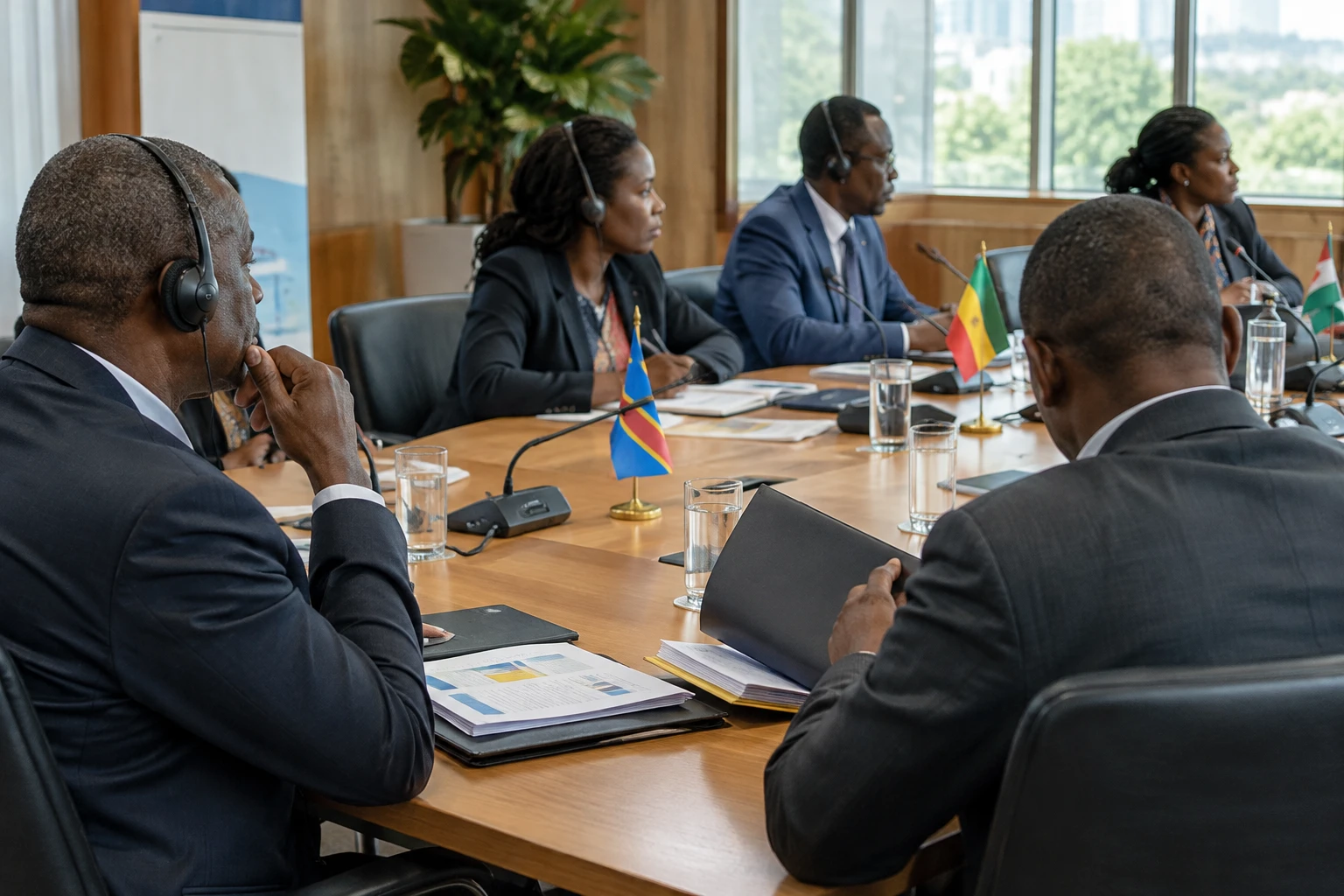
Mediation can bring officials together in Kinshasa, Kigali and Goma without bringing their positions closer. For residents of the east of the Democratic Republic of the Congo, the stakes are measured less by the number of diplomatic stops than by the return of security and the possibility of going home.
A tour to hear the parties
From 5 to 10 October 2026, a panel of facilitators from the African Union (AU) held consultations in the Great Lakes region. In Goma, its members met officials from the AFC/M23, a political-military coalition of which the M23 movement is the main component. In Kigali, they held talks with Rwandan authorities. Then, in Kinshasa, they met President Félix Tshisekedi and members of his government.
Congolese media confirmed the stops in Goma and Kinshasa, as well as the panel’s composition. The delegation included former leaders Uhuru Kenyatta of Kenya, Mokgweetsi Masisi of Botswana, Sahle-Work Zewde of Ethiopia, and Catherine Samba-Panza of the Central African Republic. Available information does not make it possible to say whether all of them took part in every meeting.
In Kinshasa, the meeting on Saturday 10 October followed an initial exchange with Félix Tshisekedi the previous day. It was expanded to include Prime Minister Judith Suminwa and members of the government. After the meeting, Sahle-Work Zewde said the panel was seeking a lasting solution so that the Congolese people could “enjoy what they have”. No new agreement or detailed timetable was announced publicly.
The mission does not end with this round of meetings. Its members referred to future visits to Uganda and Burundi, followed by consultations in Beni and Bunia, in eastern Congo. The dates and arrangements for these steps remain to be specified.
Overlapping peace processes
The tour is taking place amid a crisis in which several mediation efforts are moving forward in parallel. The Washington process concerns relations between Kinshasa and Kigali. The Doha process focuses on talks between the Congolese government and the AFC/M23. The AU panel is seeking to bring these efforts together, although no public announcement has yet confirmed a common position among the parties.
For Kinshasa, the stated priorities remain concrete and verifiable progress, the withdrawal of Rwandan troops from Congolese territory and the protection of civilians. Rwanda rejects Congolese accusations that it supports the M23. These disagreements make verification mechanisms crucial: a political declaration is not enough to establish that a withdrawal or ceasefire is actually being observed.
The crisis also involves regional institutions. The DRC belongs to the Southern African Development Community (SADC) and the East African Community (EAC), two organisations whose diplomatic and security initiatives have been called upon. The African Union must work alongside these frameworks as well as international efforts. The challenge is to prevent the proliferation of formats from obscuring responsibilities or commitments.
Different expectations in Kinshasa and the east
For the central authorities, territorial sovereignty and the withdrawal of foreign forces are central priorities. For people in North Kivu and South Kivu, progress will also be judged by a reduction in violence, freedom of movement and access to essential services. Residents of rural areas, often far from administrative centres, do not automatically benefit from progress negotiated in the capital.
In Goma, a city in North Kivu, the facilitators met representatives of the AFC/M23. The consultation recognises the group’s role in the discussions, but amounts neither to an agreement nor to recognition of its claims. It raises a sensitive question for Kinshasa: how can it negotiate with an armed actor while protecting state authority and civilians living in the territories concerned?
The consequences also extend beyond politics. Insecurity disrupts travel, trade and daily activities. Formal operators as well as informal traders may be affected, while the impact varies considerably between Kinshasa, eastern cities and rural communities. In the absence of published and verifiable commitments at the end of the visit, it would be premature to conclude that the tour has changed these realities.
Credibility will depend on follow-up
The initiative’s impact will now depend on what follows: dates for the next consultations, the effective participation of the parties and a method for verifying commitments. The planned visits to Kampala and Bujumbura, followed by Beni and Bunia, could bring the mediation closer to regional actors and affected areas. But at this stage, these are announced steps, not results already achieved.
For the AU, the challenge is to make its mediation clear amid the Washington and Doha processes. For the Congolese, the measure will be more direct: a lasting reduction in risks to civilians and tangible changes on the ground. The statement in Kinshasa opens up a diplomatic prospect. It is not yet a guarantee of peace.
Sources consulted for cross-checking: Radio Okapi on the panel’s mission in Goma, Kivu Morning Post on consultations in Kinshasa, and Elle FM on the Goma and Kigali stops.