
 Algeria
 Egypt
 Libya
 Morocco
 Sudan
 Tunisia
 Benin
 Burkina Faso
 Cabo Verde
 Côte d'Ivoire
 Ghana
 Guinea
 Guinea-Bissau
 Liberia
 Mali
 Mauritania
 Niger
 Nigeria
 Senegal
 Sierra Leone
 The Gambia
 Togo
 Central African Republic
 Chad
 DR Congo
 Equatorial Guinea
 Gabon
 Republic of the Congo
 São Tomé and Príncipe
 Burundi
 Comoros
 Djibouti
 Eritrea
 Ethiopia
 Kenya
 Madagascar
 Malawi
 Mauritius
 Mozambique
 Rwanda
 Seychelles
 Somalia
 South Sudan
 Tanzania
 Uganda
 Angola
 Botswana
 Eswatini
 Lesotho
 Namibia
 South Africa
 Zambia
 Zimbabwe
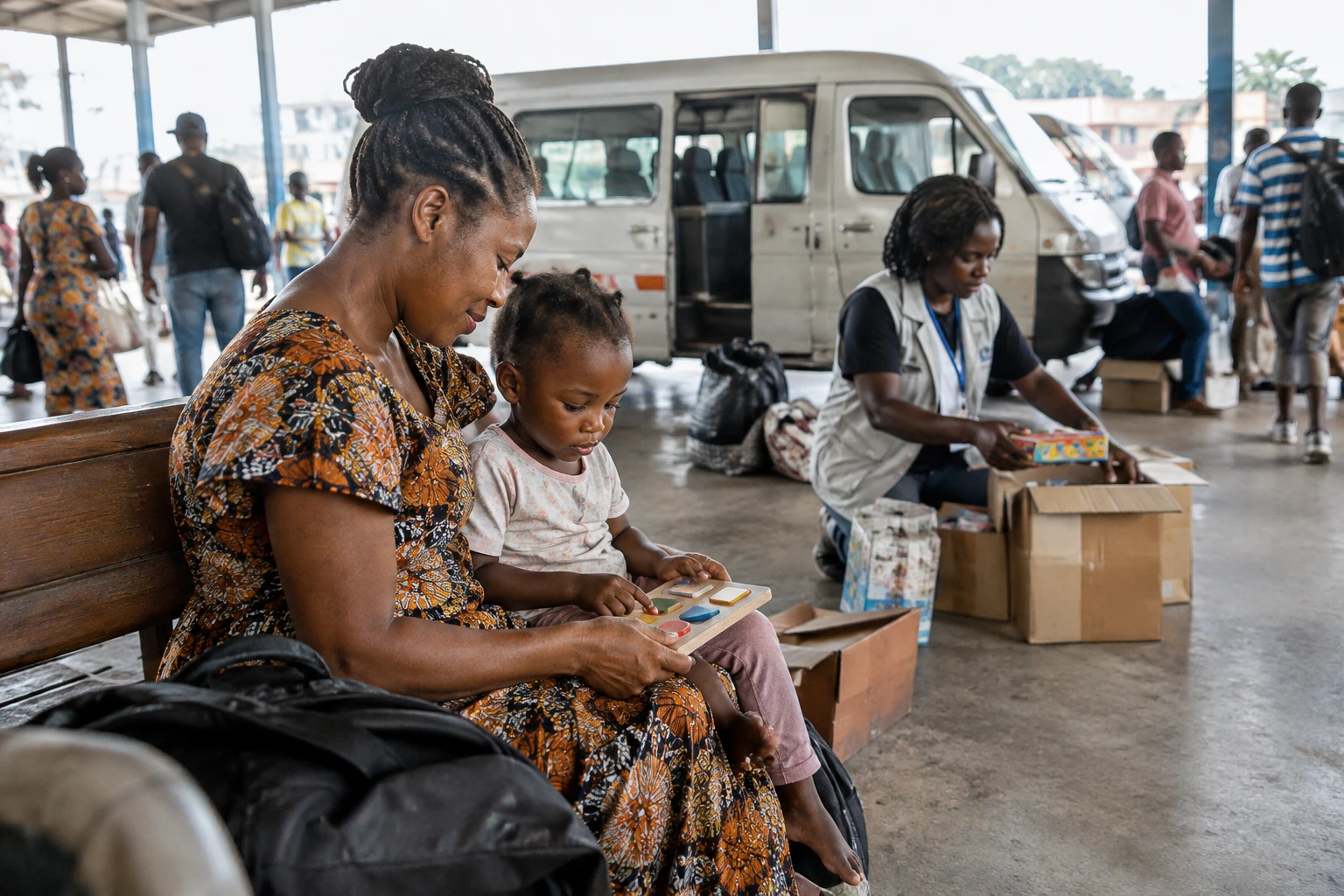
A toy cannot replace a diagnosis or specialist support. But for a family lacking information and resources, it can open up a first opportunity to engage with an autistic child. That is the aim of an initiative announced in Cameroon by Hope For Autism Cameroun and the French association DNA sans frontières.
Beyond the toys, making autism understood
The project plans to distribute 500 developmental toys to families met during the Hope For Autism Christmas Caravan. The Cameroonian team is to select beneficiaries based on its encounters in the field. The toys are presented as tools to encourage interaction at home, not as medical treatment.
The distinction matters. Autism is a neurodevelopmental condition whose characteristics and support needs vary from one person to another. The World Health Organization (WHO) notes that appropriate psychosocial interventions can support communication and social interaction. It also stresses that access to healthcare, education and practical support for relatives is part of the wider support required.
In an interview connected with the project, Cédric Barbiero, a representative of DNA sans frontières, reports that some Cameroonian families still attribute autism to a curse or to « the spirit of the water ». These remarks describe situations reported by the association; they do not make it possible to measure how common such beliefs are in the country. They nevertheless shed light on a central issue: when explanations are lacking, beliefs can influence how a child is welcomed and supported.
An initiative led by a Cameroonian association
Hope For Autism Cameroun, based in Douala, runs awareness-raising and family support activities. Its president, Charles Nombot, told the WHO that the association organises a caravan and works with parents and teachers. In this account, he referred to activities carried out between 2021 and 2024 in several regions, including the Centre, Littoral, West and South.
This local experience is essential: families and field teams know the needs, travel routes and realities of the communities visited. The French association is contributing material support and taking part in the project. According to Barbiero, the toys are to be handed directly to families supported by Hope For Autism, which will show parents how to use them in everyday interactions.
The campaign is therefore not based on criteria set remotely. This choice recognises the role of the Cameroonian team in identifying needs. It would nevertheless be useful to know, in time, how the toys will be distributed, what guidance will accompany their delivery and what follow-up will be offered. The announced number indicates the intended scale, but is not enough to establish the initiative’s impact.
Cost and diagnosis remain obstacles
Barbiero says a developmental toy can cost around €10, against a monthly salary of about €100. These are figures he cited in the interview; they are not a verified national average. They nevertheless illustrate the question of affordability: educational materials can be difficult for low-income households to buy, particularly when other healthcare or transport costs are added.
Diagnosis presents another challenge. The WHO says the prevalence of autism remains unknown in many low- and middle-income countries. It would therefore be unwise to present an isolated figure as a reliable measure of the situation in Cameroon. The organisation instead emphasises the need to identify support needs, guide families and coordinate health, education and social support services.
The consequences are not the same for every family. In cities, some services or associations may be more accessible, but their cost remains a barrier. In remote areas, distance and a shortage of professionals can make it harder to seek support. And when a parent has to reduce their working hours to support their child, household income is also affected.
A local initiative in a regional context
Cameroon is a member of the Central African Economic and Monetary Community (CEMAC), which brings together six countries around regional economic integration. The campaign described here concerns Cameroonian families and is not a CEMAC programme. Its regional relevance lies instead in a shared question: how can healthcare, schooling and information be made accessible to autistic people and their relatives beyond major cities?
The caravan’s route could help raise awareness of autism and connect families with local resources. But a one-off distribution cannot, on its own, meet the need for diagnoses, trained professionals and suitable schools. Continuity will depend in particular on partnerships, community association networks and the possibility of continuing discussions after the team has moved on.
A post by Charles Nombot announced an edition of the caravan from 10 to 20 December 2025. That date has passed. The information consulted does not confirm how many toys were actually distributed or what results were achieved. The announcement of an initiative and its implementation must therefore remain distinct. The project also set out an ambition for a lasting partnership and a documentary; their progress has not been established here.
The main indicator to monitor will not be only the number of toys handed out. It will also be important to see whether families received useful information, were able to access appropriate services and continued to receive awareness-raising support after the caravan. It is at this level that the initiative can measure its contribution to inclusion in Cameroon.



