Algeria
 Egypt
 Libya
 Morocco
 Sudan
 Tunisia
 Burkina Faso
 Cabo Verde
 Côte d'Ivoire
 Ghana
 Guinea
 Guinea-Bissau
 Liberia
 Mali
 Mauritania
 Niger
 Nigeria
 Senegal
 Sierra Leone
 The Gambia
 Togo
 Cameroon
 Central African Republic
 Chad
 DR Congo
 Equatorial Guinea
 Gabon
 Republic of the Congo
 São Tomé and Príncipe
 Burundi
 Comoros
 Djibouti
 Eritrea
 Ethiopia
 Kenya
 Madagascar
 Malawi
 Mauritius
 Mozambique
 Rwanda
 Seychelles
 Somalia
 South Sudan
 Tanzania
 Uganda
 Angola
 Botswana
 Eswatini
 Lesotho
 Namibia
 South Africa
 Zambia
 Zimbabwe
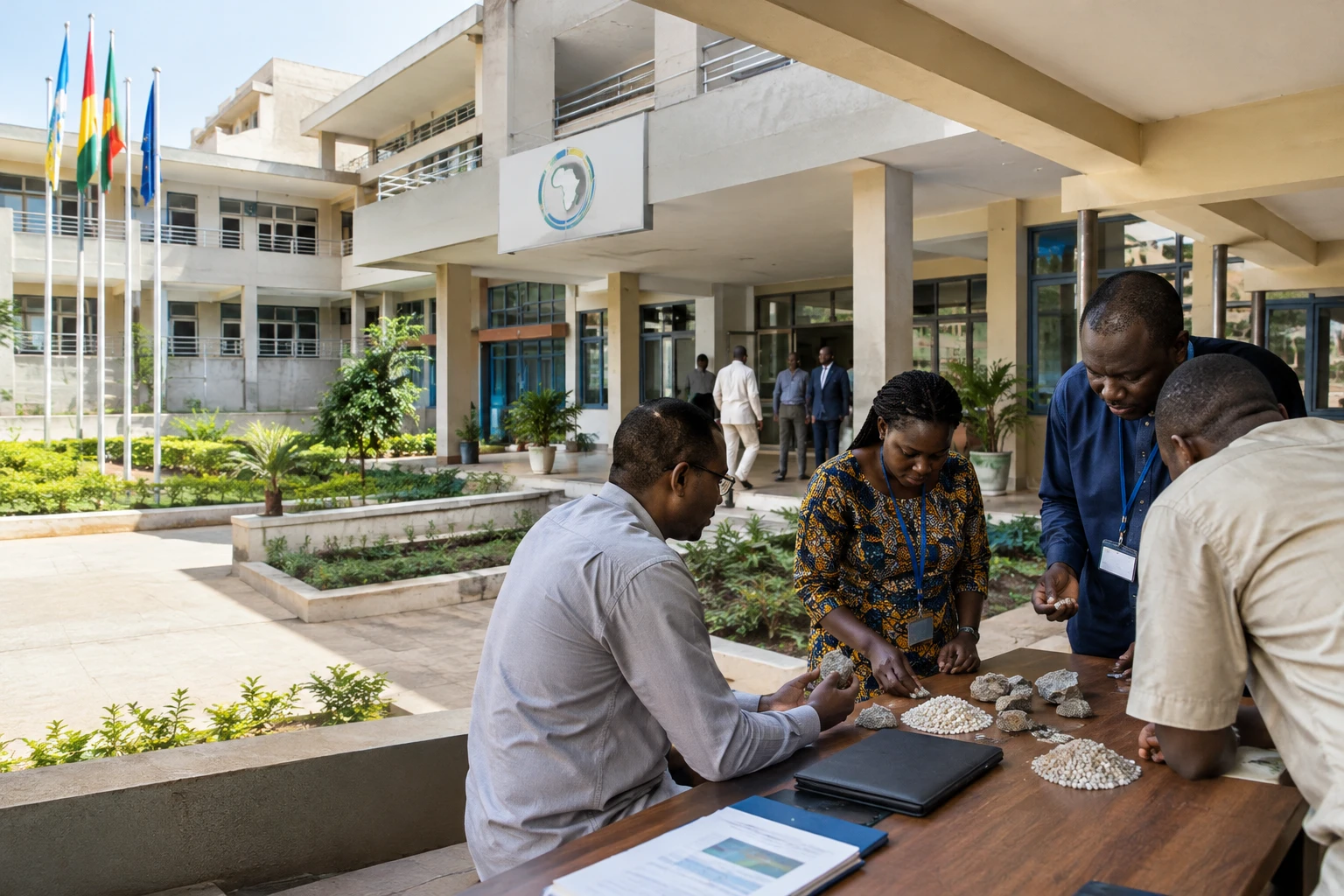
Can fertiliser produced close to farmland cost farmers less than an imported product? For the West African Economic and Monetary Union (WAEMU), the issue is not just processing phosphate. It is also about distributing activities, investment and benefits among eight countries with unequal mineral resources.
Building a regional industry from mines to fields
WAEMU comprises Benin, Burkina Faso, Côte d’Ivoire, Guinea-Bissau, Mali, Niger, Senegal and Togo. Its 2025-2030 strategic plan, IMPACT 2030, identifies the phosphate-fertiliser industry as one of its priority value chains, alongside rice and cotton-textiles. The Commission presented its proposals to Burkina Faso’s authorities in Ouagadougou on 4 and 5 June 2026, as part of a national awareness campaign.
The regional proposal is not limited to extracting ore where it is found. It aims to link extraction, industrial processing, the formulation of blends suited to crops and soils, and distribution. Countries without large deposits could host blending plants, contribute to investment or take part in production, according to the Commission. The presentation of the white papers to the authorities of member states shows that the Union is also seeking national political backing.
The Commission has identified four industrial hubs: Bargny-Ndayane, in Senegal; San Pedro, in Côte d’Ivoire; Lomé-Adétikopé, in Togo; and Kotchari, in Burkina Faso. Blending plants would complement these sites. The aim is to bring production closer to agricultural areas, rather than making the entire chain dependent on countries with deposits.
Reducing exposure to global prices
Dependence on external purchases gives the project a tangible economic dimension. According to data from the Central Bank of West African States (BCEAO) cited in several publications, fertiliser imports by the eight countries averaged 543.5 billion CFA francs a year between 2020 and 2024. This figure measures purchases made abroad, not the total cost of access to fertiliser for farmers, which also depends on transport, storage and distribution.
International markets remain vulnerable to tensions affecting energy and transport. In its April 2026 outlook, the World Bank forecasts a rise of more than 30% in its fertiliser price index over the year. It attributes this pressure, among other things, to disruptions to exports and inputs from the Middle East. This global forecast does not mean that prices will rise by the same amount in every WAEMU country: exchange rates, subsidies and local logistics costs also matter.
Regional production could therefore reduce some supply risks and retain more value added within the Union. But it would not automatically make fertiliser affordable for farms. Small-scale producers, particularly those far from ports and major transport routes, remain sensitive to the final price, delivery times and the availability of products at the right point in the agricultural calendar.
The Commission says the Union has 100 million tonnes of phosphate certified to international standards, in addition to nearly five billion tonnes of potential uncertified resources. It plans to characterise at least 250 million tonnes by 2030. These volumes are estimates presented by the institution: the exploitable share will depend on geological surveys, costs, infrastructure and the necessary permits.
Local processing, a particular issue for Togo
Togo illustrates the possible gap between mineral wealth and industrial processing. According to figures cited by the Commission, the country has 30 million tonnes of certified phosphate reserves under exploitation and about two billion tonnes of potential carbonate phosphate resources. A significant part of its activity remains focused on exporting raw rock. Establishing processing plants could shift some of the value towards local industry, provided there is sufficient investment and demand.
At the same time, the regional approach seeks to give countries without comparable deposits a role. They could take equity stakes in companies, host blending equipment or benefit from better soil mapping. This raises a governance question: how should jobs, revenues, access to products and financial risks be shared between producer and non-producer countries? The practical arrangements for this participation have not yet been detailed publicly.
Funding remains the decisive test
The 2026-2030 regional programme is valued at 1,452.5 billion CFA francs. According to the Commission, 1,190.9 billion should come from the private sector and 239.5 billion from member states. These two amounts total 1,430.4 billion CFA francs; the 22.1 billion gap against the announced budget is not explained in the information available. The funding breakdown will therefore need clarification, alongside the identification of projects capable of attracting investors in practice.
This reliance on private funding creates an issue of risk-sharing. Industrial companies will seek supply guarantees, reliable infrastructure and solvent demand. Governments, meanwhile, will have to weigh support for investment against public spending, while ensuring that plants produce fertilisers suited to local needs. Profitability is not measured solely by the volumes extracted: it also depends on the quality of blends, transport costs and distributors’ ability to reach rural farms.
The Commission plans to establish a community committee to support national road maps and mobilise funding. The next step will be to turn the white paper’s proposals into verifiable commitments: a timetable for the work, the division of responsibilities among states, investment agreements and rules on access to products. Across West Africa, the project will test WAEMU’s ability to build a common industrial chain without reserving its benefits for mining areas alone.