Algeria
 Egypt
 Libya
 Morocco
 Sudan
 Tunisia
 Burkina Faso
 Cabo Verde
 Côte d'Ivoire
 Ghana
 Guinea
 Guinea-Bissau
 Liberia
 Mali
 Mauritania
 Niger
 Nigeria
 Senegal
 Sierra Leone
 The Gambia
 Togo
 Cameroon
 Central African Republic
 Chad
 DR Congo
 Equatorial Guinea
 Gabon
 Republic of the Congo
 São Tomé and Príncipe
 Burundi
 Comoros
 Djibouti
 Eritrea
 Ethiopia
 Kenya
 Madagascar
 Malawi
 Mauritius
 Mozambique
 Rwanda
 Seychelles
 Somalia
 South Sudan
 Tanzania
 Uganda
 Angola
 Botswana
 Eswatini
 Lesotho
 Namibia
 South Africa
 Zambia
 Zimbabwe
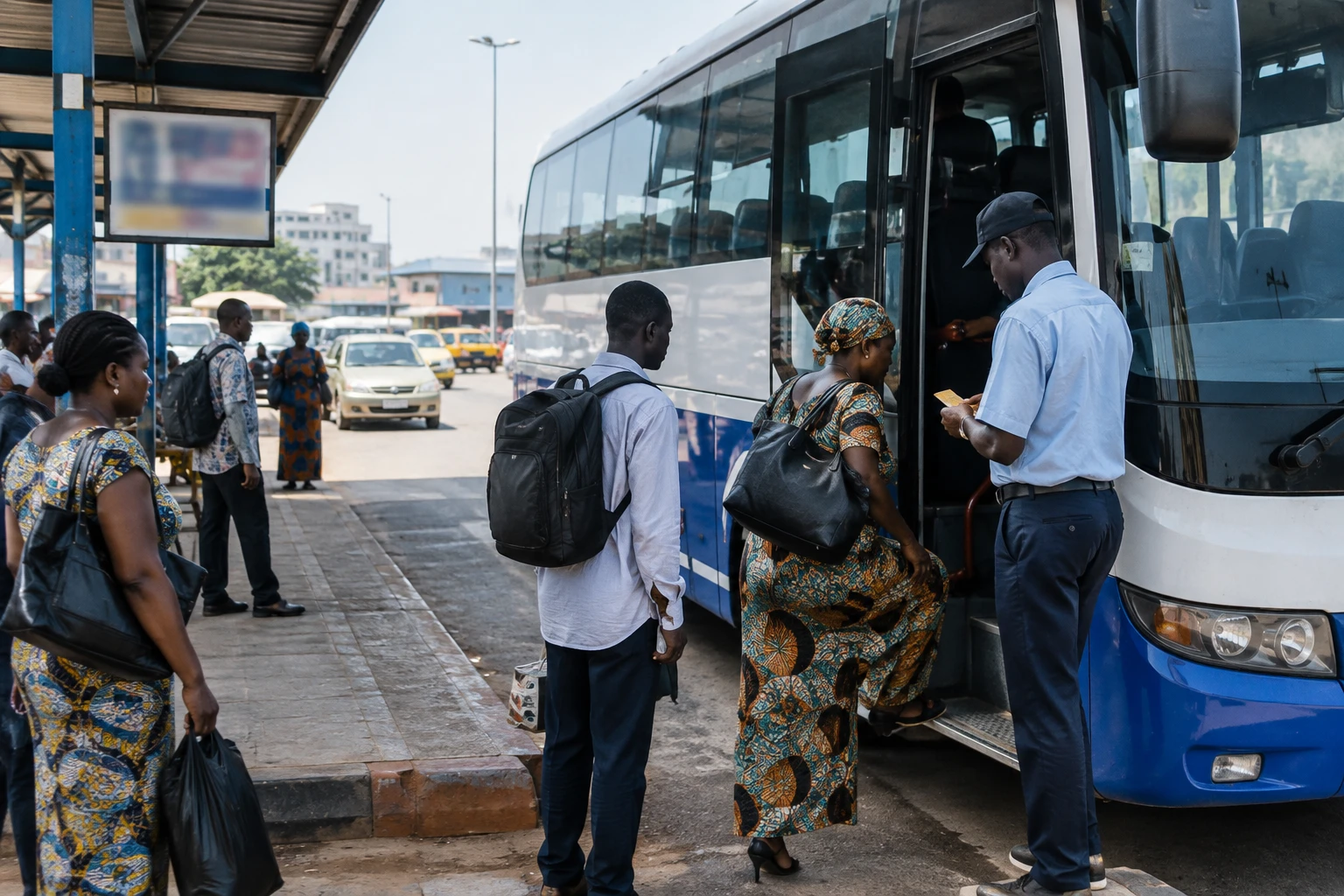
For a Beninese family, a budget’s impact is measured less by its overall size than by the services that are actually accessible: a place at school, nearby healthcare, support in difficult times. The 2027 draft budget shows an increase in spending classified as socially oriented. The challenge is to turn this stated priority into tangible results in local communities.
A larger budget, still subject to parliamentary approval
At its meeting on 7 October 2026, the Council of Ministers approved the submission of the 2027 draft finance bill to the National Assembly. The bill provides for CFAF 4,757.029 billion in revenue and expenditure, 14.7% more than the 2026 revised finance law. It is a draft: MPs must still examine and pass it.
Within this total, the government has earmarked CFAF 1,597.533 billion for spending “with a social focus”, compared with CFAF 1,285.37 billion for 2026. The announced increase is 24.3%. This represents just over a third of the projected total budget. The official account and the Beninese daily La Nation report the same figures.
This category brings together a range of initiatives: health, education, nutrition, social protection and public infrastructure. It is therefore not a single sum paid directly to households. The tangible impact will depend on the funding allocated to each programme, its implementation and the availability of services on the ground.
Schools, hospitals and support schemes
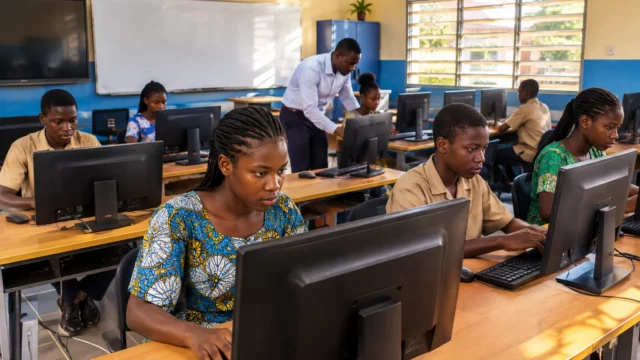
In education, the draft provides for the continuation and extension of free school fees for girls in general and technical secondary education, as well as the expansion of other free-of-charge measures. It also announces the construction and renovation of secondary schools, improvements to university infrastructure and the continuation of school canteens.
These measures address different issues. Free schooling can ease the burden on families and encourage girls’ education. School canteens can support attendance, while renovating schools improves learning conditions. Their reach will depend in particular on their rollout beyond major urban centres and on the continuity of material resources.
In health, the government announces the construction of five district hospitals, and the renovation and equipping of departmental hospitals and university hospitals. The programme also includes strengthening child vaccination, the fight against malaria, maternal health and nutrition. The government also plans to continue expanding ARCH, the Insurance Programme for Strengthening Human Capital, which brings together initiatives to improve access to healthcare and social protection.
The bill also provides for the consolidation of Gbessoké, a cash-transfer scheme for households living in extreme poverty, and the establishment of a national social benefits platform. These announcements build on a trajectory of social policies pursued under previous Government Action Programmes. Their effectiveness will also be judged by the regularity of payments and the ability of services to identify those in need.
The challenge of implementation in local communities
Some of the key challenges lie beyond Porto-Novo, Benin’s political capital. Local authorities are on the front line in addressing everyday needs, but their financial and administrative capacities vary. The draft aims to strengthen their funding through the operationalisation of the Municipal Investment Fund and an economic zoning mechanism, intended to help local authorities mobilise a more diverse range of resources.
This approach could bring investment closer to local needs, provided that allocation rules are clear and local authorities have the resources to prepare and monitor their projects. Rural residents, urban families and informal-sector workers face different obstacles in accessing services. An increase in the national budget therefore does not, on its own, guarantee an equivalent improvement for everyone.
The draft budget also assumes economic growth of 7.5% and a public deficit of 2.8% of gross domestic product. The government presents the latter figure as meeting the convergence criterion of WAEMU, the West African Economic and Monetary Union, which coordinates economic rules among its member states. These assumptions frame spending choices, but do not replace scrutiny of appropriated funds and actual expenditure.
Parliamentary scrutiny ahead
Benin’s budget debate is taking place within a regional framework in which WAEMU states must reconcile public investment, economic stability and social needs. The proposed increase puts social protection and human capital among the stated priorities. For Beninese people, the test will be whether these budget lines translate into well-equipped schools, accessible healthcare and functioning support schemes, in the capital as well as in other departments.
The next step is for the National Assembly in Porto-Novo to examine the bill. Parliamentary decisions will clarify the amounts approved and the priorities funded. Implementation will then show whether announcements — particularly the five hospitals, the expansion of social programmes and increased resources for local authorities — are delivered on schedule. It is at this stage that the rise in spending can be assessed against its impact on everyday life.