Algeria
 Egypt
 Libya
 Morocco
 Sudan
 Tunisia
 Benin
 Cabo Verde
 Côte d'Ivoire
 Ghana
 Guinea
 Guinea-Bissau
 Liberia
 Mali
 Mauritania
 Niger
 Nigeria
 Senegal
 Sierra Leone
 The Gambia
 Togo
 Cameroon
 Central African Republic
 Chad
 DR Congo
 Equatorial Guinea
 Gabon
 Republic of the Congo
 São Tomé and Príncipe
 Burundi
 Comoros
 Djibouti
 Eritrea
 Ethiopia
 Kenya
 Madagascar
 Malawi
 Mauritius
 Mozambique
 Rwanda
 Seychelles
 Somalia
 South Sudan
 Tanzania
 Uganda
 Angola
 Botswana
 Eswatini
 Lesotho
 Namibia
 South Africa
 Zambia
 Zimbabwe
Fund security, support public services and invest in production: Burkina Faso’s 2027 budget aims to address these priorities without easing efforts to contain the deficit. The challenge will be to turn announced allocations into actual spending across the country.
Higher spending envelope, text still provisional
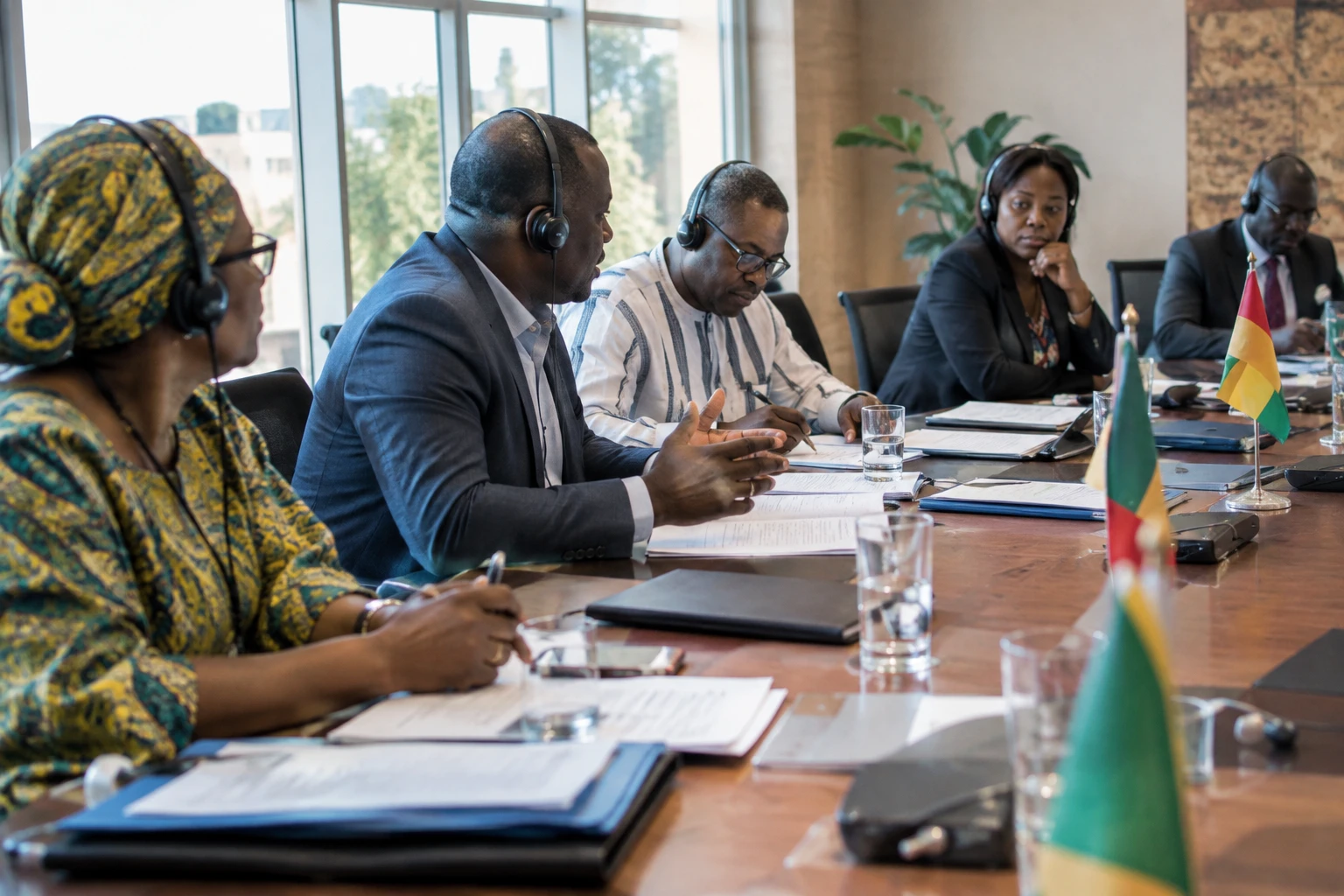
Meeting in Ouagadougou on 8 October 2026, the Council of Ministers adopted a draft finance bill for 2027. The official report puts expected revenue at CFAF 4,220.4 billion and spending at CFAF 4,839.4 billion. The gap of CFAF 619 billion corresponds to a projected deficit of 2.9% of nominal gross domestic product. These amounts must still pass through the legislative process before becoming the applicable budget.
The official figures differ from the rounded sums reported in some accounts, which cite CFAF 4,200 billion in revenue and CFAF 4,800 billion in spending. They are of the same order of magnitude, but the detailed figures in the government report provide a more precise picture.
The draft forms part of the RELANCE 2026-2030 plan, the national development roadmap. Aboubakar Nacanabo, the economy and finance minister, outlined priorities combining agriculture, industrialisation, equipping the armed forces and basic social services. The available information does not yet set out the full allocation of funds across these sectors.
Higher spending puts revenue to the test
Compared with the initial 2026 budget, which provided for CFAF 3,918.3 billion in spending, the proposed 2027 envelope is up by about 23.5%. This calculation compares budget forecasts, not actual expenditure. The increase highlights the scale of the funding effort the state intends to undertake.
The economic backdrop is favourable, but does not guarantee future revenue. In May 2026, the International Monetary Fund estimated real growth at 5.3% in 2025. It also reported that the public deficit had fallen from 5.8% of GDP in 2024 to 1.8% in 2025. According to the institution, these results came amid rising revenue and spending restraint.
The Burkinabè government had also reported that its 2026 growth forecast had been revised up to 6%, from 5.7% in an earlier projection. But a growth estimate is not revenue already collected. The budget’s soundness will depend in particular on tax collection, economic activity and the actual timing of spending.
The draft also provides for amendments to the General Tax Code. The announced tax relief would cover egg sales, travel agencies and state-owned companies. The details, specific beneficiaries and cost to the Treasury remain to be clarified. Any tax cuts will need to be weighed against the goal of funding public services and preserving revenue.
Different effects across regions and sectors
For producers and businesses, agricultural and industrial funding will have an impact only if it translates into equipment, market access and accessible infrastructure. Small businesses and informal-sector operators, with limited financial resources, will also be affected by how the tax changes are applied.
Defence spending addresses a major government priority amid a difficult security situation. However, the overall amount announced does not show what share will go to equipment, operations or other needs. Regions far from the capital also need health and education services and infrastructure. The geographical distribution of investment will therefore be crucial in assessing the budget’s practical impact.
For households, the issue is not so much the total amount set out in the draft as the quality and availability of the services it funds. An approved expenditure is not automatically carried out. Procurement delays, administrative capacity and project monitoring will all affect the results.
An equilibrium to watch across West Africa
Burkina Faso is a member of the West African Economic and Monetary Union, which brings together several countries that share the CFA franc and a framework for economic co-operation. Ouagadougou’s choices therefore form part of a regional environment in which states seek funding and deficit trajectories are monitored jointly.
The country is also a member of the Confederation of Sahel States with Mali and Niger, while its relations with ECOWAS have been reshaped following the withdrawal announced by the three states. This context gives budget choices a regional dimension: revenue, investment and security needs affect trade and co-operation priorities across the Sahel.
The next milestone will be the text’s review by the legislative bodies, followed by publication of the final decisions. The approved allocations will then need to be compared with revenue actually raised and spending carried out. That comparison, rather than the headline figure alone, will show whether the budget can fund its stated priorities while maintaining the targeted deficit trajectory.
The government has set out an ambitious spending course, while IMF data confirm a marked improvement in the public accounts in 2025. The challenge for 2027 will be to reconcile these two objectives in a context where funding needs remain high.