Algeria
 Egypt
 Libya
 Morocco
 Sudan
 Tunisia
 Benin
 Burkina Faso
 Cabo Verde
 Côte d'Ivoire
 Guinea
 Guinea-Bissau
 Liberia
 Mali
 Mauritania
 Niger
 Nigeria
 Senegal
 Sierra Leone
 The Gambia
 Togo
 Cameroon
 Central African Republic
 Chad
 DR Congo
 Equatorial Guinea
 Gabon
 Republic of the Congo
 São Tomé and Príncipe
 Burundi
 Comoros
 Djibouti
 Eritrea
 Ethiopia
 Kenya
 Madagascar
 Malawi
 Mauritius
 Mozambique
 Rwanda
 Seychelles
 Somalia
 South Sudan
 Tanzania
 Uganda
 Angola
 Botswana
 Eswatini
 Lesotho
 Namibia
 South Africa
 Zambia
 Zimbabwe
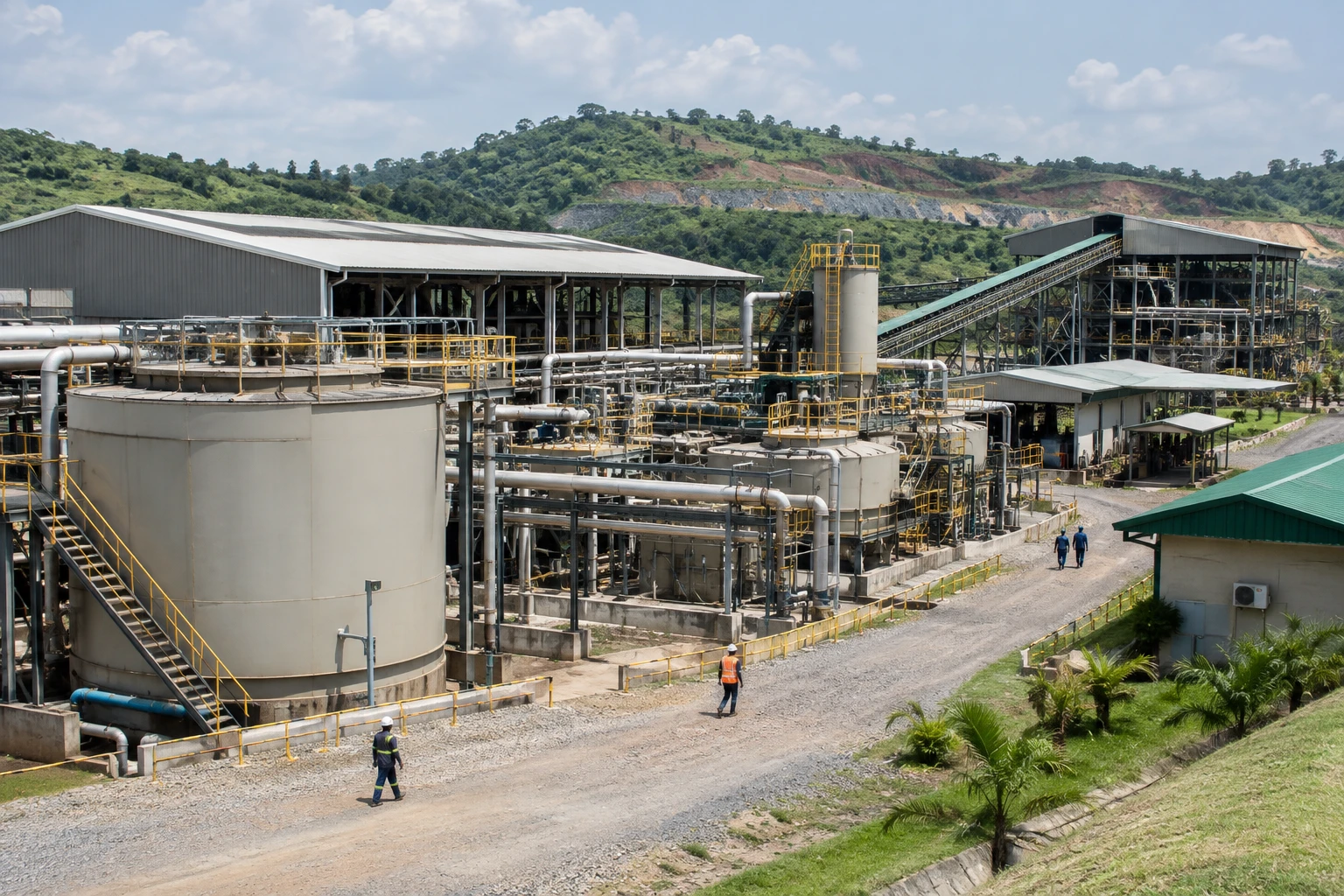
At Asanko, permits now run into the 2040s. For communities near the mine, the stakes go beyond the length of its operating life: they also concern jobs, public revenues and the lasting effects of mining activity on the area.
An asset at the heart of a changing sector
The Asanko gold mine is in the Ashanti Region, on the Asankrangwa gold belt. Galiano Gold operates it. The group owns 90% of the mining company, while the Ghanaian state retains a 10% stake. The complex comprises several mining areas and a plant capable of processing 5.8 million tonnes of ore a year.
The renewal comes in a sector that carries significant weight in Ghana but whose structure is changing. In 2025, national gold production reached 5.94 million ounces, according to figures from the Chamber of Mines reported by the Ghana News Agency. Small-scale production increased, while output from large mines fell slightly. Thus, the rise in national volumes is not benefiting every segment of the industry equally. Ghana’s gold production figures for 2025.
This trend is fuelling debate about how much value remains in the country. In Accra, the authorities are seeking to better regulate gold marketing and increase the national economic benefits. For large-scale operations, the issues also include regulatory stability, tax revenues and benefits for mining regions.
Two permits extended, mine plan secured
On 8 October 2026, Galiano Gold announced the extension of the Abirem and Miradani mining permits. According to the company, the first has been extended by 15 years, until 2041. The second has been extended by 17 years, until 2043. These permits cover deposits and infrastructure that are important to the site’s operations. Galiano Gold’s filing on the Asanko permits.
The areas concerned include Nkran and North Miradani. The company also says the processing plant and associated equipment are within the permit area. Their extension therefore provides long-term regulatory certainty. It does not, however, guarantee how much gold will be extracted or the mine’s future profitability: these outcomes will depend on reserves, investment, costs and market conditions.
Nkran has a particular place in the group’s plans. Galiano intends to develop a third open-pit mining phase there, known as Nkran Cut 3. The company expects ore deliveries to begin in early 2029. Its aim is to exceed 200,000 ounces of gold a year at that point. By comparison, Asanko produced 121,191 ounces in 2025. For 2026, the company forecasts production of between 140,000 and 160,000 ounces. These figures and targets are the operator’s, not results already achieved. Production figures and forecasts published by Galiano.
The group is also relying on exploration at Nkran and Abore to assess the potential for underground mining. At Abore, open-pit reserves have been depleted, according to information provided by the company. This shift to other areas and mining methods is intended to keep the plant supplied. It will nevertheless require technical studies, expenditure and additional permits.
Local benefits remain decisive
For Galiano, the extended permits support its operating plan and could facilitate new investment. For the state, a mine that remains active over the long term can contribute to public revenues, exports and formal employment. The benefits are not, however, automatically shared between Accra, mining regions and households living around the site. Direct jobs do not tell the whole story: contracts awarded to Ghanaian companies, local procurement, taxes and land management also matter.
The announced duration also raises questions about environmental and social monitoring. A prolonged operation means monitoring water, dust, mine waste and the rehabilitation of mined areas. The Ghanaian authorities, including the Minerals Commission and the Ministry of Lands and Natural Resources, have a role in regulating the sector. Communities, meanwhile, are directly affected by access to land, livelihoods and environmental quality. An extension of permits does not exempt the company from its obligations or the public authorities from oversight.
This vigilance is part of a broader context. In Ghana, artisanal and small-scale mining now account for a major share of gold production. These activities provide income for many workers, but also raise challenges around formalisation and the protection of natural resources. The challenge for the authorities is therefore to enable regulated large-scale mines, local operators and conservation requirements to coexist, without conflating their circumstances or responsibilities.
A signal to watch across the region
The Asanko case concerns Ghana first and foremost, but it touches on questions facing West Africa as a whole: who controls resources, who captures their value, and how do communities take part in decisions that transform their territory? ECOWAS, the regional organisation of West African states, provides a framework for economic co-operation, although the granting and monitoring of these permits are primarily the responsibility of Ghanaian national authorities.
The next step will be practical: to check whether work progresses towards the 2029 deadline announced and whether production rises without weakening social and environmental requirements. The figure of 200,000 ounces remains a company target. Achieving it will depend on project execution, confirmed reserves and forthcoming regulatory decisions. For residents of mining areas and public finances alike, the permits’ duration will have real significance only if the benefits and costs of mining are monitored over time.