
 Algeria
 Egypt
 Libya
 Morocco
 Sudan
 Tunisia
 Benin
 Burkina Faso
 Cabo Verde
 Côte d'Ivoire
 Ghana
 Guinea
 Guinea-Bissau
 Liberia
 Mali
 Mauritania
 Niger
 Nigeria
 Sierra Leone
 The Gambia
 Togo
 Cameroon
 Central African Republic
 Chad
 DR Congo
 Equatorial Guinea
 Gabon
 Republic of the Congo
 São Tomé and Príncipe
 Burundi
 Comoros
 Djibouti
 Eritrea
 Ethiopia
 Kenya
 Madagascar
 Malawi
 Mauritius
 Mozambique
 Rwanda
 Seychelles
 Somalia
 South Sudan
 Tanzania
 Uganda
 Angola
 Botswana
 Eswatini
 Lesotho
 Namibia
 South Africa
 Zambia
 Zimbabwe
From 31 October to 13 November 2026, events in Dakar, Diamniadio and Saly will put Senegal at the centre of an unprecedented Olympic occasion for the continent. But hosting competitions does not in itself guarantee that they will be followed beyond the stadiums. With the opening just weeks away, the challenge is also to bring stories, images and performances into African homes and to international audiences.
The Youth Olympic Games (YOG), an international competition for young athletes, will bring together about 2,700 participants, according to information published by the organisers and reported by the Senegalese Press Agency. For Dakar, Diamniadio and Saly, the benefits will depend in particular on the ability to connect the venues, residents and audiences who would not otherwise follow the sporting programme.
Familiar faces to reach several generations
At the end of September, Brazilian skateboarder Rayssa Leal and Kenyan marathon runner Eliud Kipchoge joined the global ambassadors for Dakar 2026. Their presence is not just intended to promote the event. The International Olympic Committee (IOC) has also given them a role in passing on their experience to young athletes.
Leal won silver at Tokyo 2020 and bronze at Paris 2024. Her career, which began at a very young age, connects skateboarding with an audience that does not always identify with traditional Olympic sports. The Association of National Olympic Committees confirms her appointment and her commitment to sharing her experience with young athletes in Dakar.
Kipchoge, a two-time Olympic marathon champion, brings a different kind of profile. He is due to meet participants and support the Refugee Olympic Team, which will make its YOG debut. The IOC and Spanish news agency Europa Press report that he will serve as a mentor. The competition will thus give visible recognition to young athletes with experiences of displacement, without reducing their presence to their status.
The two champions join a group that already includes figures from sport, film and social media. Senegalese-Italian influencer Khaby Lame, actor Omar Sy, footballer Kalidou Koulibaly and player Ndeye Awa Diakhaté, known as Eva Neymar, are among the ambassadors named by the Senegalese Press Agency. Bringing together a range of profiles is intended to reach audiences who do not follow the same sports or media.
For Khaby Lame, whose online following is global, social media platforms can draw the attention of young internet users. Koulibaly and Diakhaté bring a connection to Senegalese football, while Omar Sy offers a link to cinema. However, follower numbers do not show how many people will watch the events, follow the athletes or take an interest in the Senegalese venues. The true reach will be measured only by the content published and how widely it circulates.
From online visibility to stories from the competitions
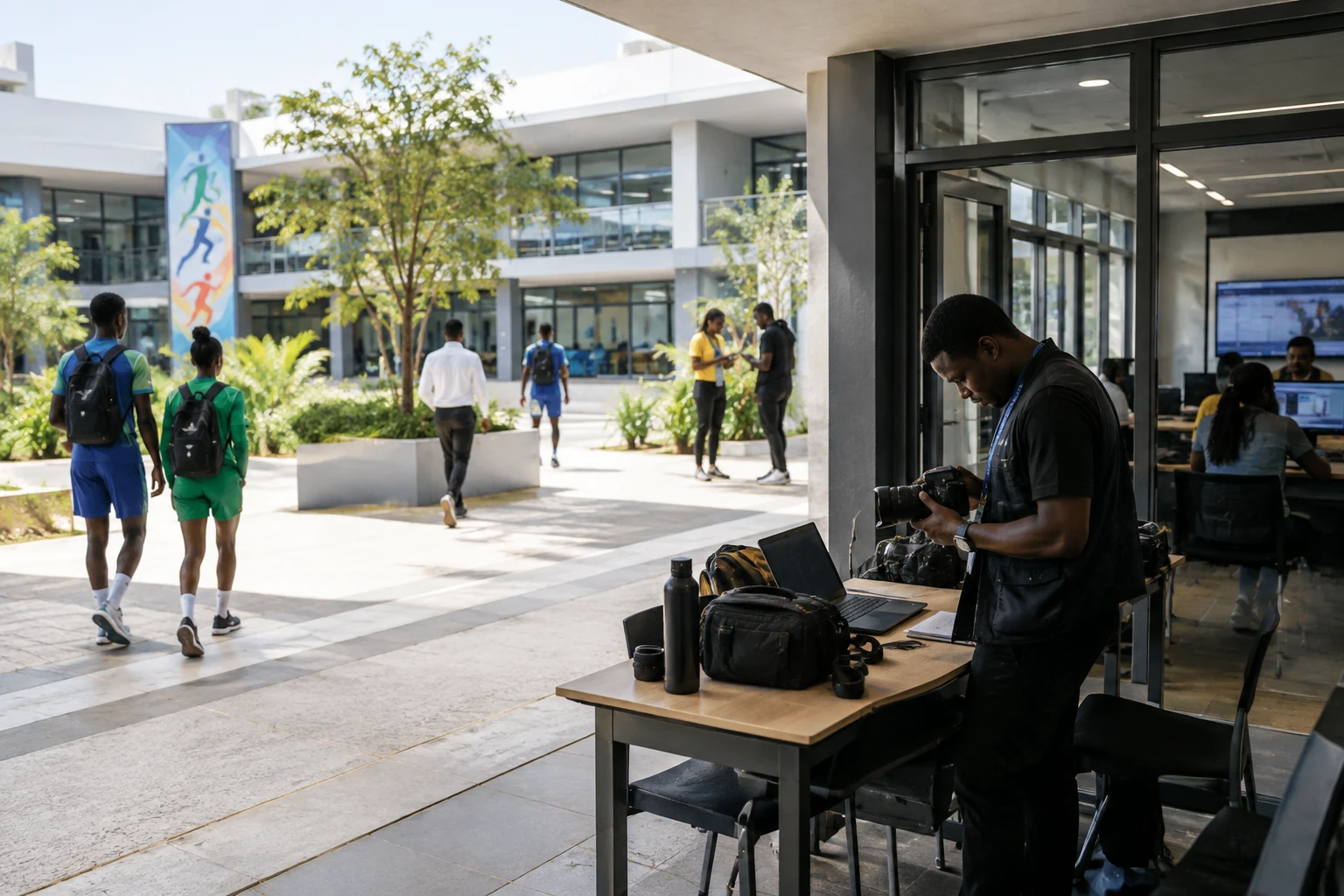
High-profile figures are only one means of reaching audiences. The plans also include an Olympic Information Service (OIS), tasked with producing competition reports, profiles, interviews and photographs. According to the IOC’s media document, the content may be reused free of charge for editorial purposes by media outlets, Olympic committees and federations.
Making this material available could help newsrooms without teams at every venue. It does not, however, guarantee balanced coverage across sports or sufficient representation of Senegalese and African athletes. Local media will retain an essential role: telling the stories of the competitions from within the communities, explaining athletes’ journeys and reporting on the event’s tangible effects on residents.
Access is also an issue. Events will take place across three venues, and the YOG experience will not be limited to screens. Transport, welcoming spectators and practical information will determine who can attend the competitions. Residents of neighbourhoods near the facilities will experience the Games differently from remote viewers, just as formal-sector businesses will experience them differently from informal vendors and service providers.
The IOC has also arranged transport services for accredited media, including access to the TER and the rapid bus network. These provisions are intended for professionals on site. They are not, on their own, enough to draw conclusions about how the general public will travel between Dakar, Diamniadio and Saly.
A Senegalese event with regional reach
For Senegal, hosting the first Olympic sporting event organised in Africa is a showcase, but also an organisational test. Success will not be measured solely by the number of views or the presence of celebrities. It will depend on the quality of the competitions, public access, the prominence given to African talent and how the benefits are distributed among the three host cities.
The event’s reach extends beyond the country. In West Africa, where ECOWAS brings together states with different realities and sporting calendars, Dakar 2026 could become a meeting point for young athletes and federations. Across the continent, the event will also test the ability of African media to produce and distribute their own stories, rather than relying only on images and commentary from elsewhere.
The YOG flame is travelling through all 14 regions of Senegal until 30 October, according to the Association of National Olympic Committees. The journey is already connecting the event with communities beyond the competition venues. What follows will show whether this mobilisation leads to lasting participation, diverse media visibility and a useful legacy for young athletes.
The dates are now close: the opening ceremony is scheduled for 31 October, and the Games will end on 13 November. The true measure of their reach will be less the list of ambassadors than the ability of stories told in Dakar, Diamniadio and Saly to reach diverse audiences — and to give Senegalese athletes and voices a central place.



