Algeria
 Egypt
 Libya
 Morocco
 Sudan
 Tunisia
 Burkina Faso
 Cabo Verde
 Côte d'Ivoire
 Ghana
 Guinea
 Guinea-Bissau
 Liberia
 Mali
 Mauritania
 Niger
 Nigeria
 Senegal
 Sierra Leone
 The Gambia
 Togo
 Cameroon
 Central African Republic
 Chad
 DR Congo
 Equatorial Guinea
 Gabon
 Republic of the Congo
 São Tomé and Príncipe
 Burundi
 Comoros
 Djibouti
 Eritrea
 Ethiopia
 Kenya
 Madagascar
 Malawi
 Mauritius
 Mozambique
 Rwanda
 Seychelles
 Somalia
 South Sudan
 Tanzania
 Uganda
 Angola
 Botswana
 Eswatini
 Lesotho
 Namibia
 South Africa
 Zambia
 Zimbabwe
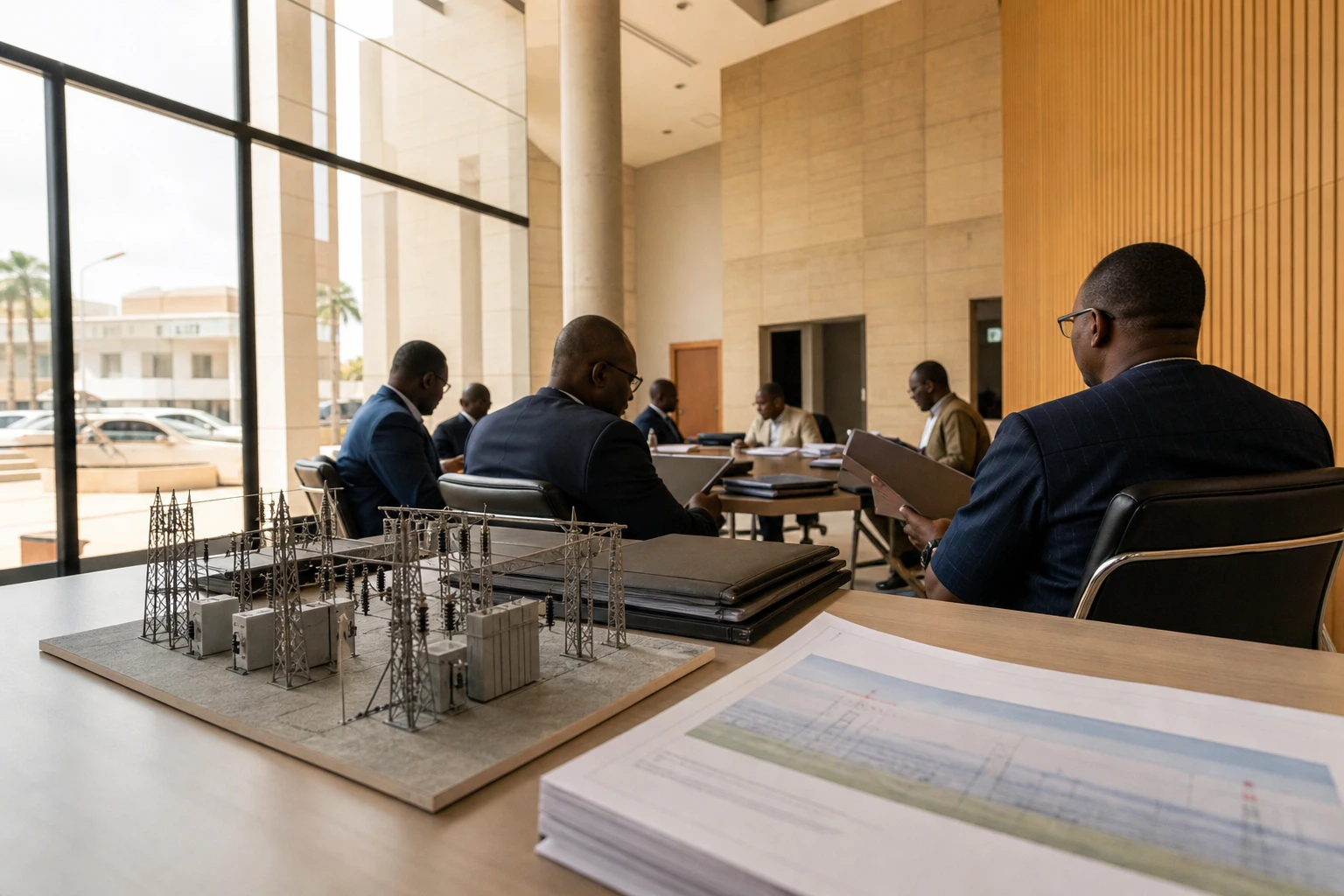
In Paris, Benin sought less a headline-grabbing announcement than concrete funding for its infrastructure. The official visit by Romuald Wadagni on 5 October 2026 resulted in commitments focused on electricity, agriculture and forensic expertise.
Benin backs projects with visible results
Welcomed at the Élysée by Emmanuel Macron, Benin’s president, Romuald Wadagni, made his first official visit to France since his inauguration on 24 May 2026. The meeting took place within a longstanding relationship, but also reflected Cotonou’s stated desire to diversify its partnerships.
The main focus is electricity. A project worth about €173 million is intended to help expand and modernise networks. The aim is to improve access to electricity while supporting the growth of cities and economic activity. The announced financing combines several instruments, including a loan from the French Development Agency.
Two other sectors featured in the Paris visit. Agriculture is to receive support to strengthen production capacity and value chains. In health and justice, Benin is also preparing a forensic research and analysis platform.
The latter project could pave the way for a national DNA laboratory. Beninese authorities say it could handle up to 30,000 analyses a year. Such a facility would strengthen criminal investigations, victim identification and the reliability of procedures, provided that equipment, training and confidentiality safeguards are in place.
In total, the announced commitments amount to nearly €100 million, or about CFAF 65.5 billion. Two financing agreements with the French Development Agency would account for CFAF 61.9 billion. A mandate letter awarded to Bpifrance would add CFAF 3.54 billion.
For Beninese people, however, the test will go beyond the signing ceremonies. In urban neighbourhoods and rural areas alike, the quality of electricity services will depend on implementation, maintenance and the ability to connect new users. In agriculture, producers will be looking above all for outlets, equipment and reliable access to markets.
Economic diplomacy in West Africa
The choice of electricity, agriculture and health reflects Benin’s development priorities. It also comes amid regional efforts to secure infrastructure funding and strengthen the resilience of the economies of ECOWAS, the economic community bringing together several West African countries.
Cotonou occupies a distinctive position. The country maintains close ties with its European partners while developing co-operation with other players, notably in Asia and the Middle East. This diversification is intended to broaden its negotiating room and limit dependence on a single source of capital.
The Franco-Beninese agreements will therefore need to be assessed on two fronts. They could accelerate projects that benefit the national economy. At the same time, they highlight the importance of external financing in the changes under way. The central question will be debt sustainability and the state’s ability to turn mobilised resources into lasting public services.
Ethiopia begins new term amid high tensions
Several thousand kilometres from Cotonou, Ethiopia is entering a new political phase. Parliament has reappointed Abiy Ahmed as prime minister for a five-year term, following the general election in June 2026. His Prosperity Party retains a large majority in the House of Peoples’ Representatives.
His reappointment does not, however, mean a return to calm. The federal government continues to face several areas of tension. In Tigray, the northern region devastated by war from 2020 to 2022, relations remain fragile between Addis Ababa and the Tigray People’s Liberation Front, or TPLF.
The conflict ended with the Pretoria Agreement, signed in November 2022. However, implementation of the agreement remains incomplete. The return of displaced people, the question of disputed territories and disarmament continue to fuel disagreements.
The situation extends beyond Tigray. Relations between Ethiopia and Eritrea have also deteriorated. Addis Ababa is asserting its access to the Red Sea, while Asmara is keeping a wary eye on its neighbour’s regional ambitions. No open confrontation between the two states has been established at this stage, but official rhetoric points to a relationship that has once again become sensitive.
Abiy Ahmed’s government must also contend with persistent violence in Oromia and Amhara. These crises affect different areas in different ways. They disrupt trade, complicate humanitarian work and weaken local administrations. In major cities, they undermine political confidence. In rural regions, they directly affect travel, access to markets and agricultural activity.
The new term will therefore be judged on the federal government’s ability to restore broader political dialogue. Ethiopia’s stability matters for the Horn of Africa and for the African Union, whose headquarters are in Addis Ababa. Any further escalation could affect population movements, regional trade and relations around the Red Sea.
In Dakar, rain highlights the cost of ill-prepared cities
In Senegal, heavy rain in Dakar has once again exposed the vulnerability of some neighbourhoods during the rainy season. Homes were flooded. Residents tried to protect their furniture and appliances with limited means.
The problem is not simply the intensity of the rainfall. It also concerns drain maintenance, the occupation of low-lying areas and local authorities’ ability to remove water quickly. After the downpour, families often have to handle pumping, cleaning and repairs to their homes on their own.
The Senegalese capital concentrates a large share of economic activity and services. Yet the effects of flooding are highly unequal. Households with a car, insurance or better-equipped housing can limit their losses. Informal-sector workers, by contrast, risk losing a day’s income, equipment or goods.
This situation reflects a challenge shared by several African cities. Urbanisation is advancing faster than drainage networks in many areas. The response therefore cannot be limited to emergency operations. It requires sustained investment, better land-use planning and genuine co-ordination between the state, municipalities and residents.
Three issues, one shared challenge of delivery
In Benin, Ethiopia and Senegal, announcements will have an impact only if they are implemented. Funding must reach the intended projects. Political decisions must ease tensions rather than shift them elsewhere. Urban plans must protect residents before the next rainy season.
The next step will therefore be monitoring. For Cotonou, progress on electricity networks and agricultural programmes will need to be measured. For Addis Ababa, developments in Tigray and relations with Eritrea will remain decisive. In Dakar, the question will be prevention ahead of the next heavy rains.