Algeria
 Egypt
 Libya
 Morocco
 Sudan
 Tunisia
 Benin
 Burkina Faso
 Cabo Verde
 Côte d'Ivoire
 Ghana
 Guinea
 Guinea-Bissau
 Liberia
 Mali
 Mauritania
 Niger
 Nigeria
 Senegal
 Sierra Leone
 The Gambia
 Togo
 Cameroon
 Central African Republic
 Chad
 DR Congo
 Equatorial Guinea
 Republic of the Congo
 São Tomé and Príncipe
 Burundi
 Comoros
 Djibouti
 Eritrea
 Ethiopia
 Kenya
 Madagascar
 Malawi
 Mauritius
 Mozambique
 Rwanda
 Seychelles
 Somalia
 South Sudan
 Tanzania
 Uganda
 Angola
 Botswana
 Eswatini
 Lesotho
 Namibia
 South Africa
 Zambia
 Zimbabwe
In Libreville, filling up has become an uncertain prospect. Since 30 September 2026, motorists have sometimes waited for several hours outside service stations across Greater Libreville. The shortages initially affected diesel before spreading to some petrol supplies.
The disruption is directly affecting taxis, transport vehicles, delivery companies and households that rely on cars to reach outlying neighbourhoods. In an urban area stretching across Libreville, Owendo, Akanda and Ntoum, any local shortage can quickly disrupt travel.
A crisis visible at stations across Greater Libreville
At several outlets, queues of vehicles began forming at dawn. Motorists drove from one station to another before finding a few litres. Others had to wait for an announced delivery, with no guarantee of how much fuel would be available.
Difficulties were reported in several parts of Libreville, including Charbonnages, Bessieux, La Peyrie, Supergros and the Hassan junction. Similar scenes were also reported in Akanda, Owendo and Ntoum, which, together with the capital, make up the country’s main consumption hub.
Professional drivers are among those worst affected. For a taxi driver, spending several hours in a queue means losing a day’s earnings. For transport operators and delivery drivers, the shortage can also cause delays, cancelled journeys and extra costs.
Accounts gathered by the Gabonese press describe motorists arriving before sunrise. Some were directed to another station, only to find that its reserves had already run out. These accounts illustrate the tangible impact of a supply problem that goes beyond simply filling up.
What the authorities say about stocks
On 2 October 2026, Gabon’s Ministry of Petroleum and Gas acknowledged temporary supply pressures at some stations across Greater Libreville. In its statement, it cited a fall in distributors’ available stocks.
To maintain distribution, the volumes available at the facilities of the Gabonese Petroleum Products Storage Company, SGEPP, were made available to fuel marketers. SGEPP is responsible for storing petroleum products. Marketers then distribute them through their station networks.
The ministry also announced temporary management of the volumes distributed. This rationing was intended to preserve stocks until the arrival of an import vessel, scheduled for the evening of Saturday 3 October. At the time, the authorities expected a gradual recovery from Sunday 4 October.
On 4 October, the government duly reported that distribution had resumed at several stations. Outlets in Owendo, downtown Libreville, Akanda and the PK area had received supplies. However, the recovery remained uneven. Some stations were still waiting for deliveries.
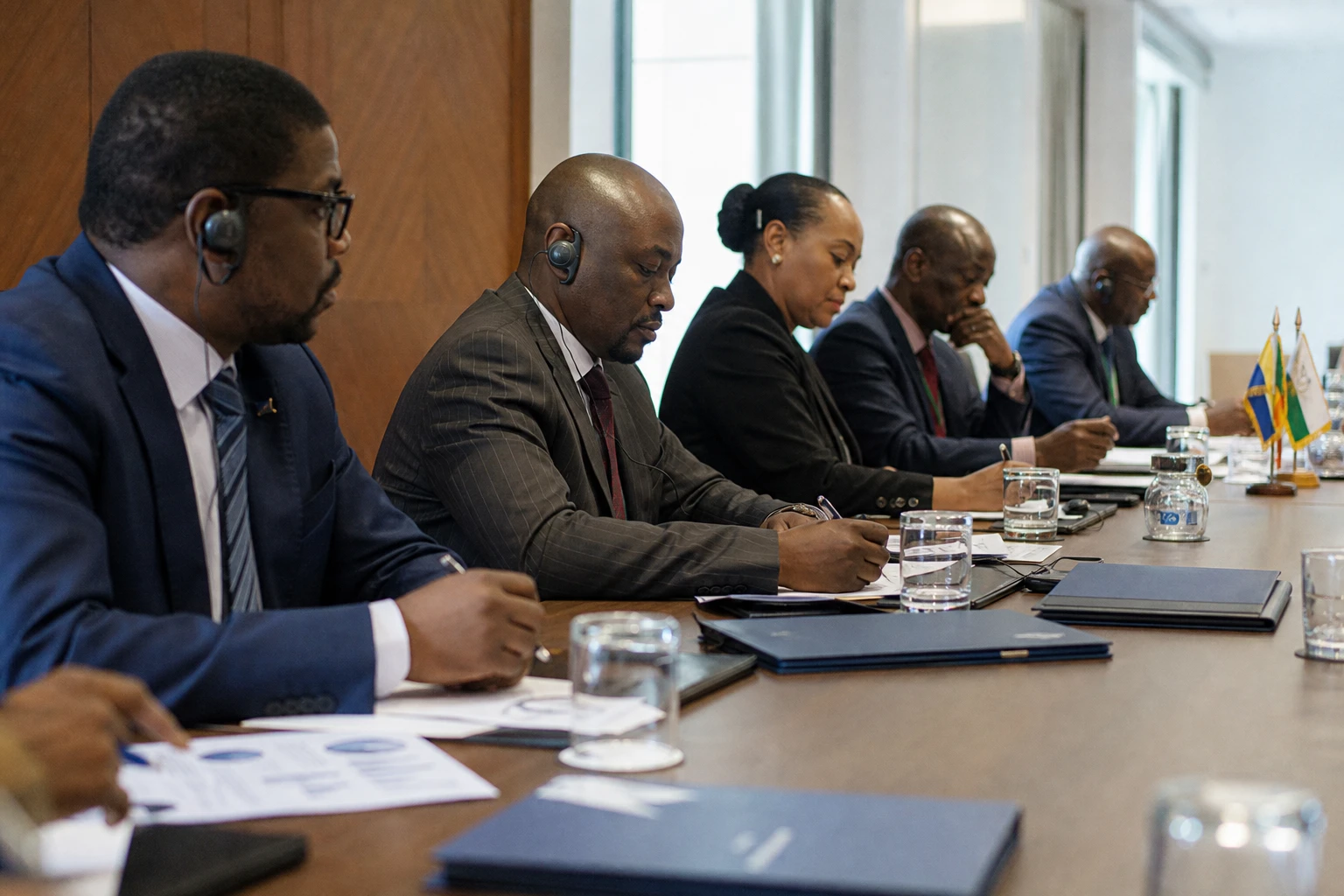
On 5 October, a technical meeting brought together officials from the downstream oil sector, distributors and road transporters of petroleum products. Its stated aim was to secure supplies and prevent the disruption from further hampering economic activity.
The paradox of an oil-producing country
The situation highlights a reality that is often misunderstood. Gabon produces crude oil, but that production alone does not guarantee a constant supply of fuel at the pump. The products still have to be refined, stored, transported and distributed.
The Gabon Oil Refining Company, SOGARA, based in Port-Gentil, supplies some of the products intended for the domestic market. However, the country’s needs are not always met by the available refined output. Gabon therefore has to supplement its supply with imports.
This system leaves the supply chain vulnerable to several factors. A fall in stocks, a maritime delay, a delivery below the volumes ordered or transport difficulties can quickly affect stations in Libreville.
Station managers have also reported discrepancies between the volumes requested and those actually delivered. A station expecting 20,000 litres but receiving less must either cut sales or ration customers. Queues then become visible, even when products continue to arrive intermittently.
Different effects across activities
The shortage does not affect everyone in the same way. Households with a car can postpone some journeys. Taxi drivers, transporters and small traders, however, lose time and income directly.
Neighbourhoods far from the centre are also more vulnerable. Someone who works in Libreville but lives in Ntoum or Akanda depends on regular transport links. When taxis reduce the number of trips they make, journeys become longer and more expensive.
The informal sector often absorbs some of the economic shocks, but its margins are limited. A day spent looking for fuel cannot be spent selling, delivering or transporting goods.
Companies, meanwhile, must weigh up the need to keep services running against building up reserves. School transport operators, maintenance companies and businesses involved in construction projects are particularly dependent on diesel.
A national and regional issue
The issue extends beyond the queues in Libreville. It highlights the need to secure Gabon’s downstream oil sector—that is, all activities from refining to distribution. It also raises questions about storage capacity and the regularity of imports.
Gabon is a member of the Central African Economic and Monetary Community, CEMAC, which brings together six countries that share, among other things, the Central African CFA franc. In the region, supply chains remain heavily dependent on ports, roads and supply corridors.
A disruption at a refinery, terminal or along a maritime route can therefore have cascading effects. For Libreville, the immediate priority is to restore regular distribution. In the longer term, the challenge will be to make the supply chain less vulnerable, including through better-sized stocks, more transparent co-ordination and refining capacity suited to national needs.
As of 6 October 2026, Gabonese authorities are speaking of a gradual recovery, while stations continue to receive supplies in stages. The next cargo and the pace of road deliveries will show whether the pressure is genuinely easing or simply shifting from petrol to diesel.