
 Algeria
 Libya
 Morocco
 Sudan
 Tunisia
 Benin
 Burkina Faso
 Cabo Verde
 Côte d'Ivoire
 Ghana
 Guinea
 Guinea-Bissau
 Liberia
 Mali
 Mauritania
 Niger
 Nigeria
 Senegal
 Sierra Leone
 The Gambia
 Togo
 Cameroon
 Central African Republic
 Chad
 DR Congo
 Equatorial Guinea
 Gabon
 Republic of the Congo
 São Tomé and Príncipe
 Burundi
 Comoros
 Djibouti
 Eritrea
 Ethiopia
 Kenya
 Madagascar
 Malawi
 Mauritius
 Mozambique
 Rwanda
 Seychelles
 Somalia
 South Sudan
 Tanzania
 Uganda
 Angola
 Botswana
 Eswatini
 Lesotho
 Namibia
 South Africa
 Zambia
 Zimbabwe
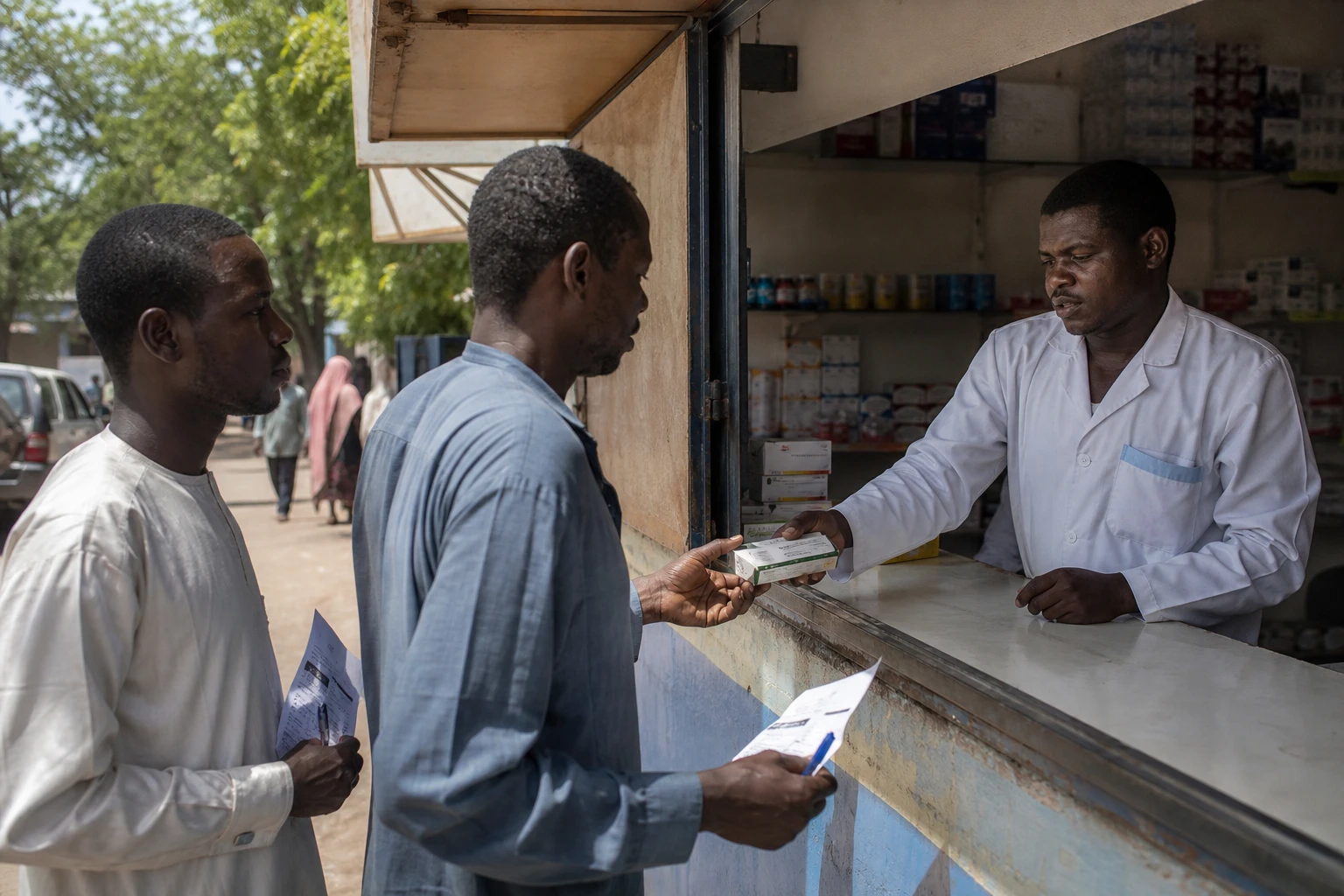
For Chad, the challenge is not simply to bring in more medicines. It is also to better control their quality, train professionals and bring specialist care closer to patients. It is against this backdrop that N’Djamena and Cairo have broadened their health partnership, a few weeks after an initial agreement focused on strengthening Chad’s health system.
An agreement focused on medicines and regulation
On 3 October 2026, on the sidelines of the Alamein-Africa Forum, Chad’s Minister of Public Health and Prevention, Abdelmadjid Abderahim, and the president of the Egyptian Drug Authority, Ali El Ghamrawy, signed a memorandum of understanding.
The text covers pharmaceutical products, biological products and medical supplies. It also provides for an exchange of expertise between the competent administrations of the two countries. The stated aim is to strengthen the safety, quality and efficacy of products used in healthcare facilities.
Cooperation is expected to cover technical and regulatory information in particular. This dimension is important. It concerns registration procedures, medicine controls, pharmacovigilance and the monitoring of medical devices. Pharmacovigilance means monitoring adverse effects after a product has been placed on the market.
The memorandum also paves the way for better coordination of supplies. However, it does not in itself guarantee lower prices or immediate availability in every region of Chad. These outcomes will depend on implementation arrangements, distribution channels and the capacity to carry out checks on the ground.
The ceremony took place in the new city of Alamein, in northern Egypt, during the opening of a forum devoted to African economic relations. The event was organised with the participation of the African Union Commission, AUDA-NEPAD and Afreximbank, according to information published by the Egyptian authorities.
Building on the agreement signed in N’Djamena
This new step builds on commitments made in N’Djamena on 6 and 7 August 2026, during the fourth session of the joint cooperation commission between Chad and Egypt. The two health ministries had then concluded a health agreement.
That initial text provided for a training programme for Chadian health managers and professionals. It also covered pharmacists, laboratory technicians, intensive care specialists and staff responsible for maintaining biomedical equipment.
The two parties had also discussed creating or strengthening specialist services. The fields mentioned included neonatology, paediatric oncology, surgery, cardiology, nephrology and intensive care.
The arrangement also provides for Chadian patients to be referred to Egyptian hospitals. It includes the dispatch of medical missions and specialists to Chad, as well as support for setting up an emergency medical assistance service. In August, the Egyptian authorities had also announced their intention to support the dialysis centre at N’Djamena Central Hospital, which is equipped with 25 machines.
The commitments nevertheless need to be translated into measurable results. For patients, the questions will be concrete: how many training courses will actually be held, what equipment will reach regional hospitals and which medicines will be available outside the capital?
Strengthening Chad’s health system
The partnership comes as Chad’s health system faces several challenges at once. Needs span primary care, the management of chronic diseases, maternal and child health, as well as emergencies and communicable diseases.
The pressure is particularly acute in areas far from N’Djamena. Patients in the provinces still have to travel long distances to access certain tests, dialysis or specialist care. Strengthening regional hospitals could therefore reduce journeys to the capital, provided staff, equipment and medicines are available.
The crisis in Sudan adds a major constraint. Since the conflict began in its eastern neighbour, Chad has received large numbers of refugees. This situation places demands on health facilities, supply chains and medical teams in the east of the country. The World Health Organization also stresses the importance of cross-border cooperation and the availability of essential products.
Chad is also seeking to develop its own expertise. In June 2026, N’Djamena hosted the 25th edition of the International Pharmaceutical Forum, devoted to access to safe, effective and affordable medicines in Africa. The memorandum with Egypt is therefore part of a broader discussion about regulation, training and the resilience of health systems.
For the cooperation to be sustainable, it will need to avoid a relationship limited to purchasing finished products. Skills transfer, equipment maintenance and support for Chadian laboratories will be critical. The ability to check imported products will be just as important as the ability to obtain them.
An opening for Egypt’s pharmaceutical industry
Cairo has a more structured pharmaceutical sector and a national authority dedicated to regulating medicines. For Egypt, the agreement with Chad expands opportunities for its companies and strengthens its presence in African health partnerships.
This approach is in line with Egypt’s strategy of presenting the pharmaceutical industry as a lever for health security and economic development. It could also encourage cooperation in local manufacturing, training and maintenance, rather than a simple commercial relationship between supplier and buyer.
For its part, Chad can benefit from more direct access to a regional supply of medicines and medical devices. But this opening will need to be governed by transparent rules. The authorities will have to verify product quality, the regularity of deliveries and whether equipment meets the needs of Chadian facilities.
A significance that extends beyond bilateral relations
The rapprochement between N’Djamena and Cairo comes as Africa seeks to reduce its dependence on external supply chains. The African Union and regional institutions are now advocating greater medicine production, harmonised standards and closer cooperation between national agencies.
Chad is a member of the Central African Economic and Monetary Community, CEMAC, which brings together six countries that share, among other things, a common currency and economic coordination mechanisms. Strengthened pharmaceutical cooperation with Egypt could therefore be of regional interest if it is aligned with Central African initiatives.
The next stage will be implementation. The first technical exchanges, the training announced, the approval procedures and the establishment of supply channels will need to be monitored. The agreement’s success will be measured less by the ceremony in Alamein than by its impact in N’Djamena’s hospitals and in facilities across Chad’s provinces.



