Algeria
 Egypt
 Libya
 Morocco
 Sudan
 Tunisia
 Burkina Faso
 Cabo Verde
 Côte d'Ivoire
 Ghana
 Guinea
 Guinea-Bissau
 Liberia
 Mali
 Mauritania
 Niger
 Nigeria
 Senegal
 Sierra Leone
 The Gambia
 Togo
 Cameroon
 Central African Republic
 Chad
 DR Congo
 Equatorial Guinea
 Gabon
 Republic of the Congo
 São Tomé and Príncipe
 Burundi
 Comoros
 Djibouti
 Eritrea
 Ethiopia
 Kenya
 Madagascar
 Malawi
 Mauritius
 Mozambique
 Rwanda
 Seychelles
 Somalia
 South Sudan
 Tanzania
 Uganda
 Angola
 Botswana
 Eswatini
 Lesotho
 Namibia
 South Africa
 Zambia
 Zimbabwe
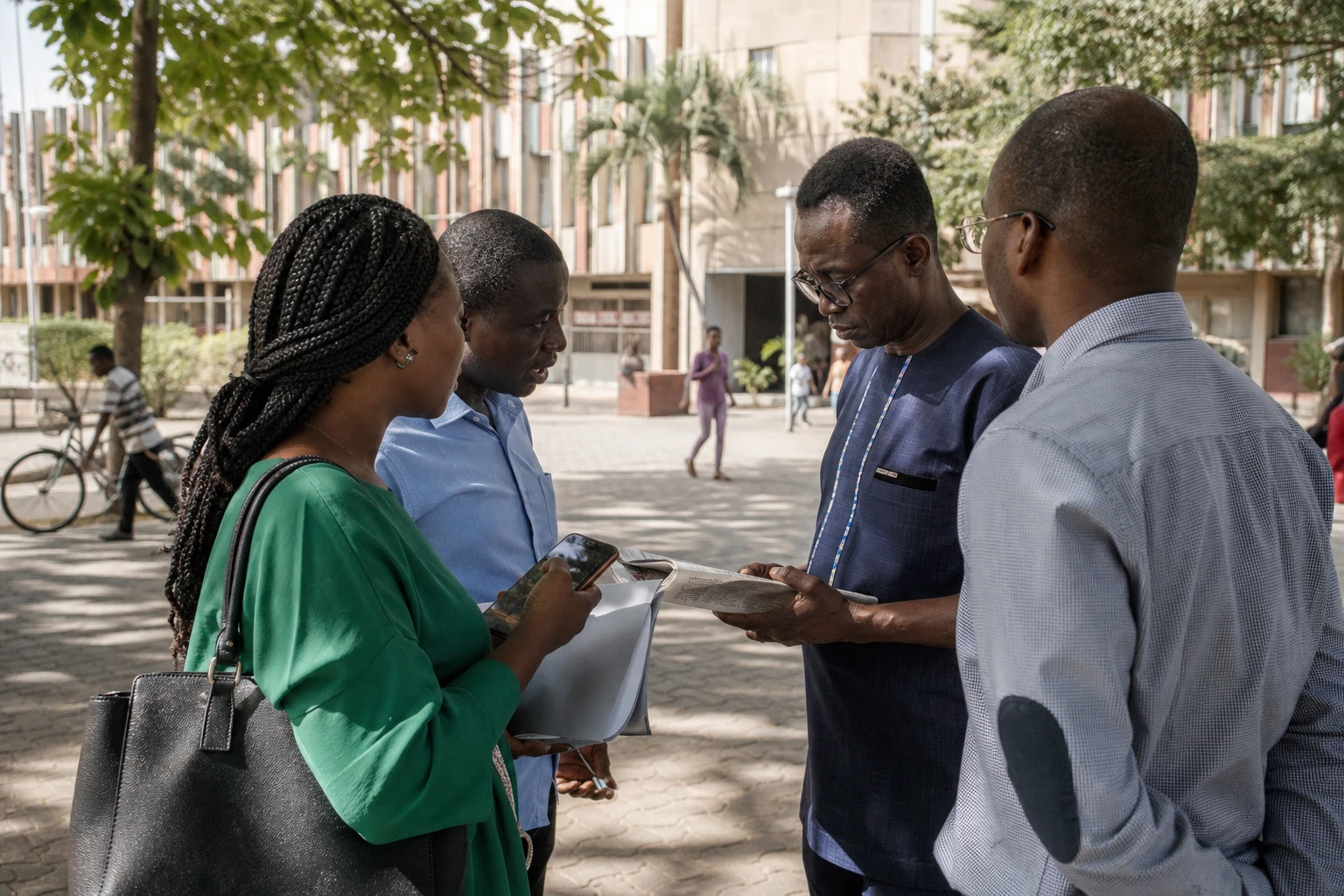
Beninese President Romuald Wadagni arrives in Paris with an agenda that goes beyond bilateral relations. His visit on 4 and 5 October 2026 comes as Benin seeks to attract more investment, strengthen security in the north and maintain a difficult dialogue with its Sahelian neighbours.
A French visit in a region under strain
From Porto-Novo, Beninese diplomacy must navigate a profoundly reshaped regional environment. Burkina Faso, Mali and Niger, which are part of the Alliance of Sahel States, have distanced themselves from France and the Economic Community of West African States, ECOWAS, an organisation tasked with promoting integration and stability in West Africa.
Benin remains a member of ECOWAS. It also shares borders with Niger, Burkina Faso, Nigeria and Togo. This gives it a particular role. Cotonou must preserve regional trade while protecting its northern territories, which are exposed to incursions by armed groups active in the Sahel.
Relations with Niger remain especially sensitive. The two countries have experienced several tensions over their border and the movement of goods. Niamey has also accused Cotonou of facilitating hostile operations with the support of foreign powers. Beninese authorities have rejected these accusations.
The border between the two countries remains a point of friction. Its reopening depends on decisions in Niamey, security requirements and the desire to preserve exchanges between communities on either side. For traders, transport operators and informal workers, a prolonged closure has immediate effects far from the capitals.
First visit to France since taking office
Romuald Wadagni was sworn in as Benin’s president on 24 May 2026, after winning the presidential election in April. A former minister of state for the economy and finance, he is already familiar with French diplomatic and financial circles. However, this is his first official visit to France since taking office.
The programme includes a meeting with Emmanuel Macron. The talks are expected to cover bilateral cooperation, investment, infrastructure and security. The two presidents are also due to discuss political developments in West Africa, notably deteriorating relations between Paris and several military governments in the Sahel.
For Cotonou, the challenge is not to choose between France and its neighbours. Rather, it is to preserve useful partnerships without giving the impression that its diplomacy depends on a single interlocutor. Romuald Wadagni’s visits to Nigeria, Niger, Burkina Faso, Mali, Côte d’Ivoire, Mauritania, Togo, the Republic of the Congo and Rwanda are part of this effort to diversify.
Practical economic expectations
France remains an important trading partner, although trade is still unbalanced. It reached €309 million in 2025, according to the French Treasury’s Directorate General. French exports to Benin amounted to €282 million, compared with €27 million in imports from Benin.
These figures describe a trading relationship still dominated by French sales. They also show the importance of local processing to Benin’s economy. The country is seeking to produce more on its own territory, particularly in textiles, agribusiness and cotton-related industries.
The Glo-Djigbé Industrial Zone, near Abomey-Calavi, embodies this strategy. Benin wants to process a growing share of its agricultural output there and create industrial jobs. This ambition requires capital, markets and suitable infrastructure. It also depends on Beninese businesses being able to access regional and international markets more easily.
Romuald Wadagni is familiar with the constraints of public finance and the demands of investors. In Paris, he is therefore expected to advocate an approach focused on specific projects: energy, transport, digital technology, water, agricultural processing and industrialisation. For Beninese authorities, the aim will be to turn political proximity into measurable financial commitments.
Security in the north is unavoidable
Security will weigh heavily on the talks. Northern Benin is facing the advance of armed groups operating across the Sahel. Areas near W National Park, Pendjari and the Niger border are under particularly close surveillance.
On 5 March 2026, a military position near Kofouno, in Karimama commune, was attacked. The Beninese army reported that 15 soldiers were killed and four military personnel wounded. Another African source reported five wounded. The exact number of wounded should therefore be treated with caution.
The attack was attributed to the Group for the Support of Islam and Muslims, known by its acronym JNIM, an armed group affiliated with al-Qaeda in the Sahel. Several media outlets reported the attribution, but operational information remains limited. Beninese authorities have since reinforced their military presence and surveillance arrangements in the north.
This pressure falls first on communities living near the borders. Residents must contend with checks, movement restrictions and the risk of some routes being closed. Farming, pastoral and commercial activities can be disrupted. In these areas, security is not simply a matter of protecting military camps. It also concerns access to markets, public services and land.
France can offer intelligence, training and logistical support. But Cotonou will also have to rely on its own capabilities, regional cooperation and relations with Nigeria and Togo. A lasting response cannot depend solely on external assistance.
Between memory, influence and diplomatic autonomy
Franco-Beninese relations also have a cultural dimension. The return of objects linked to the former kingdom of Danxomè has shaped exchanges between the two countries. Other Beninese requests are still under consideration, including those concerning pieces held in French institutions.
This issue is not only about heritage. It touches on cultural sovereignty, historical memory and Benin’s ability to present its history through its own institutions. Porto-Novo and Cotonou also want to develop spaces capable of receiving, preserving and showcasing these works.
Romuald Wadagni’s visit will therefore be watched beyond Paris. It will show whether France intends to prioritise a relationship based on mutual interests, while Benin seeks to maintain room for manoeuvre between ECOWAS, its neighbours in the AES and its international partners.
The next steps will be practical: financial commitments, security cooperation, developments on the border with Niger and regional coordination against armed groups. For the Beninese president, the success of the visit will be measured less by declarations than by the results achieved for the country’s economy and security.