Algeria
 Egypt
 Libya
 Morocco
 Sudan
 Tunisia
 Benin
 Cabo Verde
 Côte d'Ivoire
 Ghana
 Guinea
 Guinea-Bissau
 Liberia
 Mali
 Mauritania
 Niger
 Nigeria
 Senegal
 Sierra Leone
 The Gambia
 Togo
 Cameroon
 Central African Republic
 Chad
 DR Congo
 Equatorial Guinea
 Gabon
 Republic of the Congo
 São Tomé and Príncipe
 Burundi
 Comoros
 Djibouti
 Eritrea
 Ethiopia
 Kenya
 Madagascar
 Malawi
 Mauritius
 Mozambique
 Rwanda
 Seychelles
 Somalia
 South Sudan
 Tanzania
 Uganda
 Angola
 Botswana
 Eswatini
 Lesotho
 Namibia
 South Africa
 Zambia
 Zimbabwe
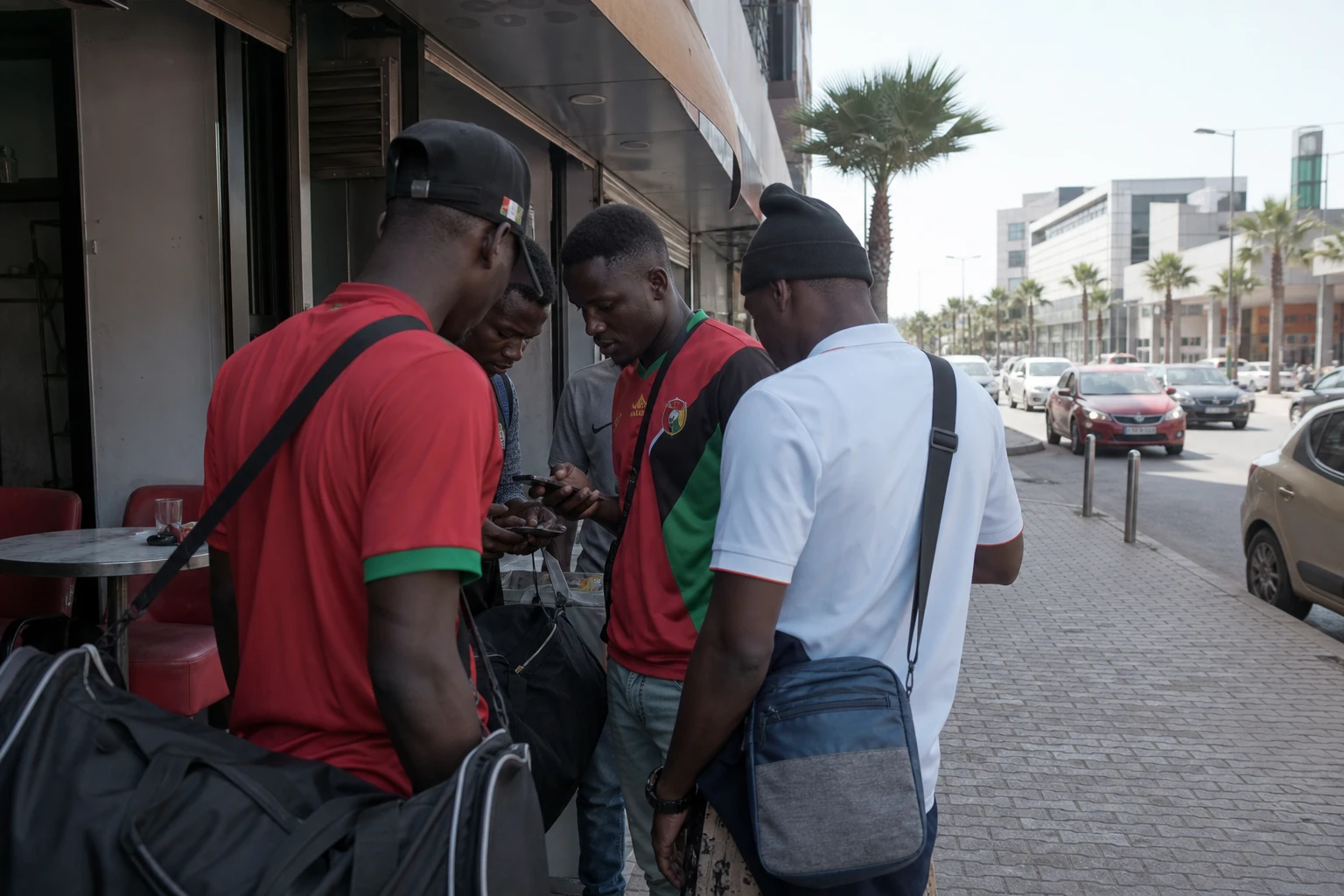
Just hours before a much-anticipated fixture in Buenos Aires, Burkina Faso’s preparations were derailed by a very practical problem: getting to the stadium. The Stallions’ journey was disrupted by the cancellation of a flight from Casablanca, casting doubt on their presence against Argentina.
Journey thrown into disarray after match against Central African Republic
Burkina Faso had, however, just come through a positive spell on the pitch. On Monday 28 September 2026, the Stallions beat the Central African Republic 1-0 at the Larbi Zaouli Stadium in Casablanca in the 2027 Africa Cup of Nations qualifiers.
The victory took Burkina Faso’s tally to four points in Group F. Aboubacar Camara scored the only goal of the match after half-time. The result revived a team managed by Franco-Comorian Amir Abdou after their draw against Benin in the opening round.
The delegation was then due to leave Morocco for Argentina. According to the Burkinabe Football Federation, the flight scheduled for Wednesday 30 September was cancelled without warning by the company responsible for chartering the aircraft. The federation said the situation had forced it to completely revise the team’s itinerary.
On Friday 2 October, several sources were still confirming that the squad was in Casablanca. With the journey to Buenos Aires estimated to take almost eleven hours, there was very little time left before kick-off at the Monumental Stadium.
In a statement, the federation said several options had been considered. It nevertheless acknowledged that the length of the journey and the logistical constraints had raised concerns among the players. Burkina Faso’s sports ministry, the federation and the country’s embassy in Morocco took part in discussions to resolve the situation.
Squad reshuffled at short notice
Transport was not the only difficulty. According to several consistent reports, some senior players had pulled out of the trip under the proposed conditions. The composition of the delegation was therefore rearranged at the last minute.
Players from the under-23 team were reportedly called up to complete the squad. This possibility was reported by international football observers, but at the time of the latest available information the federation had not published a detailed list that would make it possible to assess the precise scale of the absences.
The problem is as much sporting as organisational. A transatlantic journey made just hours before a match cuts recovery time. It also disrupts tactical preparation, sleep and players’ physical management. For a team that must then continue its 2027 AFCON qualifying campaign, the disruption comes at a busy time.
The match against Argentina was due to take place on Saturday 3 October at 9pm local time, or in the early hours of Sunday in Burkina Faso. Some announcements also gave the time as Sunday 4 October at 00:00 GMT. The difference is due to the time zone and does not alter the scheduled kick-off time in Buenos Aires.
Information available on Saturday indicated that a departure from Casablanca had ultimately been arranged. The match had not been officially cancelled. However, the delegation’s late arrival left uncertainty over the conditions in which the Stallions would be able to take the field.
The cost of a disputed arrangement
Beyond this episode, the controversy raises questions about the division of responsibilities for international friendly matches. An African team invited to play abroad does not travel under the same conditions as a team with a more extensive logistics network and greater commercial resources.
In this case, the Burkinabe federation directly blamed the incident on the charter company’s cancellation of the flight. Other accounts have questioned the overall arrangements offered for the trip, including the use of commercial options deemed too time-consuming for a team taking part in a high-level fixture.
A previous case involving Mauritania has also been raised. In March 2026, the Mourabitounes reportedly turned down a proposed commercial flight for a match in Argentina because of the length of the journey, before paying for their own private flight. This episode, reported by specialist media, will nevertheless need to be documented by the parties concerned to establish precisely who was responsible and the financial terms of the agreement.
The issue therefore extends beyond Burkina Faso’s case. Friendly matches bring visibility and significant revenue to the host federations. They must also ensure that visiting teams have transport, accommodation and preparation arrangements compatible with the demands of international football.
A challenge for Burkinabe and regional football
For Burkina Faso, this episode comes at a time when the national team is seeking to consolidate its place among West Africa’s competitive sides. The Stallions have taken four points from their first two matches in the 2027 AFCON qualifiers. Their upcoming schedule includes a two-legged tie against Mauritania in October.
The priority, then, is to maintain sporting continuity. Disrupted preparations can take a physical toll, but can also affect relations between players, the coaching staff and the administrators. Any internal tensions will need to be assessed cautiously, as no official confirmation has detailed their nature or extent.
The case also highlights African national teams’ dependence on infrastructure and intermediaries outside their immediate sporting region. The Confederation of African Football and national federations would be well advised to strengthen contractual clauses covering flights, travel times and financial compensation for friendly matches.
Across the Economic Community of West African States, ECOWAS, which brings together fifteen countries in the region, national teams often face the same constraints: long distances, reliance on foreign airport hubs and tight international schedules. Professionalising these agreements is therefore a matter of competitiveness, but also of respect for players and supporters.
Burkina Faso was therefore due to take the field in Buenos Aires under uncertain circumstances, after several days of rearranging its travel plans. The result would matter less for the standings than for the experience of facing a major national side. But the handling of the trip would leave a more lasting question: can an international match still be considered balanced when the preparation conditions are not?