Algeria
 Egypt
 Libya
 Morocco
 Sudan
 Tunisia
 Benin
 Burkina Faso
 Cabo Verde
 Côte d'Ivoire
 Ghana
 Guinea
 Liberia
 Mali
 Mauritania
 Niger
 Nigeria
 Senegal
 Sierra Leone
 The Gambia
 Togo
 Cameroon
 Central African Republic
 Chad
 DR Congo
 Equatorial Guinea
 Gabon
 Republic of the Congo
 São Tomé and Príncipe
 Burundi
 Comoros
 Djibouti
 Eritrea
 Ethiopia
 Kenya
 Madagascar
 Malawi
 Mauritius
 Mozambique
 Rwanda
 Seychelles
 Somalia
 South Sudan
 Tanzania
 Uganda
 Angola
 Botswana
 Eswatini
 Lesotho
 Namibia
 South Africa
 Zambia
 Zimbabwe
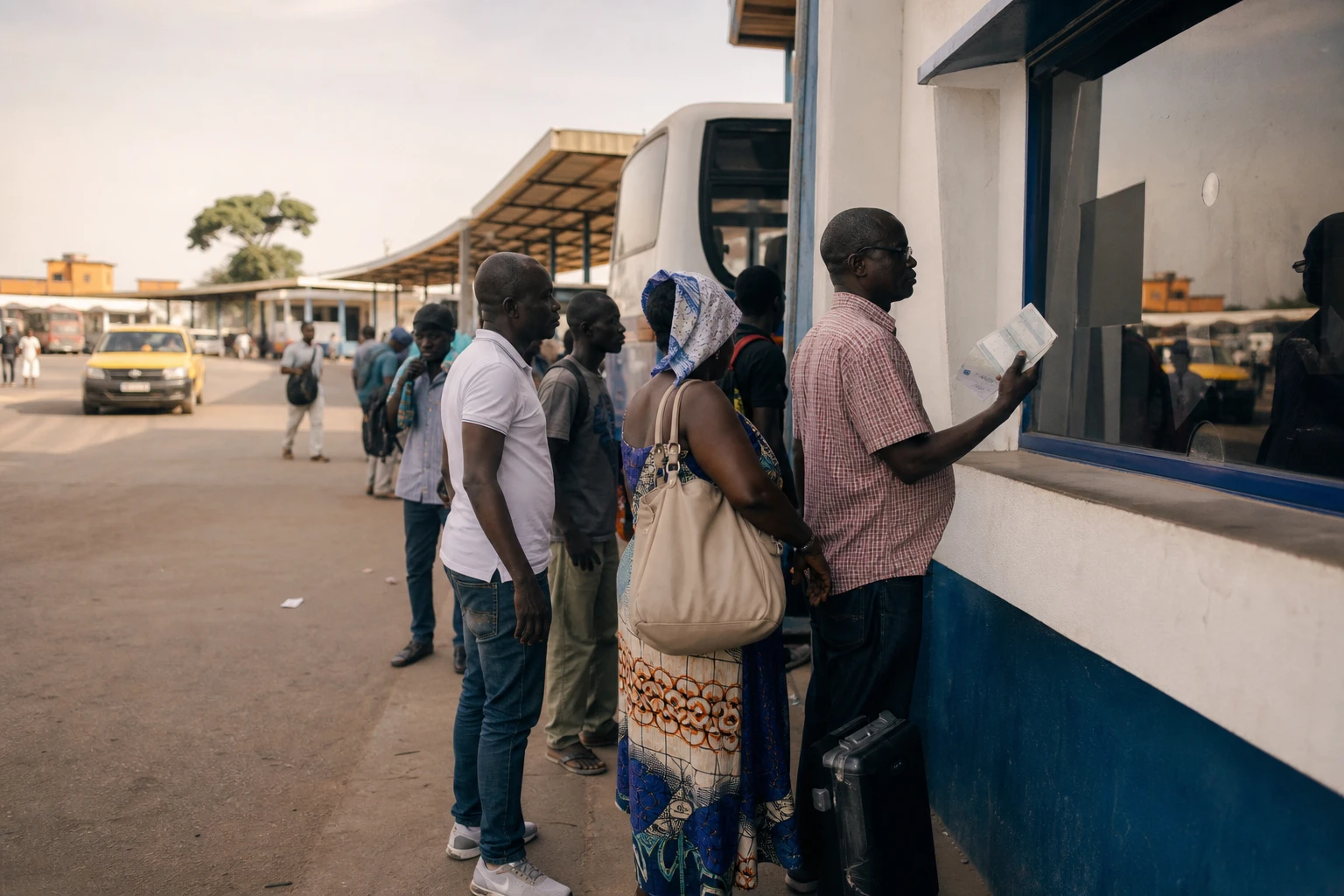
In Bissau, Umaro Sissoco Embaló’s return was supposed to open a new political chapter. It now risks becoming the first major test of the military transition launched in November 2025. The former president wanted to return to Guinea-Bissau on Sunday 4 October 2026 and seek the presidency. The military authorities have ultimately barred his return, citing security concerns.
Return announced, then blocked
On 28 September, Umaro Sissoco Embaló announced his intention to return to Guinea-Bissau and run in the presidential election scheduled for 6 December 2026. Since being ousted, the former head of state has been living in exile in Morocco.
The military high command announced on Thursday 1 October that the necessary conditions were not in place to guarantee his return. In a statement, it cited national security, the preservation of public order and the prevention of unrest that could affect the country’s stability.
The decision does not amount to a judicial ban on his candidacy. It does, however, prevent the man concerned, for now, from entering the country where he intends to campaign. This distinction will matter if the authorities keep the 6 December election date.
The junta has not disclosed specific facts that would allow the threat it cited to be assessed. It says it reviewed the national situation and security context before taking its decision. The exact findings of that analysis have not been made public.
Just days earlier, General Horta N’Tam had struck a different note. In a radio interview, the transitional president said that any Guinean citizen could return to their country if they had done nothing wrong. That statement had fuelled expectations about Embaló’s return.
A transition under scrutiny
General Horta N’Tam heads the military high command established after the coup of 26 November 2025. The army halted the electoral process the day after the presidential and legislative elections held on 23 November.
Provisional results had not yet been announced. Umaro Sissoco Embaló and his main rival, Fernando Dias da Costa, each claimed victory. The military justified its intervention as necessary to preserve public order and foil a plot said to be linked to drug-trafficking networks.
Since then, Guinea-Bissau has been governed by a military transitional authority. It says it intends to organise a return to civilian rule on 6 December 2026. The transition charter bars General Horta N’Tam from standing in the next presidential election.
At the same time, the authorities continue to restrict demonstrations, gatherings and political meetings. These measures limit parties’ ability to mobilise their supporters. They also shrink the space in which citizens can publicly challenge the transition’s decisions.
A decision fuelling uncertainty
For Embaló’s supporters, the refusal to let him return may appear to be a political obstacle. The former president is not merely seeking to come home. He wants to stand again in an election organised by the authorities that ousted him.
For the junta, his arrival could trigger gatherings and reignite tensions over the election halted in November 2025. In a country where the army has long played a central role in political life, a mobilisation around the former president could quickly go beyond the bounds of a simple election campaign.
The people of Guinea-Bissau are therefore faced with two competing demands. They expect the transition to end and normal institutional life to resume. But they also want to know the practical conditions for a credible election, with candidates free to travel and campaign.
This tension affects different groups in the country in different ways. In Bissau, parties, the media and civil society organisations are directly affected by the junta’s decisions. In the regions, the stakes are more tangible: political stability shapes the movement of people, market activity and the delivery of public services.
The restrictions also weigh on the informal economy, which is essential to many households. Any prolonged demonstration or closure of transport routes can reduce daily incomes. Conversely, an open electoral contest could usher in a new period of uncertainty if the rules are not accepted by everyone.
ECOWAS’s delicate role
The Guinea-Bissau crisis directly concerns the Economic Community of West African States, ECOWAS, which brings together the countries of the region and regularly intervenes in institutional crises.
The regional organisation must now monitor three issues: adherence to the announced timetable, the conditions for candidates’ participation and freedom to engage in political activities. An election held without sufficient guarantees could prolong the crisis rather than bring the military interlude to a close.
ECOWAS will also have to contend with a difficult regional reality. Several West African countries are undergoing military transitions or are at odds with regional sanctions mechanisms. Guinea-Bissau cannot therefore be treated as an isolated case. Any response seen as too weak could encourage military power plays. Poorly calibrated pressure, by contrast, could narrow the scope for mediation.
The next test will be electoral
The refusal to allow Embaló to return is not yet enough to conclude that the 6 December election will be cancelled. The junta is officially keeping that date. But the decision exposes a contradiction at the heart of the transition: promising a return to civilian rule while controlling the movements and activities of a former president who is a candidate.
The coming weeks will show the real extent of this ban. Developments to watch include the publication of electoral rules, the registration of candidates, the positions taken by other parties and any regional mediation efforts.
For the people of Guinea-Bissau, the stakes go beyond the fate of a former head of state. They concern the country’s ability to break its cycle of institutional ruptures through an accepted election, the restoration of civilian administration and guarantees that apply to all candidates.