Algeria
 Egypt
 Libya
 Morocco
 Sudan
 Tunisia
 Benin
 Burkina Faso
 Cabo Verde
 Côte d'Ivoire
 Ghana
 Guinea
 Guinea-Bissau
 Liberia
 Mali
 Mauritania
 Niger
 Nigeria
 Senegal
 Sierra Leone
 The Gambia
 Togo
 Cameroon
 Central African Republic
 Chad
 DR Congo
 Equatorial Guinea
 Gabon
 Republic of the Congo
 São Tomé and Príncipe
 Burundi
 Comoros
 Djibouti
 Eritrea
 Kenya
 Madagascar
 Malawi
 Mauritius
 Mozambique
 Rwanda
 Seychelles
 Somalia
 South Sudan
 Tanzania
 Uganda
 Angola
 Botswana
 Eswatini
 Lesotho
 Namibia
 South Africa
 Zambia
 Zimbabwe
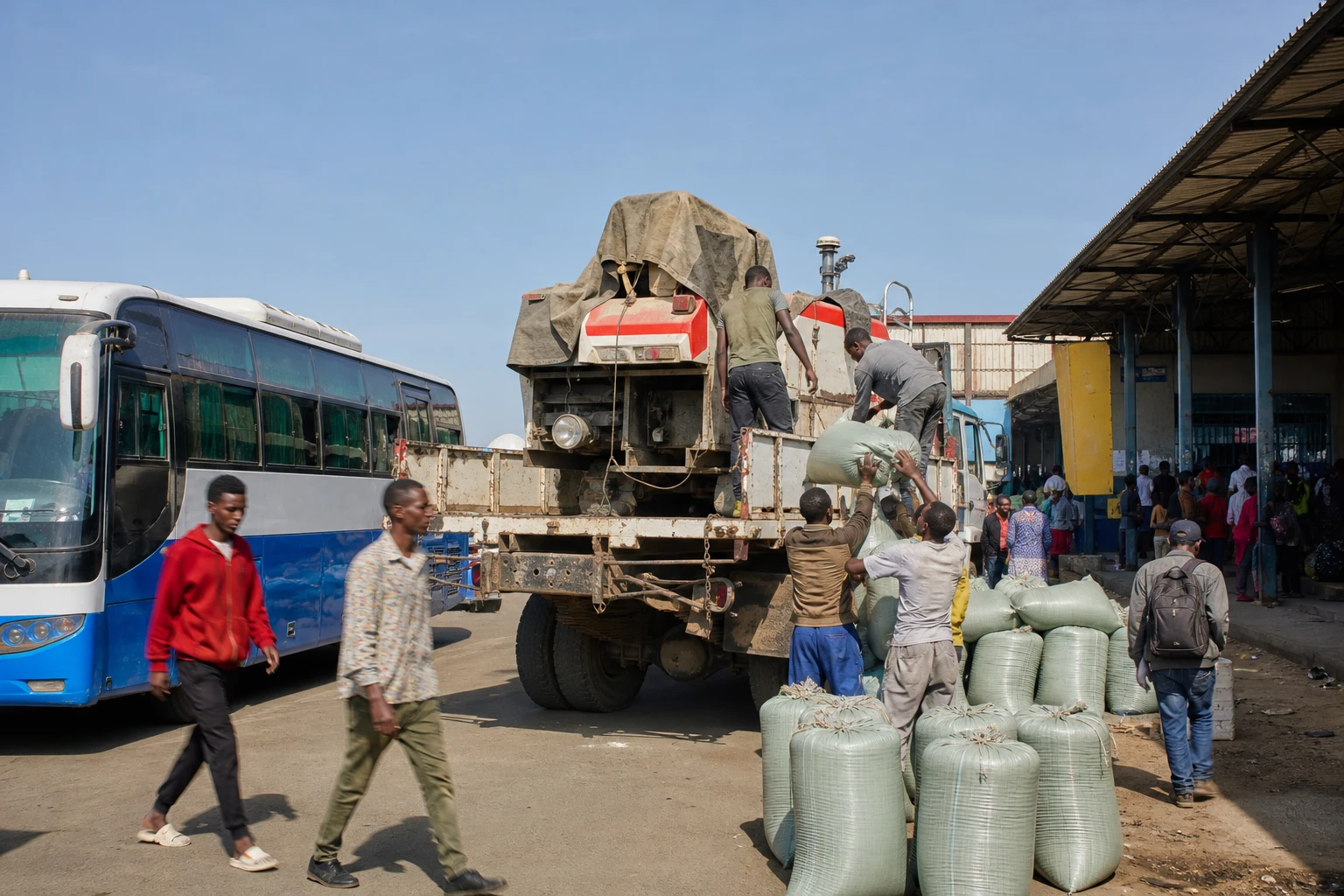
For Ethiopia, rice has become much more than a supplementary crop. It is gradually becoming part of the diet, while imports still meet most of demand. The challenge is therefore not simply to produce more. Rice must also be harvested on time, processed properly and protected from post-harvest losses.
Japanese support for agricultural equipment
On 30 September 2026, Ethiopia and Japan signed a 360 million yen grant agreement in Addis Ababa to support the modernisation of the rice sector. The funding is provided as a grant from the Japanese government, with support from the Japan International Cooperation Agency (JICA).
The agreement provides, among other things, for the acquisition of tractors, combine harvesters, land preparation equipment and rice-processing machinery. The official statement from Japan’s Ministry of Foreign Affairs also confirms that the programme aims to strengthen Ethiopia’s agricultural production capacity.
According to the Ethiopian press, the equipment is intended to support several stages of the supply chain. Land preparation and harvesting are covered, as are threshing, husking and polishing. The aim is to reduce losses, improve the quality of rice sold on the market and limit reliance on imports.
The funding follows several years of Japanese cooperation in the sector. The EthioRice 2 project, implemented with JICA, has strengthened research, training and the dissemination of rice-growing techniques in the Amhara region. Japanese cooperation is therefore not limited to supplying machinery. It also seeks to build the skills needed to use it.
A growing sector that remains poorly mechanised
Ethiopian rice production has risen sharply over the past decade. According to data cited in the National Rice Flagship Program 2023-2027, paddy rice production rose from around 97,000 tonnes in 2012 to 276,000 tonnes in 2021. The area under cultivation increased over the same period, from 34,000 to 88,000 hectares.
However, this growth remains well short of the country’s ambition. In its second rice development strategy, Ethiopia is targeting paddy rice production of 1.93 million tonnes by 2030. Paddy rice refers to grain harvested before it is husked.
The main obstacle lies in the fields and processing units. A study of farmers in several rice-growing areas found that only around 2% of farms had access to a tractor for land preparation. Access to polishing equipment stood at about 22.7%.
These figures were cited in a study on rice mechanisation in Ethiopia by researchers affiliated with the Ethiopian Institute of Agricultural Research. It also found that weeding accounts for nearly 66% of the labour devoted to rice-growing operations. This task remains largely manual and places a particular burden on farming households with little labour or small plots.
The national programme identifies several priorities: soil preparation, weeding, harvesting, threshing and processing. The challenge is to select equipment suited to Ethiopian farms. Machinery that is too large or too expensive could remain in the hands of a few operators and mainly benefit large farms.
The real challenge: making machinery accessible
Mechanisation is not simply a matter of buying tractors. Access to them must also be organised. In Ethiopia, agricultural machinery-hire services can enable small-scale farmers to use equipment without having to buy it. The national programme therefore plans to support local service providers, small businesses and youth groups specialising in mechanised services.
This approach could create jobs in operating, maintaining and repairing machinery. It could also reduce delays in the farming calendar. In rice-growing areas, a late harvest increases the risk of losses and a decline in grain quality.
However, the machinery’s effectiveness will depend on several conditions. Operators will need training. Spare parts will have to be available. Farmers will need access to credit. Finally, rural roads and storage facilities will have to keep pace with rising production volumes.
Irrigation also remains central. More effective mechanisation cannot by itself compensate for irregular access to water. Fragmented land, a shortage of qualified staff and inadequate processing equipment are other constraints identified by the Ethiopian authorities.
A national and regional priority
For Addis Ababa, developing rice production serves several objectives. First, it aims to diversify the food supply and ease the pressure that imports place on foreign-exchange reserves. Japan’s Ministry of Foreign Affairs estimates that local production still meets only about 20% of demand, leaving the country around 80% dependent on external supplies.
Rising demand is also driven by changing eating habits and tensions that have affected the prices of some cereals. Rice can then serve as an alternative when other products become more expensive or less available.
Across East Africa, Ethiopia’s experience is of interest to countries seeking to strengthen their food security. Ethiopia is a member of the Intergovernmental Authority on Development (IGAD), a regional organisation bringing together several states in the Horn of Africa. Challenges related to water, supply chains, imports and agricultural productivity extend far beyond national borders.
The next stage will therefore be decisive: it will be important to establish where the equipment is deployed, which farmers can access it and whether local maintenance capacity can keep pace. The programme’s success will be judged less by the number of machines delivered than by how regularly they are used in production areas.