Algeria
 Egypt
 Libya
 Morocco
 Sudan
 Tunisia
 Benin
 Burkina Faso
 Cabo Verde
 Côte d'Ivoire
 Ghana
 Guinea
 Guinea-Bissau
 Liberia
 Mali
 Mauritania
 Niger
 Nigeria
 Senegal
 Sierra Leone
 The Gambia
 Togo
 Cameroon
 Central African Republic
 Chad
 DR Congo
 Equatorial Guinea
 Gabon
 São Tomé and Príncipe
 Burundi
 Comoros
 Djibouti
 Eritrea
 Ethiopia
 Kenya
 Madagascar
 Malawi
 Mauritius
 Mozambique
 Rwanda
 Seychelles
 Somalia
 South Sudan
 Tanzania
 Uganda
 Angola
 Botswana
 Eswatini
 Lesotho
 Namibia
 South Africa
 Zambia
 Zimbabwe
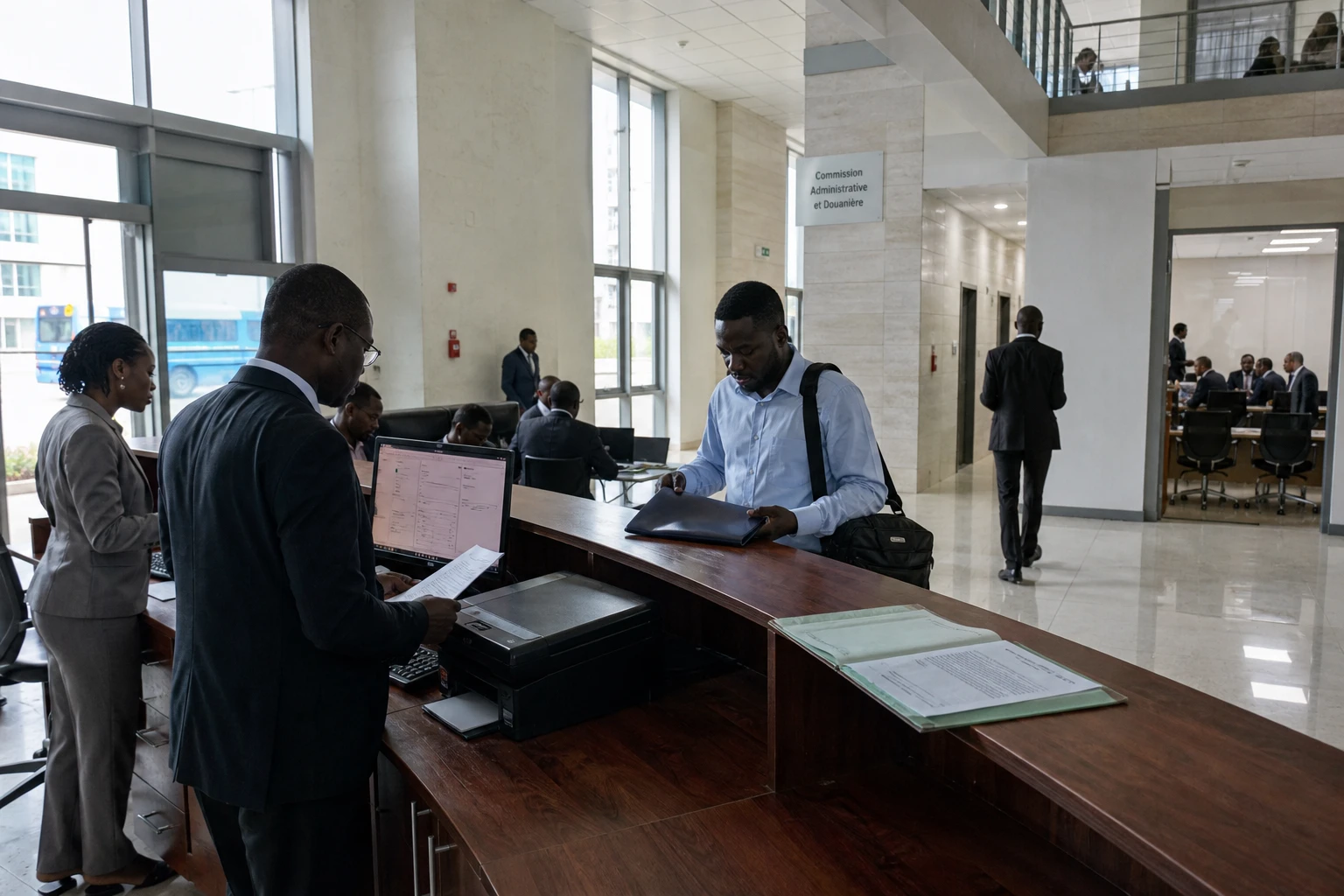
In Brazzaville and Pointe-Noire, rising exports are improving the Republic of the Congo’s external accounts. They do not, however, resolve the central question: how can an oil-driven performance be turned into more stable revenues, jobs and markets for Congolese businesses?
Trade surplus rises sharply
In the second quarter of 2026, the Republic of the Congo’s merchandise exports reached CFA francs 1 463.290 billion, or about $2.51 billion. The National Institute of Statistics (INS) reported a 54.06 % increase year on year. Compared with the first quarter of 2026, exports rose by 37.14 %.
Meanwhile, imports stood at CFA francs 596.640 billion. They increased by 6.24 % compared with the previous quarter and by 5.90 % year on year. The rate of growth in purchases from abroad therefore remains far below that of Congolese sales.
This trend lifted the trade surplus to CFA francs 866.650 billion, or nearly $1.5 billion. According to data published by the National Institute of Statistics of the Congo, the surplus increased by 71.48 % compared with the previous quarter.
A trade surplus occurs when the value of exports exceeds that of imports. It boosts foreign-currency earnings, but its impact on the economy depends on how these resources are used and redistributed.
Oil remains almost the sole engine
The composition of exports explains the scale of the increase. Crude oil accounted for 95 % of Congolese foreign sales in the second quarter. The country therefore remains highly exposed to production volumes, international prices and the timing of shipments.
Other exported products account for a much smaller share. They include sawn timber, unprocessed timber, cement, petroleum gas and other gaseous hydrocarbons.
This structure offers an immediate advantage: when prices and volumes are favourable, exports can rise quickly. It also creates a vulnerability. A fall in crude prices, a technical incident or a decline in production can reduce foreign earnings within a few months.
The increase recorded in the second quarter therefore does not, on its own, signal diversification of the Congolese economy. It mainly demonstrates the extractive sector’s ability to drive trade higher. For other industries, the challenge remains to move from occasional exports to a regular supply, processed locally and better integrated into regional value chains.
China consolidates its place in trade
China remained the leading destination for Congolese exports during the period under review. The Netherlands, the Republic of Korea and Vietnam were among the next largest markets.
This pattern reflects Asia’s role in global demand for hydrocarbons and raw materials. It also highlights the concentration of Congolese markets outside the African continent. In the short term, these markets offer significant volumes. In the medium term, however, the Congo will need to broaden its customer base to reduce its dependence on a handful of partners.
China also ranked first among import sources, ahead of France, Belgium, Brazil and Indonesia. Purchases included meat and edible offal, tubes and pipes, petroleum oils or oils from bituminous minerals, palm oil and certain special-purpose motor vehicles.
This list points to a dual need. The Congo imports products for everyday consumption, as well as equipment and inputs required for industry, transport and construction. The trade surplus should therefore not obscure the economy’s ongoing needs, particularly in food, logistics and manufacturing.
Modernising procedures becomes a practical priority
Trade performance also depends on how quickly formalities are completed. In this context, the Congo is continuing to digitise foreign trade through the Single Window for Cross-Border Operations, or GUOT. The system electronically brings together the information and documents required for import, export and transit operations.
The system aims to reduce delays, improve traceability and limit repetitive procedures for operators. The GUOT describes its electronic platforms as a single entry point for processing trade procedures.
The reform has also received a new institutional framework. Decree No. 2025-460 of 3 December 2025 approved revised statutes for the GUOT and repealed the provisions that had governed the body since 2014. The text sets out, in particular, its responsibilities for facilitating foreign trade, digital trust and producing statistics on trade flows.
For large companies, simpler procedures can reduce costs and delivery times. For small businesses, traders and informal-economy operators, the outcome will depend on real access to the platforms, the quality of the internet connection and administrative support. Digital transformation will be useful only if it also reaches operators outside Brazzaville and Pointe-Noire.
ECCAS and AfCFTA as the next markets to conquer
The Congo is part of the Economic Community of Central African States, or ECCAS. The organisation brings countries in the sub-region together around economic co-operation, infrastructure and the movement of goods and people. For Congolese businesses, this setting offers markets closer to home than those in Asia, provided that difficulties involving roads, borders, payments and standards can be resolved.
The government also wants to benefit from the African Continental Free Trade Area, or AfCFTA. The agreement aims to gradually reduce barriers to trade between African countries and facilitate the emergence of regional value chains.
The Congolese ministry responsible for the AfCFTA highlights tools for exporters, including guides, tariff lists and supporting documents. The government has also announced that Brazzaville will host the 22nd meeting of the AfCFTA Council of Ministers in 2028.
The next challenge will be to turn the current surplus into productive capacity. This means more timber processing, a more competitive agri-food offering, efficient logistics services and stronger links between Congolese producers and ECCAS markets. Oil can finance this transition. It cannot, on its own, stand in for it.