Algeria
 Egypt
 Libya
 Morocco
 Sudan
 Tunisia
 Benin
 Burkina Faso
 Cabo Verde
 Côte d'Ivoire
 Ghana
 Guinea
 Guinea-Bissau
 Liberia
 Mali
 Mauritania
 Niger
 Senegal
 Sierra Leone
 The Gambia
 Togo
 Cameroon
 Central African Republic
 Chad
 DR Congo
 Equatorial Guinea
 Gabon
 Republic of the Congo
 São Tomé and Príncipe
 Burundi
 Comoros
 Djibouti
 Eritrea
 Ethiopia
 Kenya
 Madagascar
 Malawi
 Mauritius
 Mozambique
 Rwanda
 Seychelles
 Somalia
 South Sudan
 Tanzania
 Uganda
 Angola
 Botswana
 Eswatini
 Lesotho
 Namibia
 South Africa
 Zambia
 Zimbabwe
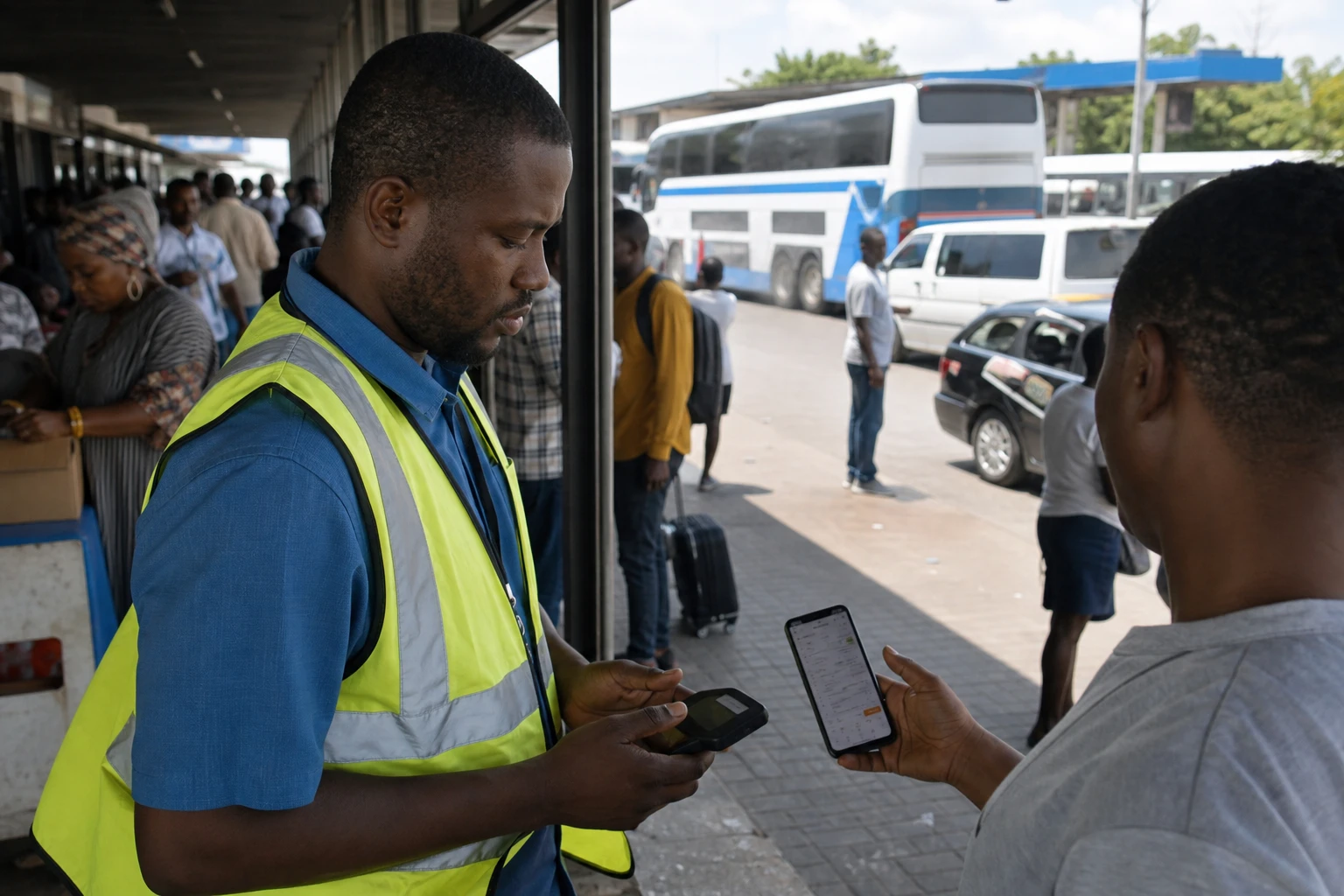
In Nigeria, giving an address does not always mean providing a street number. People often have to name a landmark, a market or a neighbourhood. This makes deliveries more difficult, slows emergency response and limits access to some services. Abuja now wants to replace this approximation with a more precise digital identification system for buildings.
A unique code for every building
The federal government launched the National Digital Alphanumeric Postcode System on Thursday 1 October 2026. The system is being rolled out by the Nigerian Postal Service, NIPOST, with support from the Ministry of Communications, Innovation and Digital Economy.
The system assigns each addressable building a unique 11-character alphanumeric code. It is based on a geographic information system, or GIS: technology that links an address to its exact position on a digital map. The codes are built from five levels: state, local government area, district, sector and building.
The framework is designed to cover all 36 Nigerian states as well as the Federal Capital Territory. The official platform already allows users to search for, register and share a digital postcode. It also offers tools for businesses and developers.
The code is attached to the building, not to the person occupying it. It can therefore remain unchanged after a tenant moves out, a business changes hands or the use of the premises changes. This distinction is intended to make it easier to verify addresses over time.
Information about the system is available on the official Nigerian digital postcode platform. The national launch was also confirmed by Channels Television and the Nigerian daily The Guardian Nigeria.
Logistics at the heart of the reform
The first priority is economic. Delivery companies still have to contend with incomplete addresses, poorly signposted streets and directions that vary from one person to another. These problems lead to returned parcels, extra journeys and higher fuel costs.
Minister Bosun Tijani estimated that addressing errors caused annual losses of between 50 billion and 80 billion naira through missed or failed deliveries. Several Nigerian media outlets, including Channels Television and Nairametrics, have reported the figure. It is, however, an estimate provided by the authorities, not a detailed independent assessment.
More precise addressing could also support e-commerce. For small businesses, being locatable is a practical advantage. It could reduce calls with customers, limit cancellations and improve stock and returns management.
Digital finance providers could also use the data to verify a customer’s or merchant’s address. This is of particular interest to services that must comply with know-your-customer rules, commonly referred to as KYC. It will not replace national identification, but could complement the information already available.
Expected benefits for public services
The government presents the project as national digital infrastructure, rather than simply a modernisation of the postal service. Its aim is to provide a common reference point for emergency services, government agencies, logistics operators and businesses.
For an ambulance, rescue team or patrol, a standardised location can reduce time lost searching for a place. In the urban areas of Lagos, Kano or Port Harcourt, it could help manage densely populated neighbourhoods. In rural areas, it can provide a reference point where street names and house numbers are scarce.
The benefits will not be the same everywhere. Connected neighbourhoods may adopt digital tools quickly. Rural communities, meanwhile, will need simple access to the code, including when internet connections are unstable. Success will therefore depend on mobile coverage, the quality of maps and NIPOST’s ability to keep the data up to date.
Privacy is another concern. A precise address can make it easier to access a service, but it can also become sensitive if used without safeguards. The Nigerian authorities will need to clarify who can access the data, how it may be used and what mechanisms will be available to correct the location of a misidentified building.
One part of Nigeria’s digital transformation
The launch forms part of President Bola Tinubu’s strategy to make Nigeria a $1 trillion economy by 2030. Addressing alone will not achieve that goal. It could, however, provide a foundation for more efficient services in logistics, e-commerce, security and urban planning.
The project was prepared several months before its launch. In June 2026, the government announced an initial phase for October. Mapping and validation operations had begun, with teams working in several states. The daily The Guardian Nigeria reported at the time that the aim was to assign a precise identifier to every building, including those in rural communities.
The reform is part of a broader trajectory. Nigeria is seeking to build digital public infrastructure capable of linking identity, payments, businesses and government services. The postcode could become another layer of this architecture, provided institutions adopt compatible standards.
An issue that extends beyond national borders
The issue also concerns the Economic Community of West African States, ECOWAS. The organisation brings together countries in the region and seeks, among other aims, to facilitate trade, mobility and market integration. Compatible digital addresses could eventually make it easier for goods to move between Nigeria and its neighbours.
For now, the system remains primarily national. Its regional impact will depend on whether businesses adopt it, whether it is compatible with customs systems and whether postal administrations co-operate. Its actual coverage, use in remote areas and ability to reduce delivery failures will also need to be measured.
The next step will therefore be practical rather than symbolic: making the codes known, enabling their use offline and ensuring they are reliable. For Nigerians, the question is straightforward. Will the assigned code really make it possible to be found, receive a delivery or get help more quickly, in Abuja as well as in outlying neighbourhoods and rural communities?