Algeria
 Egypt
 Libya
 Morocco
 Sudan
 Tunisia
 Benin
 Burkina Faso
 Cabo Verde
 Côte d'Ivoire
 Ghana
 Guinea
 Guinea-Bissau
 Liberia
 Mali
 Mauritania
 Niger
 Nigeria
 Senegal
 Sierra Leone
 The Gambia
 Togo
 Cameroon
 Central African Republic
 Chad
 DR Congo
 Equatorial Guinea
 Gabon
 Republic of the Congo
 São Tomé and Príncipe
 Burundi
 Comoros
 Djibouti
 Eritrea
 Ethiopia
 Madagascar
 Malawi
 Mauritius
 Mozambique
 Rwanda
 Seychelles
 Somalia
 South Sudan
 Tanzania
 Uganda
 Angola
 Botswana
 Eswatini
 Lesotho
 Namibia
 South Africa
 Zambia
 Zimbabwe
A $16 billion industrial project in Lamu, on Kenya’s coast, aims to shift the centre of gravity of the East African oil market. The refinery backed by Nigerian businessman Aliko Dangote’s group does not rely on Kenya’s reserves. It is banking on Lamu’s maritime position, regional demand and neighbouring countries’ ability to secure their supplies.
Lamu: a logistical choice before an oil one
The foundation stone for the future refinery was laid on 30 September 2026 in Lamu County, in the presence of Kenyan President William Ruto, Aliko Dangote and several African leaders. The site is to host a facility capable of processing up to 700,000 barrels of crude oil a day. It is expected to come on stream around 2030, following a construction phase scheduled to last about 40 months.
Kenya does not currently have enough oil production to supply a unit of this size on its own. Its Turkana fields remain to be developed and cannot meet the needs of such a facility in the short term. The project will therefore depend on imported crude, shipped to Lamu by sea.
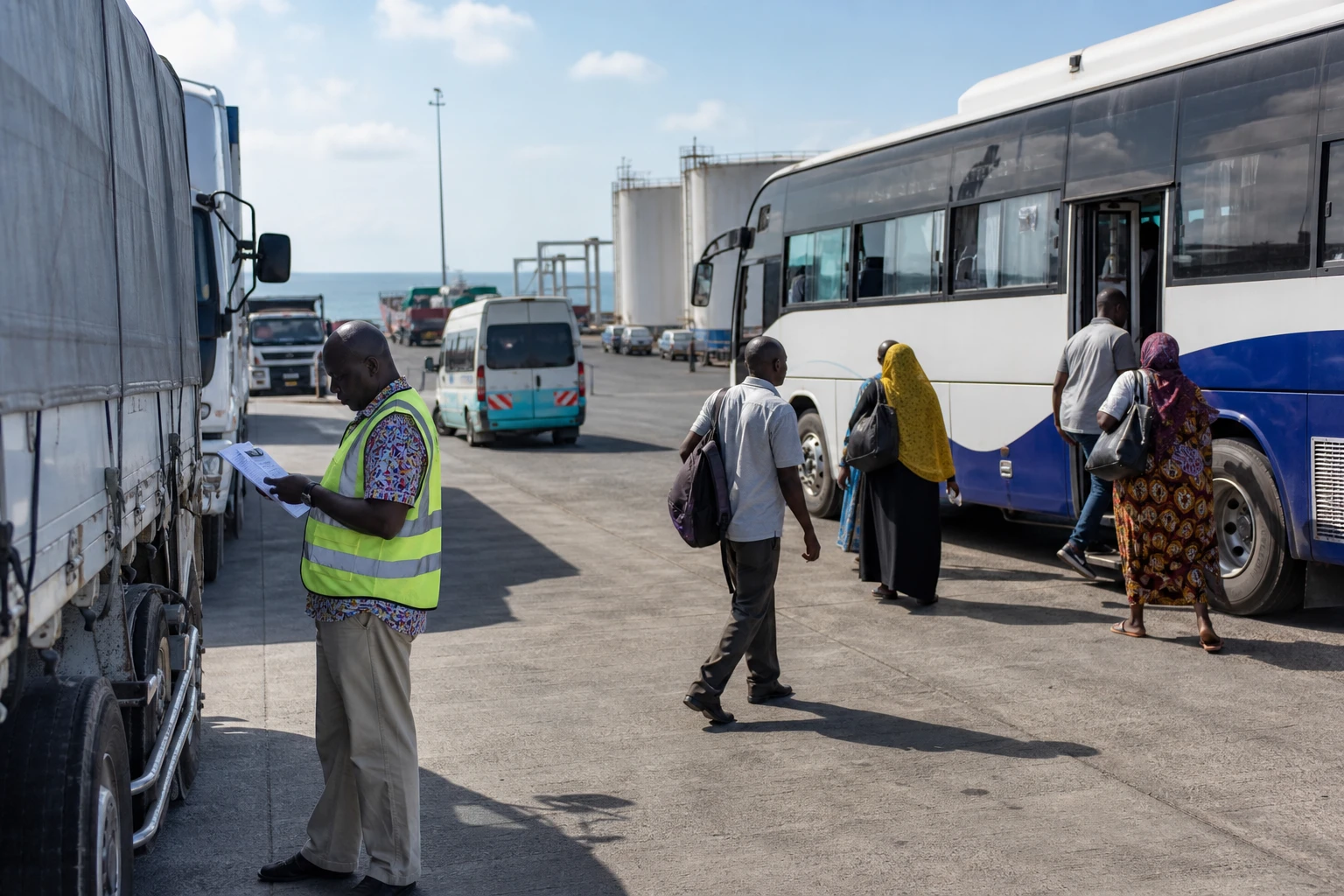
This is precisely one of the advantages cited by Dangote. The port of Lamu offers deep-water access suited to large vessels. The site can also be connected to the LAPSSET corridor, a vast infrastructure network linking the Kenyan coast with South Sudan and Ethiopia. Lamu was therefore chosen for its potential in transport, storage and regional distribution.
The project was initially due to be built in Tanga, Tanzania. The Dangote Group says it ultimately favoured Lamu because of the depth of the sea, the nature of the soil and access for heavy equipment. The decision strengthens Kenya’s role in East Africa’s energy supply chain.
A refinery designed to serve several markets
The future facility is expected to produce more than petrol. Plans also include petrochemical units, storage capacity, pipelines, electricity generation and maritime infrastructure. The group describes the development as an integrated petroleum and chemicals zone.
The potential market extends far beyond Kenya. Refined products could supply Uganda, Ethiopia, Tanzania, Rwanda, Burundi, South Sudan and eastern Democratic Republic of the Congo. The region brings together growing economies that remain heavily dependent on imports of refined fuels.
This dependence exposes consumers to fluctuations in crude prices, maritime tensions and freight costs. It also puts pressure on countries’ foreign-exchange reserves. Regional production would not eliminate these risks, since most crude would still be imported. It could, however, shorten supply times and reduce some of the costs associated with buying finished products from outside the continent.
For Nairobi, the project also has an industrial dimension. Kenya currently imports most of its refined fuels. The Mombasa refinery, which has ceased production and is used mainly for storage, has not enabled the country to build lasting energy independence. The Lamu investment therefore revives a long-standing ambition: to turn the Kenyan coast into an energy hub for the region’s interior.
Nairobi and Dangote’s economic gamble
The Kenyan government describes the project as the largest private investment in the country’s history. The authorities cite tens of thousands of direct and indirect jobs, as well as the creation of a technical training centre in Lamu. The county governor is already calling for young people in the region to be given priority for opportunities linked to construction and operation.
These benefits will not, however, be automatic. Major port and industrial projects generate activity, but they can also concentrate benefits among companies, subcontractors and skilled workers from other regions. Local training will therefore be crucial. Compensation, access to land and the impact on communities living around the site will also need to be monitored.
Lamu is not an industrial blank slate. The county has a long trading history, a predominantly Muslim population and economic activity centred on fishing, tourism and maritime transport. The refinery’s development will have to accommodate these existing livelihoods. Job creation alone will not guarantee an equitable distribution of income.
Financing is another critical issue. A $16 billion project requires public and private capital, guarantees, purchase agreements and co-ordination among several countries. Dangote has said he wants the project to remain under African leadership while attracting international investors. The precise capital structure, state participation and terms for access to the products will be key factors to watch.
A new phase for East African integration
The project is part of the East African Community (EAC), which seeks to facilitate trade among its member states. However, not all the countries identified as potential markets belong to the organisation. Ethiopia, South Sudan and the Democratic Republic of the Congo have different relationships with the EAC, depending on the sector and the period.
The refinery will therefore have to operate across several customs, tax and regulatory frameworks. Differences in fuel taxation can encourage diversion and informal cross-border trade. A degree of harmonisation will be needed to prevent a product sold in Lamu from becoming more expensive after crossing into a neighbouring country.
The project is also taking shape as other East African states pursue their own energy strategies. Uganda is making progress on its Hoima refinery, while Tanzania is seeking to strengthen its port infrastructure and transit capacity. The Lamu refinery will not eliminate competition. Instead, it could hasten the emergence of a more contested regional market.
At continental level, the initiative carries a clear message: more of Africa’s resources should be processed on the continent. The formula championed by Dangote, “Africa must industrialize Africa”, sums up that ambition. But success will depend less on the slogan than on the project’s delivery, financial transparency and neighbouring countries’ ability to organise a common market for petroleum products.
The next test will be moving from symbolism to execution. Construction, crude-supply agreements, financial close and connections to regional corridors will show how robust the project is. For Kenya, Lamu could become a major industrial hub. For East Africa, the main question is whether a private infrastructure project can genuinely support sustainable energy integration.