Algeria
 Egypt
 Libya
 Morocco
 Sudan
 Tunisia
 Benin
 Burkina Faso
 Cabo Verde
 Ghana
 Guinea
 Guinea-Bissau
 Liberia
 Mali
 Mauritania
 Niger
 Nigeria
 Senegal
 Sierra Leone
 The Gambia
 Togo
 Cameroon
 Central African Republic
 Chad
 DR Congo
 Equatorial Guinea
 Gabon
 Republic of the Congo
 São Tomé and Príncipe
 Burundi
 Comoros
 Djibouti
 Eritrea
 Ethiopia
 Kenya
 Madagascar
 Malawi
 Mauritius
 Mozambique
 Rwanda
 Seychelles
 Somalia
 South Sudan
 Tanzania
 Uganda
 Angola
 Botswana
 Eswatini
 Lesotho
 Namibia
 South Africa
 Zambia
 Zimbabwe
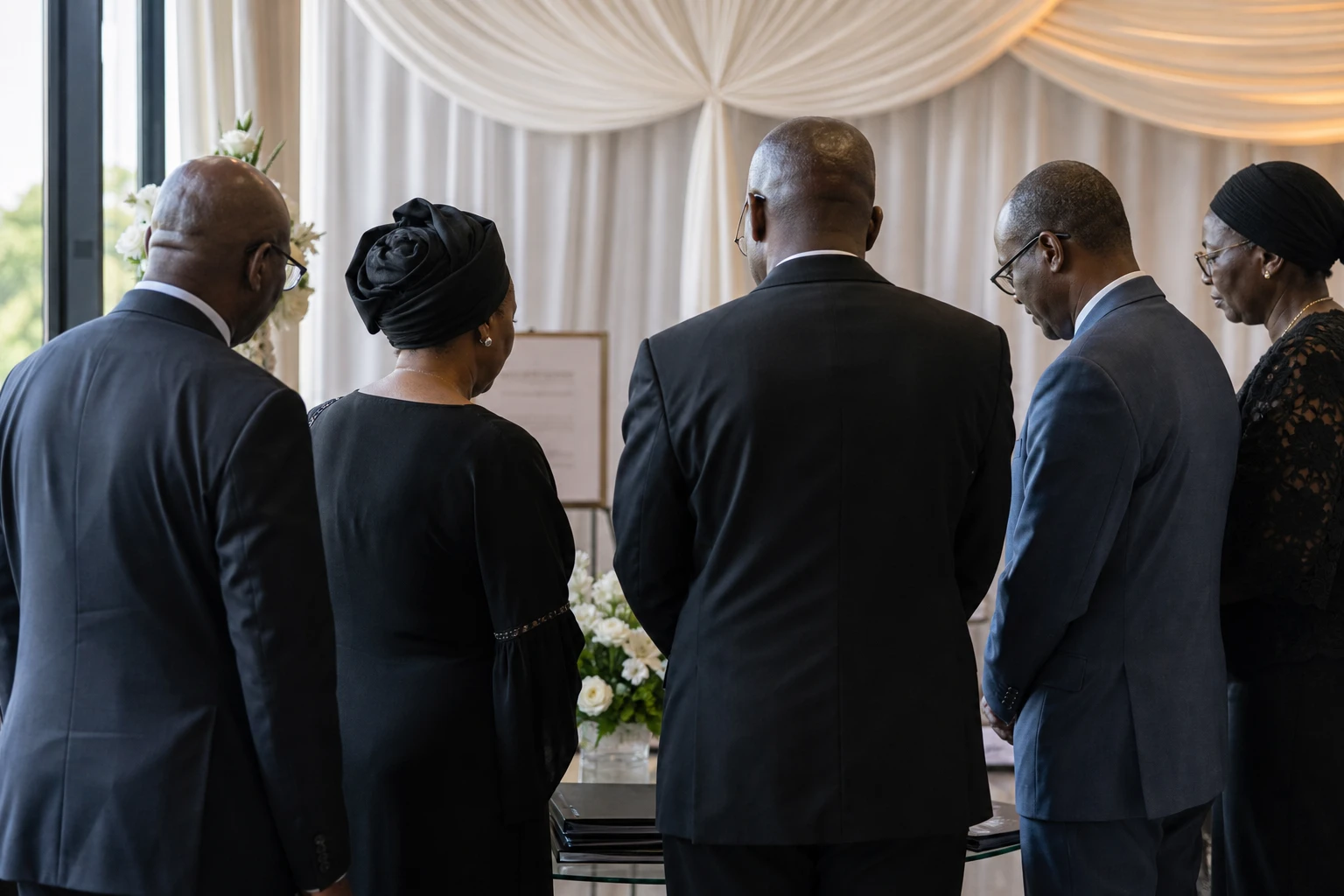
In Abidjan, Sidya Touré’s funeral will bring together Guinea’s history and an Ivorian life story. The former prime minister of Guinea is to be buried in Côte d’Ivoire, the country where he was born, built much of his career and spent his final years away from Conakry.
The opposition figure’s body is expected at Félix-Houphouët-Boigny International Airport in Abidjan on Friday 2 October 2026. According to the programme issued by his family, condolences will be received from Sunday 4 to Tuesday 6 October, before the body is taken for burial and funeral prayers are held on Thursday 8 October at the Grande Mosquée de la Riviera Golf.
A family choice laden with meaning
Sidya Touré died in Paris at the age of 81. The sources consulted differ slightly on the exact date of his death, with some giving Friday 25 September and others Saturday 26 September 2026. The family, however, has confirmed its choice of Abidjan for the funeral.
The choice is primarily rooted in the former Guinean head of government’s personal ties to the country. Born in Dimbokro, Côte d’Ivoire, Sidya Touré completed most of his career in public administration there before returning to Guinea to enter politics. He held senior public finance roles and worked within the Ivorian government apparatus.
His career was also linked to Alassane Ouattara. In the 1990s, when Ouattara was prime minister of Côte d’Ivoire, Sidya Touré served as chief of staff at the prime minister’s office. That professional closeness continued over the years. The former Guinean official affectionately called the Ivorian president “big brother”, according to accounts reported by people close to him.
Alassane Ouattara’s possible attendance at the funeral has not been officially confirmed in the information available. However, several Ivorian sources report that the head of state was personally overseeing the organisation of the ceremony. This involvement highlights the special nature of the bond between the two men.
A major figure in Guinean politics
Sidya Touré led the Guinean government from 1996 to 1999 under President Lansana Conté. After leaving the prime minister’s office, he founded and led the Union of Republican Forces (UFR), an opposition party that gradually established itself in the national political landscape.
He stood for president in Guinea twice. His party also took part in debates on governance, the Constitution and the conditions for holding elections. In 2020, the UFR refused to support Alpha Condé’s bid for a third term, amid strong tensions over constitutional reform.
After the coup of 5 September 2021, which overthrew Alpha Condé, Sidya Touré distanced himself from the transitional authorities led by the National Committee of Rally for Development (CNRD). The military body had promised to lead Guinea back to constitutional order.
However, Guinea’s transition was marked by persistent disagreements with political parties and civil society organisations. The electoral timetable, the duration of the transition and the possibility of military leaders taking part in political life fuelled tensions. In this context, Sidya Touré spent several years in Abidjan.
Between political exile and tensions with Conakry
Guinean authorities expressed a wish for the former prime minister to be laid to rest in Guinea. Prime Minister Bah Oury presented the request as a mark of respect for a former head of government. The family nevertheless chose Côte d’Ivoire.
A senior figure close to the UFR said that, in his view, returning the body to Conakry was “inconceivable”. He also referred to the “humiliations” Sidya Touré had allegedly suffered at the hands of the Guinean authorities, as well as the confiscation of his house. These allegations reflect the position of those close to him and have not been independently established in the available sources.
The issue of Sidya Touré’s home is part of a broader context. Since the military takeover, several political figures have denounced evictions, restrictions on movement and proceedings targeting opposition figures. The transitional authorities, for their part, say they are acting as part of efforts to recover state assets and reorganise institutions.
This divergence partly explains the political significance of the chosen burial place. It is not simply a family decision. It also reflects the distance that has grown between the former prime minister and the authorities in Conakry in recent years.
Abidjan, a regional political arena
Côte d’Ivoire’s economic capital has for several years hosted Guinean officials in exile, including former prime minister Cellou Dalein Diallo and Sidya Touré. Abidjan thus plays a particular role in West Africa’s political realignments, even though Côte d’Ivoire does not present itself as an official host country for regional opposition figures.
This comes as relations between Côte d’Ivoire and Guinea remain under close scrutiny within the Economic Community of West African States (ECOWAS), an organisation tasked with promoting cooperation and stability among its members. Since the coups in Mali, Burkina Faso and Guinea, the regional organisation has faced a crisis of authority and disagreements over military-led transitions.
Sidya Touré’s death therefore comes at a sensitive moment. His career recalls the longstanding movement between West African administrations, political parties and regional capitals. It also shows how closely national trajectories remain connected to professional and family networks built across the region.
The ceremonies in Abidjan will provide an opportunity to gauge the place Guinea, Côte d’Ivoire and political leaders from across the sub-region wish to accord him. Beyond the tribute, they will offer a moment to observe relations between Conakry and Abidjan, as well as the UFR’s political future after the death of its founder.